Chronicle Editor
Colonel (Rtd) Ernest Mganda Dube
TO the Zimbabwe Republic Police (ZRP) women officers in general and the former Zimbabwe People’s Revolutionary Army (ZPRA) Mkushi girls in particular, the re-commissioning of Morris Depot in Harare to their former Zambian Mkushi camp by the Second Republic’s Commander-in-Chief, His Excellency President Emmerson Dambudzo Mnangagwa on 7 July 2023, will go down the annals of memories as a historic recognition of the Zimbabwean girl child; the past, present and future generations.
This comes at the backdrop that assumes that many of the girls’ war-time agonies have not been scripted. Probably this is simply because most research works have tended to focus on the roles of women guerrillas in the male-dominated attrition conflict environment and as such have sought to establish how they fared in the rear base trenches and the theatres of war.

To the Mkushi girls, their theatres of war were the flipside of the guerrillas deployed in Rhodesia. For many of them, theirs was a non-frontline combat role but professional human resource developmental build-up in readiness for a guerrilla government administration.
They were developed to take up such future functions like national policing, intelligence, medicine, secretariat, border frontier guards inclusive of immigration, among other duties. While these girls were equally ready to take up the quasi-military training in either Zambia and beyond, little did they know that the Rhodesian enemy was closely spying on them. Anywhere, we will deliberately omit this emotional record of their survival following the Rhodesian attack on 19 October 1978 where approximately 400 girls died, because of the need to focus on the background of ZRP Mkushi Academy.
The re-naming of Morris Depot to Mkushi Police Academy could also be epitomic recognition to 14 or so Mkushi girls who in 1981 joined the ZRP two of whom qualified for patrol officer status while the rest were decorated with constable ranks.

According to Assistant Commissioner (Retired) Potso Rachel Mpofu (conversation of 14 July 2023); “We were inducted into the ZRP Patrol Officer Corps being two, the other girl being Thembiso Tofa while 12 or so got in as constables. Tofa rose to the rank of Chief Superintendent while I retired as an Assistant Commissioner. Except for myself a product Cuban intelligence background, most of these girls had after Mkushi guerrilla development been selected for training in policing duties either at Lilayi Police Academy, Zambia or Yugoslavia. I am thus most profoundly proud for our camp to get this Presidential Honour, more so, myself being the last Mkushi product to leave the ZRP.”
While the Roll of Honour for the police-trained Mkushi girls cannot be ascertained now due to loss of memory by the surviving witnesses, the 25 who trained in Lilayi Police Academy in early 1979 were in two groups of which the constable group included; Thando Mabhanga, Ropafadzva Bhatshi (Private), Thokozile Mabuza (real name Antoneta Moyo), Nonina (real name Precious Mabhena), Sabina, Eva Moyo Mntume (Kelina), Sukoluhle, Sibongile Mabhena (Rosline), Bridget Khumalo, Violet, George (Patricia), Nyaradzai, Janet Ncube Tapela (Susan Ndapota), Viola Mathe, Sithembewena Greenfield, Linda, Lucia Sibanda, Dometria, Moreen, Thembi Maplanka, Sinothabo, Soneni Chivizha and Memory Dube (Arthar Mlauzi), Mrs Gede Dube, (interviewees Jacqueline Mathwasa Nkala and Jane Ncube-Tapela).
The other Officer Cadet group of four were namely; Jacqueline Nkala aka Kaunda Siyabonga, Kaznet Chikumbo (Sifoto), Christabel Maphosa and Elsy Mojapelo (aka Choice nicknamed Professor). However, of the Officer Cadet group only Kaznet Chikumbo dropped before graduation. From the two above groups another selection picked up a similar number of girls for training in policing duties in Sarajevo, Yugoslavia.
Due to a number of circumstances, some of the trained police girls found themselves dropping out and consequently replaced by some who had no initial police training. According to the interviewees, these two trainings in both Lilayi and Sarajevo, grounded in world policing standards, was what they infused into the ZRP, hence renaming of Morris Depot to Mkushi serves as an acknowledgement.
Why the name Mkushi Police Academy is worth celebrating for? One would ask. The Mkushi girls’ accounts is the replica of Nyadzonia in Mozambique where hundreds of girl-children were massacred by the Rhodesian enemy soldiers for the sin of heeding the calls by the two liberation mass parties Zanu and Zapu to stand and fight for their right to exercise political democracy. Were the girls really interested in joining the ZRP? The answer to this question is an interesting one.
Lieutenant-Colonel Moyo had this to say, “Our interest was in the military uniform, as such we didn’t wish to put on the police tunic. But you know what, we were driven from Sierra Assembly Point in Lower Gweru right to Morris Depot without our consent. After writing the assessment tests, we were taken to the School of Military Police of the Zimbabwe National Army (ZNA) for another aptitude test.”
While they thought they had since gotten into the right service of choice, they were surprised to see the ZRP officers calling out the names of those they said had passed the assessment tests. In response, many of the girls through peer pressure on the love of military sand suit uniform refused to turn up. Nevertheless, the number that eventually joined the ZRP around mid-December 1980 were a representative gamut of the one-time indomitable Mkushi Girls Camp.
By then, joining the ZRP was determined by one’s assessment test results and not only police-training background. Complimentary to the police-training status, what should be celebrated is that all of these new ZRP recruits were survivors of the Mkushi attack who saw themselves joining a Rhodesian-dominant anti-guerrilla police force.
How did the one-time killer girls adapt to peace-officer roles? By virtue that these girls were trained in multi-roles theirs was to quickly adjust to new roles they had learnt at Lilayi as well as Socialist countries and unknowing that 42 years later on 7 July 2023, the State President himself a freedom fighter who escaped the hangman’s noose of the brutal Rhodesian system on a technicality, will honour them not only for scary missing death by inches, but simply because they stood firm and walked shoulder high against a Rhodesian-dominant police force.
The Presidential honour has also rekindled the girls’ memories about their lives in the trenches where they loathed their one-time mother comfort. The agony of re-introspecting the raid and hearing the gunshots on some of their close-knit friends, are memories they would and will never forget.
Yes, as police officers they were trained to enforce law and order, but seeing a white police officer so proud of his genocidal past was another tormenting episode they eventually had to live with. Never mind the horrible life in the trenches, the girls now attest that it was indeed meant to prepare them for such policing roles where former enemies would become one’s colleague or superior.
Above everything else, the encouragement by Father Zimbabwe, the Commander-in-Chief ZPRA Forces Umdala uJoshua Mqabuko oka Nyongolo Nkomo, was acknowledged by the interviewees as key to what they later became in independent Zimbabwe.
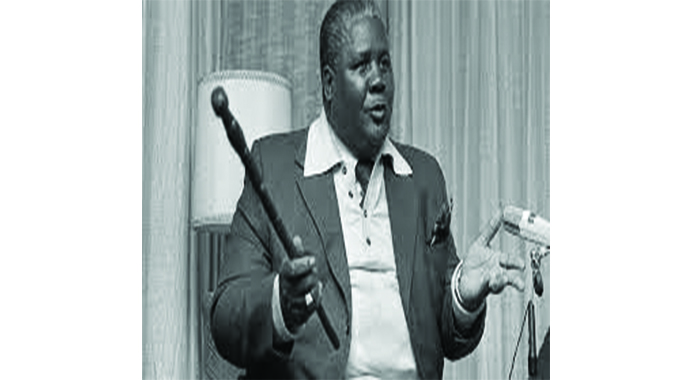
The Mkushi-girls’ excitement on the backdrop of the recognition of their contribution to the liberation of Zimbabwe by His Excellency President E.D. Mnangagwa marked the beginning of the mortal presence in the ZRP which is the most profound honour. This is also consistent with Cde ED’s philosophy of “Leaving no one and no place behind.”
As a police custom the girls have no more words to express their joy other than to call for the bugler-man to blow the “Last Post Salute!” and Aluta Continua, “Nyika inovakwa nevene vayo/ Ilizwe Lakhiwa ngabanikazi balo”.
Col (Rtd) Dube is a former ZPRA combatant who during the armed struggle operated in Mashonaland West and Matabeleland South provinces under the pseudonym Cde Bookless Chizororo. Currently, he is a resource person at the Herbert Chitepo School of Ideology. He spoke to our Assistant Editor Mkhululi Sibanda. Col (Rtd) Dube can be reached on 0772300567.


 Online Reporter