Chronicle Editor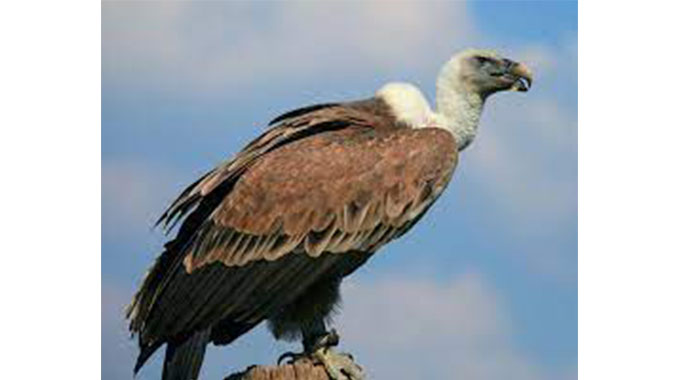
Amanda Mlevu, Sunday News Reporter
THE media has been called to play an active role in dispelling the traditional myths that certain parts of the vulture are powerful business charms as they have led to the dwindling number of the important bird species in the country.
Conservationists, Birdlife Zimbabwe expressed concern at the decrease in the number of vultures in the country attributing it to a host of beliefs and myths that exist in traditional African societies.
At a workshop in Bulawayo on Thursday, bird conservationists said they wanted to increase journalists’ understanding and coverage of vulture decline and belief-based use of the bird’s parts so that they dissuade those using them as lucky charms.
The workshop was held in partnership with the Traditional Medicine Practitioners Council and had a bias towards dispelling the myth associated with vultures as a bird of spiritual and mystical significance as is widely believed in some African communities.
Mr Leeroy Moyo from Birdlife Zimbabwe spoke on vulture identification, its importance and conservation and African vulture catastrophe.

He said vultures were important in cleaning nature of the rot and smell of dead animals that sometimes fouls the air.
“Vultures are important because they are nature’s clean-up crew. In the absence of vultures carcasses can take three times as long to decompose and there are high opportunities for disease transmission among the scavengers,” he said.
Dr Josephine Mundava from the National University of Science and Technology (Nust) spoke on the analysis on the research on how many vultures are left in Zimbabwe.

She said it was worrying that vultures were used by some vendors and entrepreneurs in African markets as lucky charms. She attributed the decline of the birds to the African belief systems.
“We visited markets in Bulawayo and Mbare in Harare and asked sellers the use of vultures, we gathered interesting information because some say vultures give people luck to win, they have a way of pulling crowds and are used by powerful people. That’s why we came here to educate people to seek permits and licences to kill the birds so that the future generations can get access to these birds,” said Dr Mundava.
A representative from the Traditional Medical Practitioners Council, Dr Leslie Marisa educated the attendees of the workshop on the standpoints and strategies set out by TMPC regarding the use of birds by their associations.



 Online Reporter