malvernmugadzikwa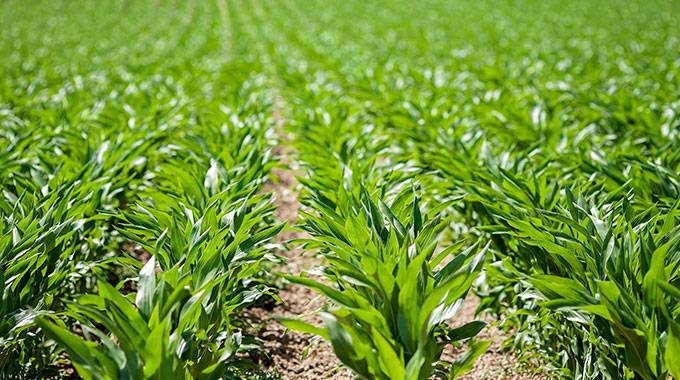
Theseus Shambare
THE rains received countrywide over the last few weeks have significantly improved the condition of crops, especially maize, raising hopes of a good harvest in some areas.
Most crops were adversely affected by moisture stress because of the prolonged dry spell experienced between November and mid-December due to the El Niño weather phenomenon.
However, in the past fortnight, persistent rains have helped crops recover.
Agricultural Advisory and Rural Development Services (AARDS) acting director of crop production Mr Leonard Munamati said: “All districts have received significant amounts of rain. This has improved the condition of the early planted crops — those planted in October or November.”
He urged farmers to use the wet spell to “apply top-dressing fertiliser” using the split application principle.
Split application involves applying small amounts of fertiliser to a single crop at different times, approximately three weeks or more apart, in order to improve nutrient uptake efficiency.
This will ensure the crop is not damaged during a dry spell. At the same time, the method reduces loss of fertiliser if there is leaching following excessive rains.
“In short, the season can be described as delayed, short and sharp, but considering the current crop’s good condition, we can still remain food-secure.”
According to Mr Munamati, crops grown under the climate-proofed Pfumvudza/Intwasa scheme remain the best hope for a successful season.
“Despite the dry spell, most crops grown using the Pfumvudza/Intwasa model were still looking good and withstanding high temperatures experienced, in contrast to some dryland crops that had temporarily wilted . . . The rains and the scheme have inspired more farmers to increase the area planted,” added Mr Munamati.
Close to 3,9 million households have signed up for the Pfumvudza/Intwasa scheme.
According to the latest Weekly Advisory Report by the Ministry of Lands, Agriculture, Fisheries, Water and Rural Development, 3 858 650 households have prepared at least one Pfumvudza plot each.
The total number of plots prepared stood at 11 035 495, covering 688 615 hectares.
The authorities have been emphasising that farmers must plant seed varieties that are specific to their agro-ecological regions.
AARDS director of training and information Mr Sibangilizwe Dlodlo said agricultural extension officers were working closely with farmers to promote good agronomic practices.
“We established 35 000 farmer field schools, where every agricultural extension officer conducts training weekly. Now, the training focus is on agronomic practices that should be followed by farmers, from planting up to crop maturity,” said Mr Dlodlo.
For good yields, he said, farmers should stick to short-season varieties in natural regions one and two, where a crop’s maturity can be reached in less than 120 days.
“In natural regions three, four and five, farmers had to plant short-season traditional grain crops that mature early and are drought-resistant. Early scouting for the fall armyworm is key to ensuring no grain is lost in the field,” added Mr Dlodlo.
Farmers in natural regions one and two are expected to plant three maize plots and two plots of sunflower, sorghum, pearl millet, groundnuts, African peas or sugar beans.
Those in region three are focusing on three mandatory maize plots and three of the optional crops, while regions four and five will have two mandatory sorghum or millet plots, one mandatory sunflower plot and two plots comprising African peas or groundnuts.
Each farmer received a free termite-control chemical, a water-retention enhancer, a post-planting herbicide for three plots and a grain protectant for post-harvest grain protection.
Acting provincial director for AARDS in Mashonaland Central Mr Misheck Chitokomere said crops in the province have responded well to the rains.
“We have farmers who planted with the early rains. The crop suffered a bit from the dry spell; however, with the recent rains, the crop has responded positively. We are also having most of our crops germinating right now, and these are in excellent condition,” he said.
AARDS acting provincial director for Mashonaland West Ms Evelyn Ndoro said the incessant rains have slowed down planting of the new crop and weeding in the established crop fields.
“We are really happy with the rain. However, our farmers have been failing to do their farming activities. Planting has been slowed down, as has weeding in the established crops under irrigation,” she said.
Some of the early planted crops, she said, have been written off after poor germination.
“We are urging farmers to use any possible sunbreak to fight weeds to ensure we get maximum yields. Considering extension of the planting dates of tobacco, we are encouraging farmers to go for short-season varieties to match the short season,” said Ms Ndoro.
However, AARDS acting provincial director in Matabeleland North Mr Dumisani Nyoni said after the rains received in the province last week, planting is in full swing.
“Our Christmas period was in the field because that is the day we received our first effective rains. We urged our farmers to accelerate maize planting so that in January, we will only be planting crops like sugar beans and cowpeas.
“So, generally, most of our crops are still germinating, with a few farmers who had risked planting with the November rains doing replanting after a damaging dry spell,” said Mr Nyoni.
Farmers who spoke to The Sunday Mail are confident Pfumvudza will help mitigate the effects of El Niño.
Mrs Eurita Verengai from Masenda village in Mudzi, Mashonaland East, said: “I am going for small grains only because these are the crops that thrive in our area. After last season’s success, I am confident it will be the same this season.”
Mr Tendai Mangudzi of Mhangura, Mashonaland West province, said Pfumvudza/Intwasa is a trusted programme.
“Since the inception of this scheme, I have been following everything I am told by our agricultural extension workers. The results have always been good. With these rains, I am positive of better yields because I have done potholing in my field to capture as much water as possible,” he said.
* X: @TheseusShambare



 Online Reporter