Online Reporter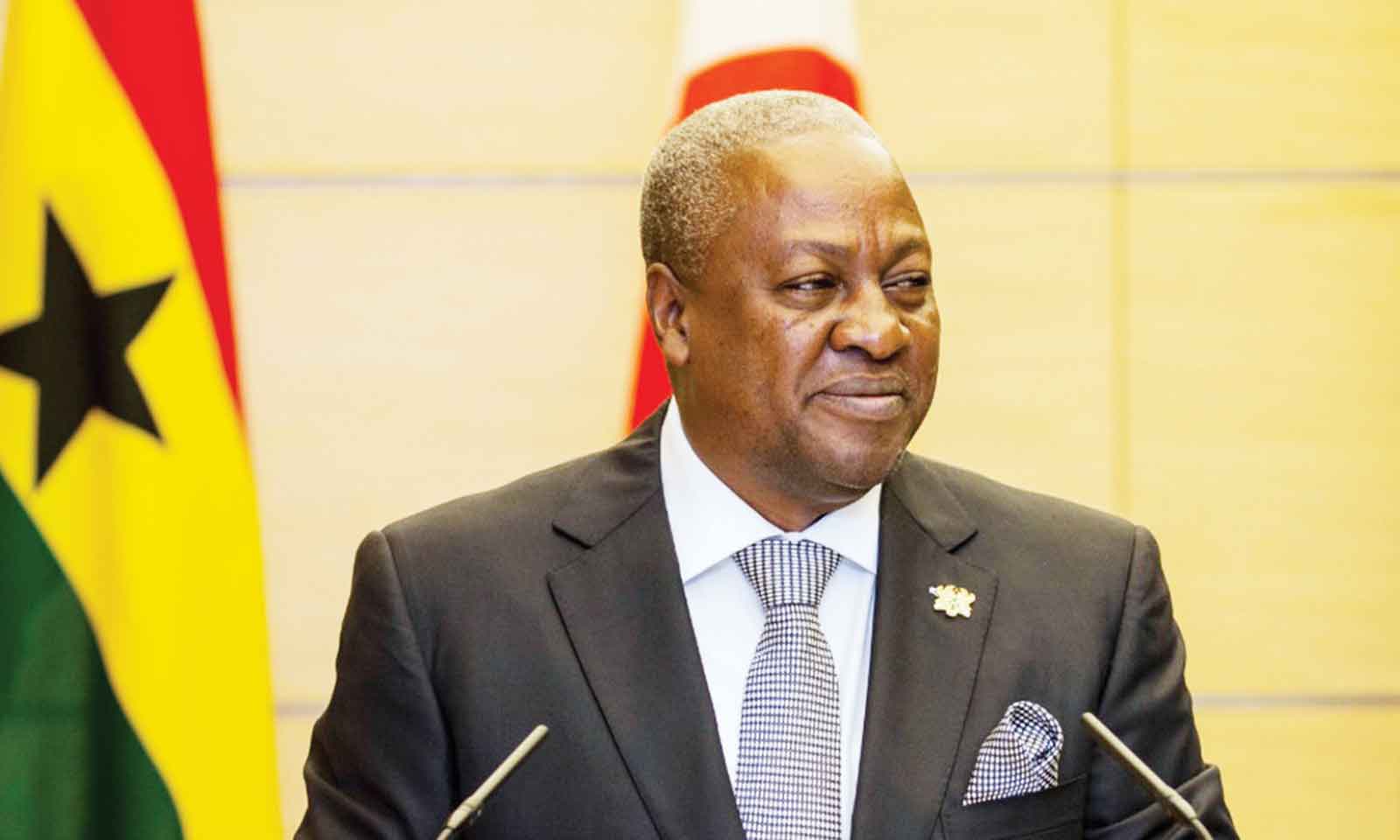
Alexander Rusero
Ranga Mataire
THE recent meeting between Ghana’s President John Dramani Mahama and a global delegation drawn from Africa, the Caribbean, Europe, Latin America, and the United States marks a critical inflection point in the long, unfinished struggle over slavery reparations.
This was not a ceremonial encounter nor a nostalgic revisiting of a painful past. It was a deliberate political act that signals Africa’s refusal to remain trapped in a global order that demands amnesia from the violated while rewarding the beneficiaries of historical crimes with moral authority and economic advantage.
Mr Mahama said his country will table a motion at the United Nations General Assembly next year to have the Trans-Atlantic slave trade recognised as the greatest crime against humanity. He urged Africans and the diaspora to unite behind the growing reparations agenda.
“Reparations must include tangible measures such as debt cancellation, monetary compensation, return of stolen artefacts, institutional reform and transformative economic redress in the global economic structure,” said Mr Mahama.
It’s clear that his call is more than just political rhetoric meant to harangue Africans into an anti-West tirade. His call is born out of the realisation of the need to place history into proper context and ensure just like perpetrators of the holocaust were prosecuted and victim compensated – the same must apply to Africans who have suffered double dehumanisation and genocide through slavery, colonialism and apartheid.
Mr Mahama who serves as the African Union (AU) Champion for Reparations said historical records show that between the 15th and 19th centuries 12,8 million Africans were forcibly shipped across the Atlantic, with roughly 1,2 to 2,4 million dying during the brutal Middle Passage, and millions more perishing in raids, forced marches to the coast, and seasoning camps, leading to a catastrophic total death toll far exceeding those who arrived in the Americas.
For far too long, Africa has been lectured, often condescendingly, to “move on.” This call to move on is not neutral advice; it is an ideological weapon. It is an attempt to foreclose truth, short-circuit justice, and silence legitimate claims by presenting historical crimes as closed chapters.
Africa must reject this framing outright. Reparations are not primarily about monetary compensation, no sum can ever equate the scale of human loss, cultural annihilation, epistemic erasure, and economic theft occasioned by transatlantic slavery and colonialism.
Reparations are about restoring African dignity, affirming African humanity, and reclaiming historical truth from those who have long monopolised its narration.
The insistence that Africa should “move on” without truth is an invitation to accept injustice as destiny. It demands reconciliation without accountability, closure without confession. In no serious moral universe does this constitute justice.
Africa’s demand is not vengeance; it is recognition. It is the right to name the crime, to trace its afterlives, and to dismantle the structures that continue to reproduce its logic under new guises.
One of the most persistent attempts to derail the reparations conversation is the misguided fixation on logistics: who gets what, where, when, and how compensation should be delivered.
This obsession is not innocent. It deliberately reduces a profound moral and political question into a technocratic puzzle, thereby trivialising the substance of the claim.
Reparations are framed as impractical, administratively messy, or economically unrealistic – flimsy arguments never raised when trillions are mobilised to bail out banks, fund wars, or stabilise collapsing financial systems in the Global North.
This narrative misses the point by design. Reparations are not a welfare programme. They are a civilisational reckoning. They demand a restructuring of global relations that were built on African dispossession.
To obsess over the mechanics of pay-out while ignoring the structural theft that made Europe and North America wealthy is to invert the moral burden. Africa is not on trial, history is.
Within this broader reckoning lies a strategic bargain Africa must unapologetically place on the table, that is, the total and unconditional cancellation of African debt. Much of Africa’s so-called debt is itself a continuation of colonial extraction by other means.
It is a debt accumulated under unequal global financial architectures, punitive interest regimes, and externally imposed development models that benefit creditors far more than African societies.
To speak of reparations without confronting debt is to treat symptoms while preserving the disease. Debt cancellation is not charity; it is partial restitution.
Beyond economics, the reparations debate must be understood as a struggle over being. Africa’s being, its humanity, intellect, history, and moral worth, has long been robbed, questioned, and denied.
Slavery did not only extract labour; it produced a racialised ontology in which Africa was cast as sub-human, ahistorical, and perpetually deficient.
Colonialism formalised this lie into law, policy, and knowledge systems. Post-colonial global order has largely retained it through development discourse, humanitarianism, and selective memory.
The reparations moment therefore offers an opportunity to reclaim Africa’s being. To insist that Africa is not a problem to be managed, but a civilisation that was violently interrupted.
To assert that African poverty is not natural but manufactured. To remind the world that underdevelopment is not an accident, it is the other face of development elsewhere.
Crucially, this moment must also foster continental and diasporic consciousness. Slavery never truly ended, it mutated. Its logics persist in extractive trade regimes, racialised labour markets, migration controls, resource plunder, and knowledge hierarchies.
Reparations reopen debates that dominant narratives have sought to close. They force uncomfortable questions about why Africa remains structurally disadvantaged in a world it helped build with its blood, bodies, and brilliance.
The African union has a historic responsibility here. This agenda cannot be left to individual states or symbolic gestures. It requires coordinated continental leadership, legal clarity, diplomatic pressure, and intellectual coherence.
The AU must anchor reparations within Africa’s collective foreign policy posture, making it a non-negotiable pillar of engagement with Europe, the Americas, and global institutions. Anything less reduces reparations to rhetoric.
Equally urgent is the need to confront Africans who are hired intellectually and politically as mercenaries against this cause. These voices populate conferences, panels, and media platforms, arguing the “impracticality” of reparations while enjoying the privileges of systems built on historical injustice.
Their role is not accidental. They provide moral cover for denial and delay. Decolonial honesty demands naming this betrayal without apology.
Finally, Africa must decisively reject the false and dangerous narrative that Africans were willing enablers of the slave trade and therefore equally culpable. This false equivalence is intellectually lazy and morally perverse. It deliberately collapses asymmetrical power relations, ignores coercion and violence, and sanitises European and American responsibility.
To acknowledge that some Africans were coerced into intermediary roles under conditions of extreme violence is not to equate that with industrial-scale racial slavery engineered, globalised, and normalised by European empires.
This narrative exists for one reason only: to cleanse the slave curse and absolve its primary architects.
Reparations are not about reopening old wounds; they are about healing wounds that were never allowed to close. Africa is not asking for sympathy. It is demanding justice, dignity, and the right to narrate its own history.
The meeting in Ghana must therefore be read not as an end, but as the beginning of a more assertive, unapologetic African reclamation of truth.
The world must listen, not because Africa is begging, but because history is knocking.