Chronicle Editor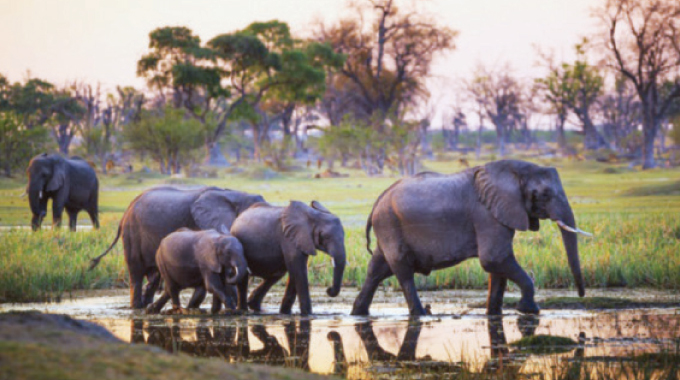
Mahlabezulu Zulu
Wildlife research and conservation are vital for the survival of different species of wild animals.
They are also important for national economic growth as tourists travel from all walks of life to come and see some of the species – the lions, honey badger, elephant and the endangered painted dogs, leopard, python and many others.
Some of these research or conservation projects, have their centres close to communities. A few of such organisations have their centres located deep in some national parks or forestry areas in which the specific wild animal being researched on, or encouraged to be conserved, is found.
Most communities, especially rural ones sharing boundaries with forestry or national parks areas where these research or conservation projects are based tend to benefit in terms of employment opportunities, self-help projects and promotion of educational programs, that is, building more classroom blocks for schools or offering scholarships to learners.
It is good that such organisations extend these communities so that such communities are cushioned from the negative effects of human and wildlife conflict, understand the operation of these organisations in saving the animal from being extinct or endangered and promote education, which can be used as a “weapon” to promote conservation of wildlife.
Despite the fact that such organisations offer opportunities to communities, it is unfortunate that some of the wild animals they are researching on or whose conservation they promote, have sometimes been “painted with a wrong brush” in some of human and wildlife incidents.
This has had many negative repercussions which include spoiling the relationship between the research, or conservation project and the community it is operating in.
Elephants, with their unique spoors, t can be easily identified if they move into neighbouring communities and destroy crops, fruit trees or damage water supplies or drainage pipes in places like Dete and Victoria Falls.
However, identifying spoors of some carnivorous wild animals like hyenas, leopards or lions when they visit, attack or kill some of the domesticated animals which in some cases would have been left out of kraals overnight has been challenge for most villagers or community members.
In a number of communities, some species of wild animals have become popular because wildlife research or conservation organisations run programs related to promoting their survival. Vehicles with logos related to the animal, which in most cases might be a picture or drawing of the wild animal are always seen weaving through communities, and neighbouring protected areas like national parks or forestry areas promoting such educational and research programs.
It is unfortunate that sometimes, incidents of livestock attack, especially at night, happen in such places and all hell breaks loose as community members sometimes suspect from animal spoors found and mode of attack during killing and complain that some of these wild animals “are kept at a secret place in the park, or forestry area for breeding purposes” and released to explore communities especially at night as part of researches.
Mr Samson Sibanda of Chezhou Village in Dete near Hwange National Park who lost two cows to a suspected carnivore attack said at a recent meeting:
“I thought these researches were genuine. It seems these researches on collared animals involve releasing the animals to communities at night so they study how they attack our livestock. From spoor identification, I suspect the collared lions which are sometimes seen roaming the park are the ones which killed my two cows.”
Correctly identifying spoor and mode of killing of a carnivorous predator sometimes needs expertise and experience. Villagers, because they tend to lack such expertise, and experience sometimes associate such killings with popular animals being researched on. Such animals, when suspected to be causing problems within communities are always labelled “researchers or conservation projects’ animals.”
This has spoiled the relationship between such projects and communities where these projects operate.
Are community members getting enough information in the form of education, involving the responsible authority, Zimbabwe Parks and Wildlife Management Authority (ZimParks) about the so called “researcher or conservation project wild animal?”
Due to lack of knowledge, some community members believe that research or conservation projects associated with given animals have gained “total ownership” of the animal. This is not the case.
ZimParks, on behalf of the State, which is the custodian of all wildlife in the country, should go deeper sometimes through joint educational or community meetings with such research or conservation programs to educate community members on issues like wildlife ownership and role of communities in conserving wildlife.
Offering of operation licences by ZimParks to such projects is a pre requisite so that their existence, and operations are known, but their safety in terms of operating in communities’ hinges on imparting knowledge.
Mahlabezulu Zulu is a conservationist who has worked for various wildlife research, and conservation organisations in Hwange National Park, and Fuller Forestry in Victoria Falls.
He can be contacted on 00263(0)713269827/0776196171. Email [email protected] or [email protected]



 Online Reporter