Online Reporter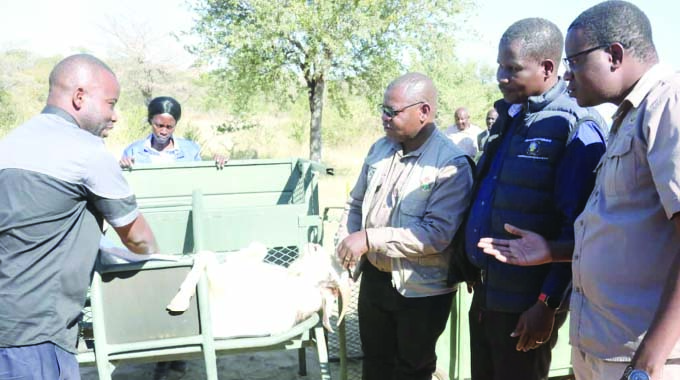
Raymond Jaravaza, [email protected]
LIKE the majority of villagers in Strip Road Village, Ward 19 in Lupane and surrounding areas, Mrs Sihle Nyoni owns indigenous goats, traditionally viewed as a symbol of wealth and social standing. However, her herd rarely grew beyond 10 goats.
A low fertility rate, coupled with a high mortality rate among young goats, meant Mrs Nyoni lost almost as many animals as were born either at birth or before they could reach maturity.
That all changed a few years ago when a partnership involving the Research Council of Zimbabwe (RCZ), Lupane State University (LSU) and local farmers was established, to improve the productivity and genetics of indigenous goats through selective breeding.
The successful collaboration saw the RCZ applying scientific research and practical solutions to enhance the genetics of the goats owned by villagers in Strip Road and Daluka villages. The aim was to boost production and transform small-scale goat-rearing projects into viable commercial ventures.
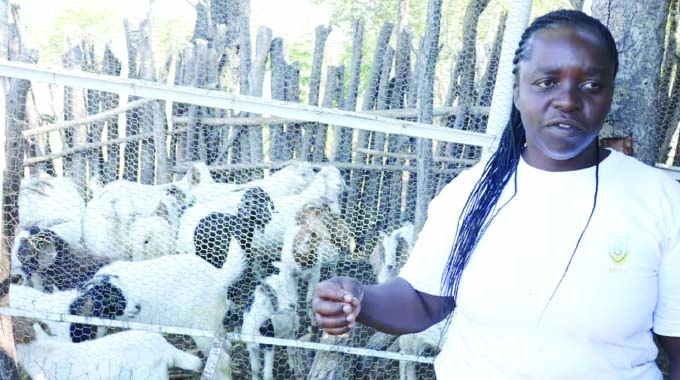
The results have been impressive. Villagers now own crossbreeds of the Matabele and Boer goats, animals that are disease-resistant, have higher body mass and reproduce more effectively.
Mrs Nyoni now owns over 60 goats.
“For years, the number of goats that my family owned remained stagnant and rarely exceeded 10 animals,” she said.
“At one point, my husband and I thought perhaps we were simply unlucky. But we realised that the high goat mortality rate was a problem affecting all villagers in Strip Road and Daluka.”
When RCZ approached her and other villagers to participate in a pilot project aimed at improving genetics and productivity, she seized the opportunity.
She received a young Boer goat to enhance the genetics of her herd, along with practical guidance on how to care for her animals, to ensure maximum productivity and lower mortality rates.
“Before we started working with RCZ and Lupane State University, we relied on unproven methods to treat conditions like blisters in the animals’ mouths and other diseases, which never really worked,” said Mrs Nyoni.

“Thanks to their research and advice, the mortality rate of our goats has dropped significantly, our breeds have improved and so has the general health of our herd.”
“Today, our family herd has grown to 60 goats, and other villagers participating in the project have also seen similar improvements,” she said.
Last Friday, a field day was held at Mrs Nyoni’s homestead to showcase the tangible benefits of applying research and science in agriculture to improve rural livelihoods.
The event was held under the theme: “Promoting the Uptake and Utilisation of Research Results for Improved Indigenous Goat Productivity and Genetics through Selective Breeding.”
RCZ Executive Director Dr Partson Chikudza, said the event aimed to bridge the gap between scientific research and practical application for the benefit of smallholder farmers in Matabeleland North.

“We want to showcase the newly developed goat breed resulting from the strategic crossbreeding of the Matabele and Boer goats, a breed that combines disease resistance, greater body mass and improved reproduction rates,” said Dr Chikudza.
“These new breeds exemplify best practices in selective breeding, feeding and disease management, which can be adopted by local farmers.
“It is vital to facilitate knowledge exchange between researchers, extension officers and farmers, to promote the adoption of improved breeding techniques that are climate-resilient and suited to the realities of rural livestock production,” she added.
Dr Chikudza said the field day and the success story of Mrs Nyoni, as well as the partnership between RCZ, LSU and the Ministry of Lands, Agriculture, Fisheries, Water and Rural Development, was a confirmation of innovation and a call to action for inclusive livestock development across the province.
“These goats are built for resilience, economic impact and sustainability. The field day is a powerful testament to how research-driven agricultural solutions can transform rural communities and pave the way for shared prosperity,” he said.
In a speech read on his behalf by the Permanent Secretary, Professor Obert Jiri, the Minister of Lands, Agriculture, Fisheries, Water and Rural Development, Dr Anxious Masuka, said that through selective breeding, the villagers of Lupane have developed a resilient, high-yielding breed that can thrive under the region’s harsh climatic conditions.
“These beneficiaries are living proof of the transformative power of adopting research-based agricultural innovations. Their success should serve as inspiration to farmers across Zimbabwe,” said Dr Masuka.
“The Ministry is proud to be part of this collaborative initiative, which recognises that food security and rural development must be driven by science, supported by policy, and grounded in the lived experiences of our farming communities.”
Dr Masuka reiterated the Ministry’s support for the RCZ’s efforts to ensure research is not confined to bookshelves but is implemented, applied and scaled up in the fields and on farms.