Chronicle Editor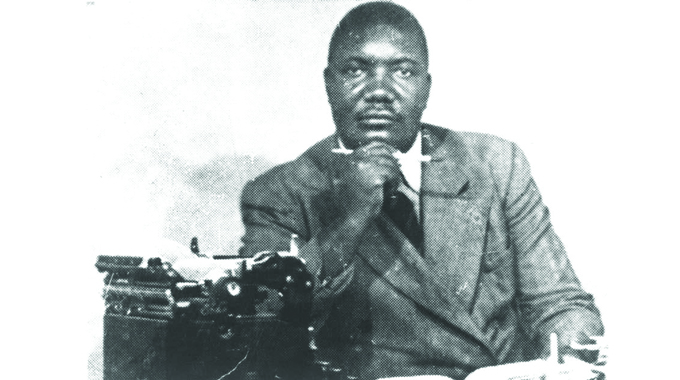
Ashley Phiri, [email protected]
THE Bulawayo Progressive Residents Association (BPRA) is advocating for the commemoration of two pivotal Zimbabwean revolutionary trade unionists: Benjamin Burombo and Jason Ziyaphapha Moyo.
The association proposes erecting a statue in Makokoba to honour Burombo’s legacy in championing workers’ rights during the 1950s.
Additionally, they recommend transforming Jason Moyo’s house in Makokoba into a national museum. The museum would serve to preserve the rich history of the country’s liberation struggle, specifically highlighting the contributions of ordinary workers and trade unions in achieving national freedom.
The proposal to honour the veteran trade unionists arose during the Zimbabwe Council of Trade Unions (ZCTU) Workers Day commemorations held at the Bulawayo City Hall on Wednesday.
BPRA’s secretary of education, Mr Benny Moyo, delivered a solidarity message highlighting the critical role workers and trade unionists played in the liberation struggle and the importance of recognising their contributions.
“We started celebrating Workers Day as a nation after independence which we commemorated two weeks ago. We recall that independence itself did not come on a platter, the workers and residents contributed their sweat and blood to its realisation. From their sweat, they ensured the guerrillas were clothed, fed and had accommodation in the cities where they held their meetings.
“We recall with pride how in 1948 Makokoba was at the epicentre of the working class revolution. It was here in Makokoba that Benjamin Burombo and Jason Ziyaphapha Moyo lived and worked to reform the conditions of the working class which resulted in the re-examination of wages by the Native Labour Board. As residents, we believe we should erect a statue in honour of Benjamin Burombo in Makokoba and turn Jason Moyo’s house into a national museum in honour of their contribution,” Mr Moyo said.

A pivotal figure in Zimbabwe’s history, Burombo was born in 1901 in Buhera. Considered one of the earliest African nationalists in Rhodesia, Burombo’s political consciousness was shaped during his time working in South Africa. There, he came under the influence of prominent South African trade unionist Clement Kadali.
Returning to Bulawayo in the 1940s, Burombo didn’t hesitate to make his mark. He founded the British African National Voice Association (BANVA), a trade union organisation and became its founding president. His leadership in 1948 proved instrumental in organising a nationwide strike that pressured the Native Labour Board to urgently re-evaluate worker wages.
Burombo’s activism extended beyond labour rights. When the Rhodesian government proposed the controversial Native Land Husbandry Act, he and his team vehemently opposed it. Their efforts bore fruit, as Burombo successfully challenged and overturned several wrongful implementations of the act.
A true pioneer, Burombo’s leadership and numerous programmes paved the way for future generations of nationalists. His legacy lives on, and his highly publicised funeral in 1959 stood as a testament to his impact.
Jason Ziyaphapha Moyo was born in 1927 in Plumtree, and began his path to activism during his primary education at Mzingwane Government School. There, he honed his skills as a builder and carpenter, but his interests soon turned to the plight of workers.
By the early 1950s, Moyo found himself actively involved in Bulawayo’s trade unionism, becoming the general-secretary of the African Artisans’ Union.
His growing influence extended to the political sphere as well. He joined the Bulawayo branch of the then African National Congress (ANC), rising through the ranks to become its secretary and later, chairman.
Moyo’s dedication to the cause of liberation came at a cost. In 1959, he faced arrest and detention for three months. Released briefly, he was then detained again under the newly implemented Preventive Detention Act. Finally released from Marandellas (Marondera) Prison in 1960, Moyo’s unwavering spirit led him to the National Democratic Party (NDP). He was elected to its national executive committee in November of that year.
The ever-shifting political landscape saw the NDP banned in December 1961. Unfazed, Moyo continued his fight for freedom by joining the Zimbabwe African People’s Union (ZAPU). Affectionately known as “JZ,” he rose to the position of Second Vice President in ZAPU, a position he held until the time of his tragic demise. In 1977, Moyo’s life was cut short by a parcel bomb in Lusaka, Zambia.


 Online Reporter