Online Reporter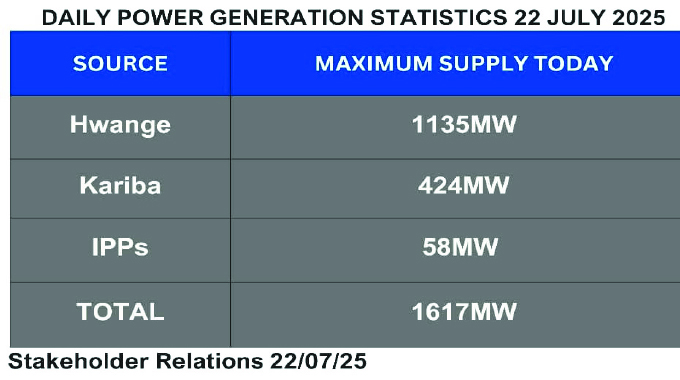
Rutendo Nyeve, Victoria Falls Reporter
CONSUMERS have applauded power utility, Zesa, for improved supplies across the country in response to growing energy investments and electricity generation efficiencies facilitated by the Government.
The improvement has eased the load shedding burden on the productive sector and guarantees stability of industrial operations.
The Zimbabwe National Statistics Agency (ZimStat), using data from the daily statistical report from the Zimbabwe Power Company (ZPC) has noted a steady increase in the country power output, clocking a recent peak of about 1 665 megawatts (MW) and 1 617 megawatts as of yesterday.
The ZimStat Index of Electricity Generation (IEG) first quarter 2025 report reflects a positive improvement of 8,7 percent compared to the same period last year and a quarterly growth of 6,1 percent from the fourth quarter of 2024.
“Hwange Thermal Power Station generated 1 674,5 gigawatt-hours (GWh) of electricity, representing 69,2 percent of the total electricity generated during the first quarter of 2025,” reads the report.
Kariba Power Station on one hand contributed 24,3 percent, while Independent Power Producers (IPPs) accounted for the remaining 6,5 percent, said Zimstats.
The positive trend has continued into the second quarter, with ZPC’s daily generation statistics as of yesterday showing a total output of 1 617MW, comprising 1 135 megawatts from Hwange, 424 megawatts from Kariba and 58 megawatts from IPPs.
The output jump marks a notable achievement given the historical challenges faced by the country’s power sector, including ageing infrastructure and reliance on imports.
ZimStat has reported that imports decreased by 37,4 percent in the first quarter of 2025, down to 305.5GWh from 487.8GWh in the previous quarter.
On annual basis, imports fell by 39,6 percent from the 505,4GWh recorded in the first quarter of 2024.
“About 34 percent of the imported electricity was obtained from Eskom (South Africa), while HCB (Mozambique) and EDM (Mozambique) provided 37,5 and 10,2 percent, respectively,” said the statistics agency.
Bulawayo United Residents’ Association chairman, Mr Winos Dube, expressed excitement over the positive improvement.

“From what I observed, there has been improvement in power supply, and I have not had any other complaints from many other areas. There is so much improvement when it comes to load shedding,” he said.
“Where I am, we just had a power cut on Sunday for a few minutes in the late afternoon, but electricity was quickly restored.
“Yesterday, the whole day, electricity was there and today as we are talking electricity is still there. This is really an improvement from what we used to experience. I would say this has happened for the past few months.”
The productive sector has also welcomed the developments and urged Government to lure more energy investments and ensure guaranteed future supplies.
Chairman of the Intensive Energy Users Group (IEUG), Mr Eddie Cross, said: “There was a significant increase in power supply in the first quarter of 2025, and this is expected to continue in the rest of the year as Kariba Dam is at 22 percent, and we should be able to increase power generation from this source.
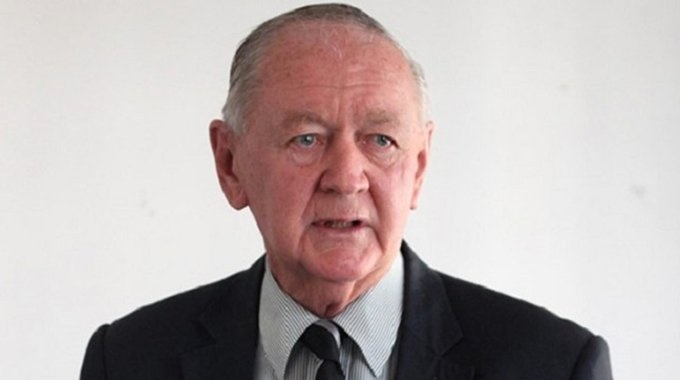
“In addition, private sector investment in new generation is starting to contribute to national supplies. However, the nation continues to experience a serious shortage of base load supplies,” he said.
The Government has attributed the improvements to a combination of factors, including the rehabilitation of Hwange Thermal Power Station, better water inflow at Kariba, and the growing contribution of IPPs.
Meanwhile, the ZimStat report notes that distributed electricity in the first quarter of 2025 totalled 1 544GWh, with the manufacturing, transport and construction sectors consuming 37,7 percent, mining and quarrying using 29,2 percent and domestic customers accounting for 26,4 percent.
As the nation moves forward, the focus remains on sustaining and building upon these gains.
With Kariba’s water levels at 22 percent and private sector investments gaining momentum, there is cautious optimism that the country may finally be turning the corner on its energy challenges.
For now, residents and businesses alike are enjoying the reprieve from prolonged outages, a welcome change after years of erratic power supply.
@nyeve14