Vusumuzi Dube
Peter Matika, [email protected]
A LOCAL company, Off and Tie Grid Company (OTG), has launched a pioneering initiative to combat environmental degradation, boost food security and improve the nutritional value of indigenous foods such as mopane worms (amacimbi).
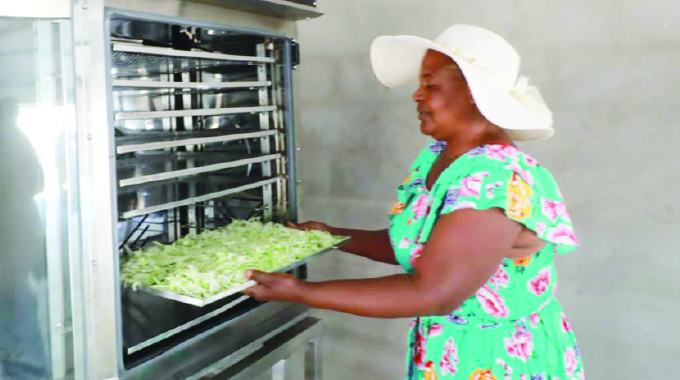
The company has established a solar-powered drying and processing plant in Garanyemba in Gwanda District, Matabeleland South, which is a major step towards sustainable community development.
The project is a collaborative effort involving the Ministry of Energy and Power Development, the Ministry of Environment, Climate and Wildlife and the Rural Electrification Agency (REA), the European Union and United Nations.
OTG technical director, Dr Engineer Charles Kanyunga, said the plant offers an eco-friendly alternative to traditional wood-fired drying methods, which have contributed to rapid deforestation.
This plant is more than just a processing facility. Our main thrust is to fuse modern technology with local needs. It’s a lifeline for the community, delivering economic opportunities while protecting the environment,” he said.
Eng Kanyunga said the facility is designed to reduce wood consumption by up to 80 percent, extend the shelf life of local produce, create jobs and preserve the nutritional content of food. The solar-powered system ensures essential vitamins and minerals are retained during drying, which is often lost in conventional methods.
“By utilising solar technology, the plant significantly cuts carbon emissions and provides a more efficient method for food preservation. Community members can now safeguard their harvests, increasing both income and food security,” said Eng Kanyunga.
The mopane worm industry has long been a source of livelihood and cultural pride for many rural communities.
However, unsustainable harvesting practices, environmental pressures, and outdated processing techniques have limited its full potential.
“This project is part of a broader climate resilience programme aimed at promoting sustainable harvesting, clean energy use, innovation in value addition, and inclusive business models for small-scale harvesters,” said Eng Kanyunga.
Local leaders have embraced the development with optimism. Ward 13 Councillor, Mr Miklas Ndlovu, expressed hope that their products would soon reach international markets.
“We are now able to identify high-value, nutritious worm species. With improved processing, we hope to begin exporting soon,” he said.
Ward 13 chairperson, Mr Gezani Dube, said the project has already sparked local economic activity.
“So far, 40 villagers have been trained to operate the plant. This initiative is empowering our community,” he said.
Ms Ntombizodwa Nyathi, the focal project officer for women’s affairs, under the Ministry of Women’s Affairs, said the plant is a game-changer for the community.
“We can now preserve our traditional foods more effectively and create additional income streams. This is also an eye-opener on the fact that we should preserve our natural resources, such as the mopane tree, which amacimbi feed on,” he said.
“Once the tree goes extinct, we will then suffer, so with this plant, we are assured of sustainable development. We are now also witnessing rural modernisation as envisioned by President Mnangagwa.”
The plant represents a model of sustainable development that could be replicated in other rural communities across the region, offering hope for environmental conservation and economic resilience.
Youth representative, Mr Blessed Dube, said the initiative comes at a critical time when climate change continues to challenge agricultural communities.
He said Innovations like this solar plant prove that sustainable, locally-driven solutions are possible.
“We hope to attract youths to be part of this project, as they play a pivotal role in national development. We also hope to see an expansion of the project, training more community members and potentially establishing similar facilities in other areas of Matabeleland South,” he said.



 Online Reporter