Online Reporter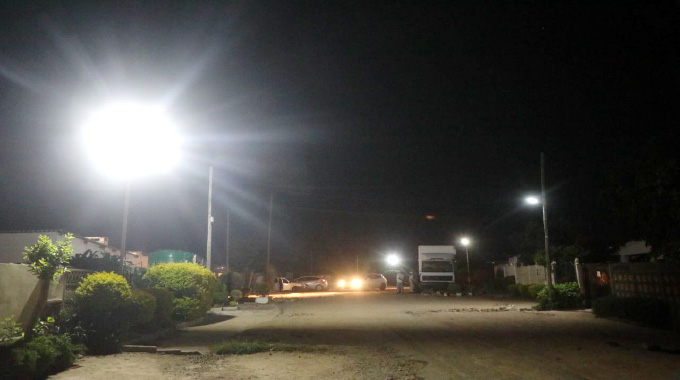
Sikhumbuzo Moyo, Zimpapers Senior Writer
RESIDENTS of Pumula North suburb in Bulawayo, fed up with living in fear as darkness turned their streets into hunting grounds for criminals, have taken matters into their own hands. Following repeated muggings and robberies, and after the vandalism of street tower lights, residents pooled resources to install solar-powered street lights in their neighbourhood.
A total of 81 households each contributed US$15, raising enough funds to purchase and install 12 solar street lights along a one-kilometre stretch, mainly covering Mpandamatenga Street.
For many residents, the project represents more than improved lighting, serving as a collective response to rising crime.
“The area used to be too dark, and that encouraged criminal activities. Now, with these lights, we can live in peace. There is a sense of security that we did not have before,” said Mr Nhamo Matsairo, the project chairperson.
He said the initiative began in March last year, driven by residents’ frustration after vandalised tower lights were never restored.
Ward 17 Councillor Sikhululekile Moyo, who proposed the idea, said the response from residents was overwhelming.
“It is an idea I suggested after all our tower lights went off following vandalism. Residents, especially those along Mpandamatenga Street, welcomed it because they were directly affected by crime,” she said.
Clr Moyo said the project’s success has encouraged wider participation across the ward.
“In total, we now have 20 solar street lights installed in the ward, covering Area Zones 2A and 2B,” said Clr Moyo.
She commended residents for embracing collective responsibility in addressing public safety challenges.
“A huge thank you to all the households who contributed to this initiative. Each household chipped in with US$15, showing real commitment to improving our community,” she said.
Clr Moyo said the total estimated cost of the project is US$1 200, adding that the initiative would significantly improve night time visibility and help reduce crime.
“Our community will be safer, and residents can now feel more secure walking around at night,” said Clr Moyo.
The Pumula North project follows similar community driven initiatives in Kumalo and Mpopoma suburbs, where residents have also installed solar street lights to deter criminal activity.
In Killarney, residents mounted solar lights on existing infrastructure belonging to the Zimbabwe Electricity Supply Authority (Zesa), although the lights operate independently of the national power grid.
For decades, street lighting has traditionally been the responsibility of local authorities, relying largely on grid electricity.
However, vandalism, power outages and rising costs have forced communities to explore sustainable and energy efficient alternatives, with solar-powered lighting emerging as a practical solution.
Street lights play a critical role in illuminating roads, intersections and residential areas, improving visibility, deterring criminal activity and enhancing public safety.
In April last year, Bulawayo residents raised concern after council announced plans by Zesa to install pre-paid meters on street tower lights, arguing that communities would bear the cost of public lighting.
The Government has also intensified efforts to improve urban lighting. In 2022, a massive street lighting programme was launched, starting with a pilot project in Harare, where 1 200 street lights were installed along a 35-kilometre road network.
The project was part of President Mnangagwa’s engagement and re-engagement policy and his “Zimbabwe is Open for Business” mantra, aimed at modernising infrastructure and improving urban safety.