Online Reporter
Brandon Moyo, Zimpapers Sports Hub
THE ICC Under-19 Men’s Cricket World Cup 2026 edged closer on Saturday as five warm up matches were staged across Zimbabwe and Namibia. Far from gentle loosening exercises, the rehearsals offered early insights into which sides already look settled, and where fault lines are beginning to appear with the tournament just days away.
After England and New Zealand launched the official warm up programme on Friday, attention turned to Masvingo, Bulawayo, Harare and Windhoek. Across venues, weather conditions, pitch behaviour and squad depth shaped results as much as raw talent. With the World Cup scheduled to run from January 15 to February 6 and co hosted by Zimbabwe and Namibia, Saturday’s contests underlined which teams are adapting quickest to southern African conditions.
At Masvingo Sports Club, Pakistan’s fast bowlers delivered the most incisive early statement against Bangladesh. Choosing to field, Pakistan struck immediately through Ali Raza and Umar Zaib, who tore through the top order within the opening spell and left Bangladesh searching for stability. Kalam Siddiki, one of the more seasoned batters in the Bangladeshi line up, countered with a gritty half-century, guiding his side to 152 for seven before rain brought proceedings to an early close. While the match ended without a result, Pakistan’s new ball control stood out on a surface offering early movement.
The most one-sided encounter of the day unfolded at Bulawayo Athletic Club. India made Scotland pay for electing to field, amassing a daunting 374 for eight in a display that highlighted the depth of their batting resources. Vaibhav Sooryavanshi led the onslaught with a scintillating 96 off 50 deliveries, striking nine fours and seven sixes. He was well supported by Aaron Varghese’s 61, Vihaan Malhotra’s 77 and Abhigyan Kundu’s 55, a spread of contributions that will set alarm bells ringing for rivals.
Scotland’s response never found momentum. Olly Pillinger fell early to Deepesh Devendran, who returned figures of three for 14. Although Theo Robinson and Max Chaplin briefly resisted, India’s spin attack quickly tightened the screws. Mohamed Enaan claimed two for 24, Khilan Patel ripped through the lower order with three for four, and Scotland slumped to 112 for nine in a rain shortened chase, losing by 121 runs under the Duckworth Lewis Stern method.

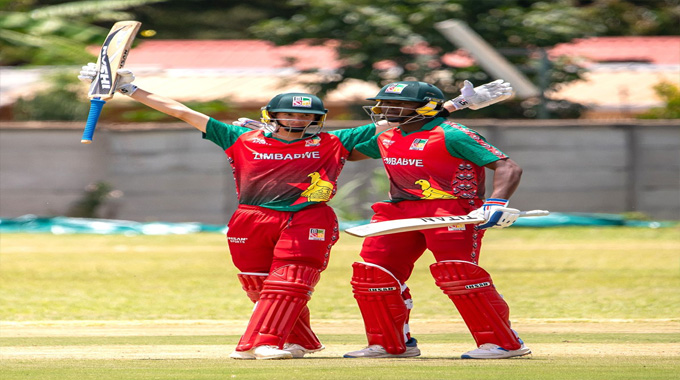
In Harare, co-hosts Zimbabwe faced a stiffer examination than the scorecard suggested. At Old Hararians, the hosts invited USA to bat first and encountered a measured innings from Amrinder Gill, who anchored the effort with a composed century. Despite losing early wickets, the Americans kept the run rate above five an over and reached 174 for four in the 34 overs possible before rain intervened.
Dhruv Patel was Zimbabwe’s standout bowler, returning two for 15 to keep the equation manageable, but the abandonment denied the hosts an opportunity to test themselves in a pressure chase.
Windhoek played host to two matches that were both curtailed by weather but provided clear lessons. At Wanderers Cricket Ground, West Indies struggled to capitalise on promising starts after captain Joshua Dorne opted to bat against Ireland. Reuben Wilson removed Tanez Francis early, and although Jewel Andrew battled through the middle overs with a patient 81 from 107 balls, momentum proved elusive.
Luke Murray spearheaded Ireland’s attack with three for 39, ably supported by Thomas Ford’s two for 38, while Isra El Morton’s 36 lifted West Indies to 246 before rain ended the contest.
At United Cricket Club Ground, Japan and Tanzania produced the day’s most dramatic finish. After opting to field, Japan’s bowlers, led by Nihar Parmar’s three for 15 and Kazuma Kato Stafford’s two for 32, restricted Tanzania to 204 for nine. Tanzanian captain Laksh Bakrania later proved pivotal, steadying the lower order with 53 — an innings that gained greater significance once rain recalibrated the target.
Set a revised chase of 127 from 20 overs, Japan lost early wickets under sustained pressure. Bakrania returned to claim two for 13, Raymond Francis added three for seven, and Tanzania powered to an 81 run victory on DLS, highlighting their ability to adapt swiftly to shifting circumstances.
With only days remaining before the tournament proper gets under way, the warm up matches are no longer about easing into competition.
They are beginning to reveal which teams are ready for the pace, the climate and the unforgiving margins that define a Cricket World Cup staged far from neutral comfort.