Online Reporter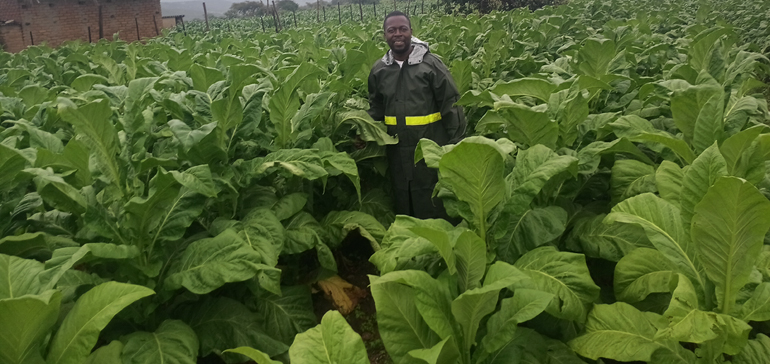
Lovemore Kadzura
Post Reporter
AT the end of the gruelling 2025/26 tobacco season, the disappointment is still fresh.
For months, farmers had nursed their crop in the fields, spending heavily on seed, fertilisers, chemicals, labour and water, hoping that the golden leaf would reward their effort when it finally reached the auction floors.
For many, that hope collided with a harsh market reality – more tobacco, but weaker prices.
The 2025/26 tobacco marketing season was marked by strong volumes, but depressed returns, with industry officials attributing the pressure largely to an oversupplied global market.
During the just-ended season, the average price was reported at about US$2,52 per kilogramme, compared with US$3,51/kg during the comparable period of the previous season.
Auction floor growers were particularly exposed, receiving significantly less than farmers selling through contract arrangements. Yet, as the 2025/26 marketing season closes, tobacco fields have not been abandoned.
Instead, farmers are preparing to plant again.
It is a contradiction that captures the difficult economics of tobacco farming in Zimbabwe — a crop that leaves growers complaining about poor prices at the end of the season is still difficult to walk away from.
Tobacco remains one of the few crops that can potentially generate a large lump-sum payment within a farming calendar. That money pays school fees, settles debts, buys livestock, builds houses and finances the next agricultural season.
This financial importance helps explain why farmers continue to return to their fields despite growing frustration with production costs and market prices of the just-ended season. The problem is that the cost of producing tobacco has been rising while the price received by growers has not necessarily followed the same direction.
Headlands-based farmer, Mr Fungai Tsikwa, said tobacco remains the only consistent crop that has been rewarding farmers well. He said one bad season cannot make growers dump the crop. Mr Tsikwa said he is approaching the season with caution and has downsized his planted area to focus on quality due to uncertainties over prices, anticipated drought and high input costs.
“Preparations for the 2026/27 season are now in full swing. Farmers are busy with their nurseries, which will be transplanted on September 1, 2026 for irrigated tobacco. Last year, I had 15 hectares under irrigation, and this year I will plant eight hectares only.
“I downsized to avoid heavy losses as was the case last season where prices were very low. There is also a projected drought, so planting a large area may lead to heavy losses.
‘‘Prices of inputs, especially fertilisers, have sharply gone up, with a 50kg bag of Compound C ranging between US$50 and US$63, which will make it even harder for tobacco growers to break even.
“Giving up the crop is too early because tobacco is the only crop that guarantees better returns at once compared to others. Drought is a double-edged sword, as farmers who take the risk will ultimately benefit due to undersupply of the crop,” said Mr Tsikwa.
Farmers must prepare seedbeds, transplant seedlings, apply fertilisers and chemicals, irrigate where necessary, harvest the leaves and cure them before grading, bailing and selling. Every stage requires money and labour.
When the final prices fall below expectations, farmers are left carrying the risk.
The 2025/26 season illustrated that problem sharply. Zimbabwe was coming off a 355 million kilogramme crop in 2025, a record that was broken in 2026 with production reaching 360 million kilogrammes.
Tobacco Farmers Union Trust president, Mr Edward Dune said smallholder farmers are the ones facing dilemma on whether to continue or find other alternatives.
He said smallholder growers must embrace both crop and livestock production and stop relying on one crop to avert debilitating losses.
“Large-scale farmers are preparing well for the irrigated tobacco crop. There is the usual activity on their farms. Few small-scale farmers with irrigation capacity have prepared, while the majority have not.
‘‘Smallholder farmers have not recovered from the losses they encountered and some will be sceptical to grow the crop this year. It is a mixed bag – some have vowed to continue and expect to capitalise on the decreased volumes likely to be caused by those throwing in the towel.
‘‘We are urging farmers to be resilient and continue growing tobacco. However, they must diversify and embrace other commercial crops to avoid reliance on one crop. Even in livestock, farmers should not rely only on cattle, but produce goats, sheep, rabbits and fish to spread the risk,” said Mr Dune.
Contract farmers generally have access to inputs, which are also steeply priced, and a guaranteed marketing channel, although their final returns remain vulnerable to market conditions. Auction growers, meanwhile, can face much sharper price fluctuations.
Maize and other food crops are essential, but they may not offer the same cash returns or established marketing infrastructure.
Tobacco, despite its risks, has an organised value chain, experienced growers, established buyers and a market that connects Zimbabwean farmers to international demand.
For a farmer who needs cash to keep a household running, abandoning tobacco completely can therefore feel like giving up one of the few available avenues for earning significant income.
But the determination of farmers to return to tobacco should not be mistaken for satisfaction with the current system. It may instead be a sign of dependence.
The sector’s own transformation plans recognise the need to improve farmer resilience, sustainability and value addition rather than simply increasing the volume of raw tobacco produced. Zimbabwe’s Tobacco Value Chain Transformation Plan II, covering 2026 to 2030, places emphasis on productivity, sustainability, farmer resilience and greater value addition.