Online Reporter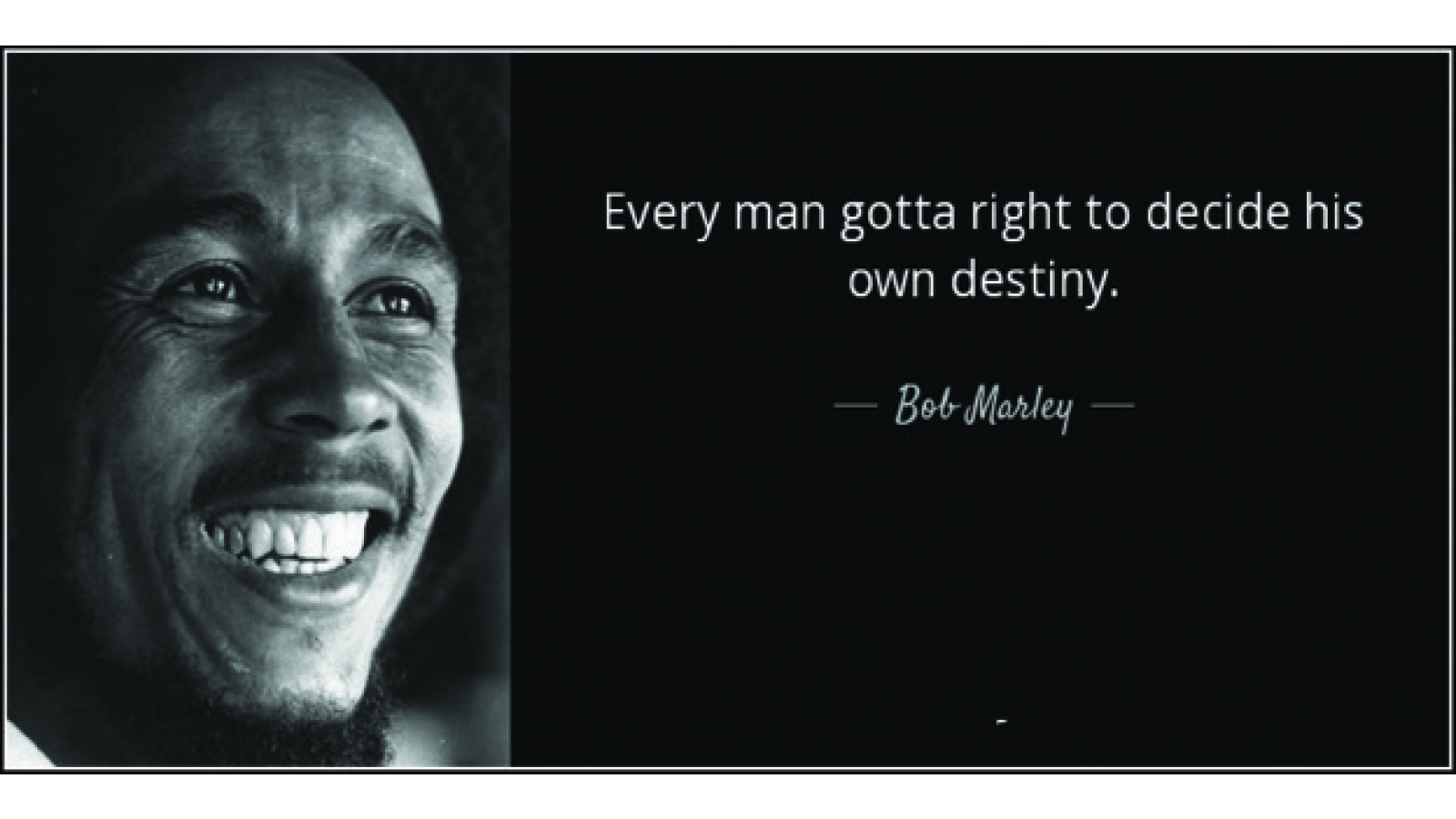
Victoria Ruzvidzo-Editor’s Brief
BOB Marley, full name Robert Nesta Marley, sang the song “Zimbabwe” before a packed Rufaro Stadium in Harare on April 18, 1980, as we celebrated our independence.
It was indeed before an ecstatic and euphoric crowd and his very opening line in the song says “Every man has a right to decide his own destiny.”
By extension, so should every country.
It is ironic that the country he debuted the song, United States, in the city of Boston, was to impose sanctions on us, 21 years later, in an illegal and gravely gratuitous manner.
The Zimbabwe Democracy and Economic Recovery Act (ZIDERA) is a US law passed in 2000. Senators Bill First (Tennessee) and Russ Feigngold (Wisconsin) introduced the bill on March 8 2001.
Senate passed the Bill on August 1, 2001 and House Representatives on December 4 of the same year.
Then President, George W Bush, signed it into law on December 21 still in the same year, spawning sustained challenges for our country, the effects of which are still evident to this day.
This necessitated the annual commemoration of the Sadc Anti-Sanctions Day, this year held two days ago on Saturday.
Because of ZIDERA lines of credit were cut off, particularly with regards the World Bank and International Monetary Fund, as was Foreign Direct Investment. Other harsh effects were to follow which formed the basis of the Sadc Anti-Sanctions Day.
The sanctions are illegal and unjustified on the basis that they violate Article 41 of the United Nations Charter which states that restrictions can only be decided by the UN Security Council.
Pursuant to this, in its resolution 39/210 of December 18 1984, the UN General Assembly called on developed countries to “refrain from threatening, or applying trade restrictions, blockades, embargoes and other economic sanctions incompatible with the provision of the Charter of the United Nations and violations of undertakings contracted multilaterally or bilaterally, against developing countries as a form of political and economic coercion which affects their economic, political and social development”.
Let us look at some of Zimbabwe’s challenges induced by these sanctions.
The Sadc permanent missions asserted, on October 19, 2020 that Zimbabwe had lost billions of dollars in the preceding 19 years between 2001 and 2020.
This includes lost bilateral support estimated at US$4,5 billion annually, US$12 billion in loans from IMF, World Bank and AfDB, commercial loans of US$18 billion and a GDP reduction of US$21 billion.
This severely compromised infrastructure development health, education and other social services.
Regional groupings such as Sadc were also hampered in their operations.
For example, Sadc’s macro-economic convergence targets of low inflation, sustainable budget deficits, minimal public debts, equitable current account balances and the formation of a regional monetary union and the movement toward attaining the region’s industrialisation agenda have all been hindered.
To be more specific, with lines of credit from the traditional sources, the International Financial Institutions (IFI) were dissipated, if not entirely obliterated.
The IFIs stopped support by instituting a number of suspensions on:
Balance of Payment support
Technical assistance
Voting and related rights by the IMF
Declaration of ineligibility to access Funding.
Consequently, the country’s external payment arrears increased.
Companies find accessing offshore funds extremely challenging. Where accessible, it was at highly punitive and unsustainable rates.
What is more, Zimbabwe’s importers are typically asked to pay cash up-front, negatively impacting on their cash flows.
A look at some sector specific adverse effects will drive the point home.
Zimbabwe and its financial sector are branded as high risk and, therefore, a compelling target for de-risking interventions.
With reference to investment and growth, clearly the negative perceptions that come with sanctions affect FDI.
Furthermore, there are instances of failure to receive proceeds from mineral exports. With regards to diamonds, mining companies have been facing challenges to effectively market and trade them at competitive prices, forcing them to sell the precious mineral at discounted prices.
It is against this background that the objectives of the Anti- Sanctions Day were enunciated by the Information, Publicity and Broadcasting Services Minister, Dr Jenfan Muswere, as to call for “the unconditional removal of all the unjustified and illegal sanction, to raise awareness of the negative impact of the illegal sanctions and celebrate the resilience of the people of Zimbabwe under the visionary leadership of His Excellency, President ED Mnangagwa, and reaffirm Zimbabwe’s appreciation for the regional and international solidarity in the fight against unilateral coercive measures imposed on the country”.
The message from the President was shared with Zimbabwean embassies abroad, which engaged host governments and international partners in solidarity efforts.
The SADC Anti- Sanctions Day was declared in August 2019 following the 39th SADC Heads of State and Government held in Dar es Salaam, Tanzania.
SADC leaders said sanctions are unjust, illegal and detrimental not only to Zimbabwe’s socio- economic development, but also regional economic integration and co-operation.
Member states have used October 25 to amplify calls for lifting of the illegal sanctions, citing progress Zimbabwe has made in governance, economic reforms and engagement with the international community.
In his keynote address on Anti-Sanctions Day on Saturday, the President asserted “The resolve, determination and hardwork of the Zimbabwean people continue to be instrumental in overcoming illegal sanctions imposed on Zimbabwe by the West while home-grown innovative development financing models are driving the nation forward.”
The President said while Zimbabwe welcomes steps taken by some Western countries to repeal the sanctions as constructive steps in the right direction, it reaffirms its position and calls for total and unconditional lifting of the unjustified unilateral sanctions.
President Mnangagwa also launched the country’s first official anti-sanctions book titled “Standing Against Illegal Sanctions: Resistance, Policy Innovations and Advocacy. The book, as captured by our sister publication,The Sunday Mail, yesterday, provides insightful perspectives from diverse sectors and scholars, reflecting on the experiences drawn since the illegal sanctions were imposed.
“As a people, we are more aware that the future of our country rests squarely in our hands. Our national development philosophy ‘Nyika inovakwa,inotongwa,inonamatigwa nevene vayo/llizwe lakhiwa, libuswe likhulekelwe ngabanikazi balo’ has become imprinted in our collective national psych. It emboldens us, serving as a source of inspiration and a rallying call to action”.
There are those who initially thought that the sanctions mantra was purely playing politics. They increasingly are revoking that stance in the face of incontestable evidence.
This includes some sections of the media and some opposition political parties. Economist Eddie Cross wrote an interesting piece in which he argues, very persuasively, that sanctions are without foundation and equally without substance or even sense.
He notes that the US is a global superpower with an expansive reach economically and politically. He is puzzled how a country that acquired its power through free trade policies, but now is going in the opposite direction, with 62 countries, which is 32 percent of all countries in the world operating under sanctions.
And astoundingly, Zimbabwe stands out as the only country whose sanctions were imposed by an Act of Congress, while the rest are administrative, imposed by presidential dictate.
On ZIDERA, he wrote “the US explicitly denies Zimbabwe access to multilateral lending . . .So to make a transfer in US dollars we have to use an intermediate bank that is not so restricted, and our banks have stated that this costs them up to US$1 billion a year.”
And he goes on to add; “The argument that these sanctions do not affect ordinary Zimbabweans is a complete fallacy. We cannot borrow money from the international system, every investor has to take such restrictions into account when they come here”.
Sanctions simply have to go and Zimbabwe is winning incremental support not just in the region, but continent-wide and as globally. A sanctions regime which brutally punishes a nation, discarding all conventional principles of sovereignty and independence has no place in this global village.
Bob Marley sang “Every man has a right to decide his destiny”. As a country, that’s all we ask and how simple can it get?
Zimbabwe’s economy has been resilient and its home-grown solutions are paying off.
This year, Gross Domestic Product growth of 6,6 percent is expected, the highest in the region.
Most sectors have surpassed growth targets, while thousands of new jobs are being created.
An upper middle income economy is within reach!
In God I Trust!
X handle: @VictoriaRuzvid2; Email: [email protected]; [email protected]; WhatsApp number: 0772 129 972.



 Bongani Ndlovu