Vusumuzi Dube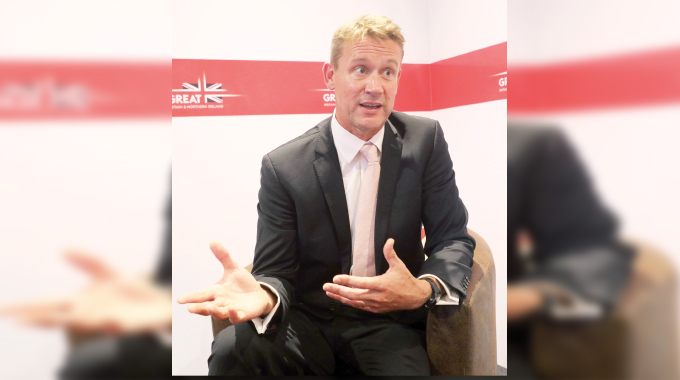
THE art of diplomacy, coupled with wisdom and political maturity has for many years served as an effective approach to resolving political conflicts, leading to lasting peaceful dispute resolution and restoration of damaged relations.
After many years of sour relations between Zimbabwe and the United Kingdom, occasioned by the political differences over the Land Reform Programme since the turn of the millennium, the two countries have once again found common ground.
Through peaceful negotiations and dialogue under President Mnangagwa’s administration, Zimbabwe is settling in well within the global community of nations, as a “friend to all and an enemy to none”.
The growing investment and trade interest in the country tells it all and is one of the milestone successes of the Second Republic’s economic diplomacy-focused engagement and re-engagement policy.
To reflect more on this, our Zimpapers’ senior journalist Prosper Ndlovu (PN) had an exclusive interview with the United Kingdom Ambassador to Zimbabwe, Mr Peter Vowles at his country’s exhibition stand at the Zimbabwe International Trade Fair (ZITF), which ended in Bulawayo yesterday.
Below, he shares his impressions about the ZITF, the state of bilateral trade and investor relations with Zimbabwe, as well as sanctions.PN: Thank you for the opportunity to engage with you, Ambassador Vowles. What are your impressions about the ZITF expo so far and what are your expectations as the UK Embassy?
Mr Vowles: Yes, we have come back to ZITF and we have increased and doubled the size of our exhibition stand. As you can see, it’s an open stand, it covers a range of issues that we do and this is an important opportunity to demonstrate the kind of trade opportunities and partnerships between the UK and Zimbabwe.
But, we also see trade as a path to connecting our people and our countries for mutual benefits and that’s why we have to demonstrate the current connections for the future, but also say, we desire a strong trade partnership between the UK and Zimbabwe.
We hope to make new connections with businesses and create new relations, new ideas and , so that we can grow economically.
PN: What investment opportunities are you seeing in Zimbabwe for the UK companies that are exhibiting here and how are you assisting them to tap into these opportunities?
Mr Vowles: There are two parts to this, one is what do UK companies have to offer for Zimbabwe? For instance, the UK is involved in a programme of building health facilities for Zimbabwe through the health infrastructure programme, which is a good example of our partnership.
We have got companies, particularly in the renewable sector where we are bringing in solar power solutions, which will attract many investors to come to Zimbabwe. We are bringing experts from the UK to teach and train the local people.
Solar power will be used in the commercial sector and the mining sectors for them to be independent. I was listening to one mining company, which is generating hydro-power using British generators and it was confessing that it’s clean and cheaper.
But equally, it’s also about helping Zimbabwean companies to see opportunity in the UK and that could be through exporting products to the UK like say blueberries or citrus and getting them to the UK market. What we have done in that space is that we have taken away trade barriers, so there are no duties or quotas. For us, it’s not just about UK companies setting shop in Zimbabwe but Zimbabwean companies tapping into business opportunities in the UK as well.
We are looking at what will make local people benefit from the UK the same way UK people yearn to benefit from Zimbabwe. This is through exporting products and getting recognition, no matter how small the company is.
PN: Thank you for these powerful insights. But, still on that, is there any leeway in your dialogue in terms of a skills exchange programme to realise some of the outcomes you are talking about to ensure the absorption of key technologies by local Zimbabweans?
Mr Vowles: Yes, a good example of that is that we work with some organisation, which helps local female Zimbabwean entrepreneurs to access the British market. We take a team of approximately five young entrepreneurs who will be individual sole traders to go to Birmingham for a week to showcase what they do and teach them about marketing and on how to get the paperwork for the marketing.
PN: How would you describe UK bilateral trade relations with Zimbabwe now and the potential this can achieve when the two countries work together as partners?
Mr Vowles: I have been here for eight months, but I think there is a huge potential in our trade relations. Our trade is growing massively as our exports and imports flow have grown by 76 percent over the last 12 months, that’s a huge increase and I want us as the embassy to be supportive of similar growth next year.
But, this is indeed a fraction of what it used to be, probably about half in real terms compared to what it was in the 1990s. We lost a lot of ground I guess in the 2000s and what we want to do is to maximise our presence here and rebuild our relationships to get it to where we were and beyond.
It’s good that now it’s positive, but there is a lot more to do and I think that there is so much trade we have done historically and it’s a big indication of potential in the future. We have a lot in common in Zimbabwe, we have a lot of Zimbabweans in the UK making contributions home and when the Diaspora come home they need to see opportunities here.
We can also talk to the Government as an embassy to keep growing these relations… and help address challenges through talks with the Government.
PN: Zimbabwe is one of the pioneers of the African Continental Free Trade Area (AfCTA). How do you view this and what role can the UK/Zimbabwe relations play in enhancing and growing intra-regional trade?
Mr Vowles: This is an important issue in regional trade. Regional integration is a key issue across many regions and Zimbabwe must access this big market of more than one billion people. This is why we participate in pouring resources into projects like enhancing efficiencies in African borders and we can make reference to the Beitbridge ZimBorders project. The UK actively supports regional integration, and we support the AfCFTA secretariat.
Our benefit from this is indirect, but the more Zimbabwe creates the vast trade gains from our relations, we are going to benefit in the future from these developments, which is why we are supporting the trade drive.
PN: Still at this level, what will be your comment on issues of competitiveness because sometimes trade barriers can retard efficiencies and how do you think Zimbabweans and other regional countries could handle these?
Mr Vowles: I’m not a trade expert and it’s not for me as a foreigner to determine what Zimbabwe should do with its trade barriers, but our experience is that you could work to improve through innovations. We (the UK) are no longer as big a manufacturing country as we used to be, but we are selling our innovations and the creative sector and so forth. We may need to fine-tune competitiveness on logistics and have direct flights.
PN: Zimbabwe under President Mnangagwa is pursuing economic diplomacy-focused engagement and re-engagement foreign policy. How do you see this assisting the country to restore relations with the UK and tapping into more investment and trade opportunities across the globe?
Mr Vowles: We are serious about wanting to have and deepen our relationship with Zimbabwe and it’s not a secret that we had a difficult relationship over history, but the past is the past and we are looking forward to having a strong and mature relationship with Zimbabwe.
So, this means everyone is trying to play a key part in that. If the Government of Zimbabwe wants to equally have that partnership, there is an opportunity to grow. Yes, there are things that we thought we would not agree on and that’s okay and the maturity of our relationship should allow us to talk about what we agree on and talk over what we don’t agree on and work together in resolving our issues.


 Online Reporter