admin
admin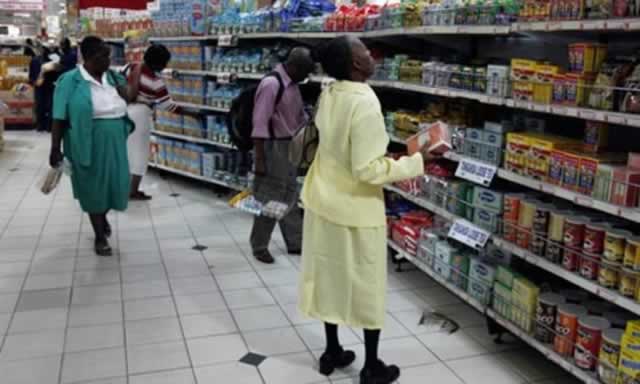
Vandudzai Zirebwa Buy Zimbabwe
The choice for Zimbabwe is a simple one. Either we allow retailers to continue with the present arrogance and allow our trade deficit to continue widening and ruin our country or we compel them to take the route of N Richards by investing in local companies.
Retailers and suppliers of various Zimbabwean products and services met over the past week under the Buy Zimbabwe conference with a view of creating a harmonious working relationship for the purposes of reviving the country’s economic growth.
While it is commendable that the conference was the second to be held over the past two years after a series of aborted attempts, the discourse suggested that the road is long and requires that stakeholders seek common ground.
While it notable that there is increased acceptance by leading retailers of the need to support the buy local initiative, we are equally concerned with recent statistics which show that over $400 million had been spent on imports by local supermarkets in a country reeling under a liquidity crunch.
Guest of honour at the conference, the Industry and Commerce Deputy Minister Chiratidzo Mabuwa aptly observed that local retailers have robbed Zimbabwe of thousands of jobs and contributed unwittingly to the worsening economic situation that has also begun to bite them through low sales and worsening smuggling of goods by jobless citizens who now turn to the informal market to make a living.
The deputy minister likened the situation to one where a person commits suicide and later on file for murder.
Clearly, such mindset suggests failure to link behaviour to consequences.
Worse still, it portrays a society that has become blind to assuming its rightful responsibilities in leaving a legacy for future generations.
The result can only be a terrible one for a country like ours, which ironically owes its basis to the sacrifice of young men and daughters who defied luxury to wage a liberation struggle whose fruits we enjoy today.
Is it not sad that this generation has chosen to forget the more than 50 000 gallant sons and daughters who died during the country’s quest for independence by failing to do a simple task of preserving the wealth of the nation?
The conference itself revealed a worrisome level of arrogance and ignorance by our top retailers, who generally felt most manufacturers and suppliers lack the basic understanding of what drives sales.
In response to questions on whether Zimbabwe must impose legislation on the amount of local goods that should occupy shelves in shops, retailers were unanimously against the idea, instead advising that consumers must be allowed to make the final decision on what they desire.
Most argued without fact that sales are driven essentially by consumer choice and that the current Zimbabwean consumer prefers imported products rather than locally produced goods and services.
One retailer even suggested that local companies must be happy over imports because such products were occupying the space which they are failing to fill.
Sadly, this argument does not seem to be backed by an empirical research on consumer behaviour which continues to reveal that consumers are not as sovereign as they are purported to be.
In South Africa, where we import over 50 percent of our products, the Proudly South African campaign has shown that 80 percent of consumers in that country actively seek out their insignia before making their purchase decisions.
Locally, N Richards, which has emerged among the few retailers to embark on a deliberate policy to support local companies, has emerged among the most profitable wholesalers in the country.
The wholesaler’s top 10 performing brands are those that are made in Zimbabwe. Their experience has debunked all notions that Zimbabweans do not like local products.
Surprisingly, almost all leading retailers do not have policies to guide their local procurement.
With the possible exception of N Richards, none has actively and demonstrably gone out of its way to create isles, where consumers not only identify local goods but ensure that these are visible.
The reluctance and indeed hostility against the idea of imposing a minimum local content threshold also goes against the regional grain where in South Africa, a 75 percent procurement accord was entered some two years back by the government, retailers and trade unions in that country.
What the accord meant is that South African retailers, who are taking over Zimbabwe earn credits for doing all they can to ensure that a minimum of 75 percent of goods are sourced from their country of origin.
Meanwhile, locally there continues to exist the mistaken fallacy that our consumers are the ones that determine the range of products to be stocked by supermarkets.
The onus is now on policymakers to make a decision that compels our retailers to work for the good of Zimbabwe.
Given that there is the Retailers Association, the best route would be for local supermarkets to quickly bring on board a voluntary policy framework that sets the minimum content threshold and work out a number of supplier development programmes.
Alternatively, we need a statutory instrument similar to the one that compels local broadcasters to play 75 local content.
There has been a positive response to this policy because it has unearthed a lot of unknown talents, who are now flying around the world exhibiting their skills.
The choice for Zimbabwe is a simple one. Either we allow retailers to continue with the present arrogance and allow our trade deficit to continue widening and ruin our country or we compel them to take the route of N Richards by investing in local companies.
Till we meet again, God bless and lets always remember Buy Zimbabwe is not an option but a necessity.
Feedback:[email protected], cell 00263773751878: www.buyzimbabwe.org.zw



 Online Reporter