Online Reporter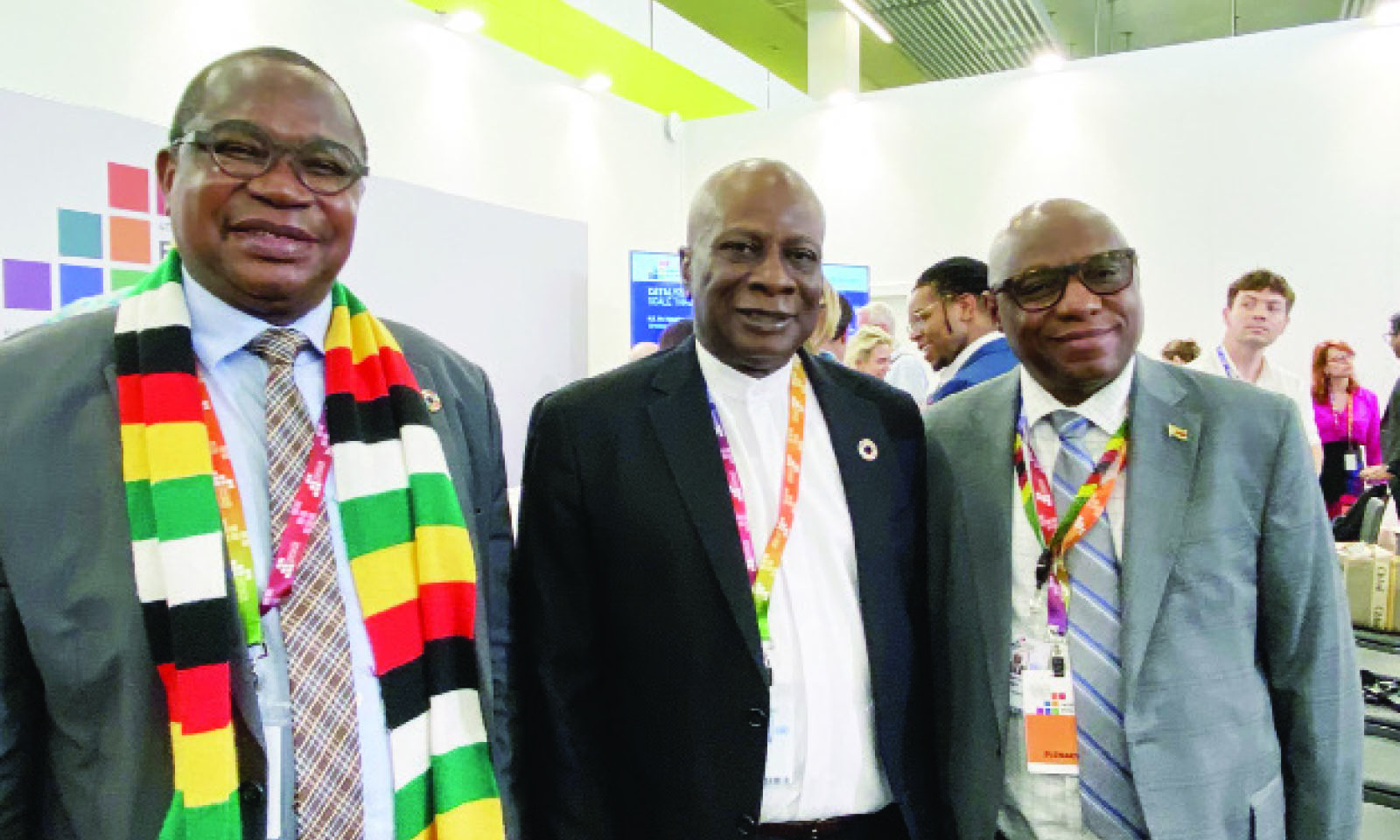
Edward Kallon
UN Resident and Humanitarian Coordinator in Zimbabwe
The Fourth International Conference on Finance for Development, held from June 30 to July 3, 2025 in Seville, Spain, was a pivotal moment in understanding how countries like Zimbabwe can navigate the increasingly complex landscape of financing their development priorities.
As I participated in this significant event, I was reminded of the human face behind every data point—a mother awaiting a hospital upgrade, a farmer desperately seeking for a climate smart agriculture methods for a transformative and adaptive food system, a young graduate eager for employment, a community seeking sustainable energy and digital banking solutions. During discussions, I had the privilege of witnessing and engaging in a vital shift: moving away from reliance on diminishing aid budgets toward sustainable, domestic-driven financing mechanisms that genuinely empower developing nations like Zimbabwe.
In recent years, the global landscape has changed dramatically. Official Development Assistance (ODA)—once a cornerstone of support for countries like Zimbabwe—has declined both in absolute value and as a share of national and international budgets. This trend risks leaving many vulnerable populations behind. Meanwhile, global debt levels among developing nations have surged, and access to affordable finance has become more elusive. Zimbabwe’s economic challenges—debt and arrears burden, currency instability, unilateral coercive measures, limited investor confidence, and recurrent climate shocks —are emblematic of these broader issues.
Africa is not poor given its vast natural endowment and Africa’s transformation can no longer rely on external finance. The report titled “Solving Paradoxes of Africa’s Development: Financing, Energy and Food Systems” published in 2023 by the UN Office of the Special Adviser on Africa provides insights into the financing opportunities within the continent. For instance, domestic capital stock across Africa is estimated at US$4,1 trillion; Pension assets are estimated at US$455billion; insurance pools are estimated at US$320 billion; US$250 billion is held in public development banks; US$150 billion in Sovereign Wealth Funds and US$2,5 trillion in commercial banking assets.
What need to change in Africa to leverage financing for Africa’s development aspirations is to stop illicit financial flows that is taking over US$89 billion from Africa annually; unlocking pension funds for development financing through credit guarantees and regulatory reform; strengthen development banks and re-orienting sovereign wealth funds towards national priorities; scaling up regional capital markets and use digital infrastructure to formalise savings and aggregate micro-capital; expand successful models like Nigeria’s InfraCredit, Namibia’s Regulation 29 and Kenya’s micro-pension schemes.
The transition from funding to financing requires this bold undertaking noting that Financing is not about more resources, but about leveraging what is available differently, strategically and with a lasting impact at a time when multilateralism is becoming more transaction, less generous and inward looking, less strategic and less rule based. It is indeed an era of trade over aid, opportunities over dependency and investment over assistance. The political consensus over saving lives and protection is undergoing reset and the drivers of humanitarian needs are deepening while ODA is declining.
At Seville, main and a series of side events explored how a paradigm shift is critical given the evolving global landscape. Development finance must transition from simple aid and concessional loans to broader, more sustainable sources—mobilising domestic resources, leveraging innovative financial instruments, and reforming international financial systems to better serve the needs of developing countries. For Zimbabwe, this means adopting a more strategic approach that includes strengthening fiscal policies, promoting private sector investments, and innovating through climate bonds and blended finance.
The outcome document of the Compromiso de Sevilla for Action underscores these vital priorities, advocating for enhanced domestic resource mobilization through fiscal reforms, combating illicit financial flows, and empowering national development banks to channel funds into sustainable projects. For Zimbabwe, this involves broadening the tax base, improving tax collection, and curbing corruption—actions that can generate the revenue needed to fund health, education, and infrastructure.
Furthermore, the document emphasizes the importance of responsible debt management and international tax cooperation—areas where Zimbabwe must advocate for a fairer global financial architecture, giving voice to small economies. Strengthening debt transparency and restructuring processes are crucial, especially as Zimbabwe navigates its debt and arrears resolution and seeks to restore macro-economic and fiscal stability.
A human-centred approach also highlights the necessity of investing in Zimbabwe’s people. This entails prioritising human capital development in which Zimbabwe has had a good history of investing in education, health, and skills training. This investment has to be deliberate and on a scale as an integral part of the Government’s education 5.0 policy in building resilience and fostering inclusive growth. Supporting small and medium enterprises, encouraging regional trade integration (like the African Continental Free Trade Area), and leveraging science, technology, and innovation are also key strategies for Zimbabwe’s transformation.
The Seville outcomes point towards a comprehensive policy framework; and I would highlight some of the key frameworks that are relevant to Zimbabwe:
Enhance Domestic Resource Mobilisation: Strengthen tax systems and fiscal governance to generate sustainable revenue. Implementing progressive taxation, reducing illicit financial flows, and expanding the formalisation of the informal economy through incentives can generate domestic funds vital for development. Reducing rent-seeking behaviour and improving fiscal governance will ensure tax revenues are effectively used for development. This also requires enhancing international cooperation and supporting civil society organisations’ efforts to expose tax evasion and corruption.
Leverage Financial Instruments: Developing and issuing climate-resilient bonds, blended finance arrangements, and catalytic funds can attract private investments. These instruments should align with national development priorities, especially in sectors like renewable energy, agriculture, and infrastructure.
Foster Public-Private Partnerships: Create an enabling environment for private sector investments in infrastructure, energy, and social services. Strategic partnerships with the private sector can provide both capital and expertise, particularly in infrastructure and technology. Governments should focus on regulatory reforms and risk mitigation to attract private investments. Improving the ease of doing business, protecting property rights, and reducing bureaucratic hurdles are essential for attracting both foreign and domestic private investments. Additionally, establishing a supportive environment for public-private partnerships (PPPs) will facilitate the financing of infrastructure and social services.
The Zimbabwe delegation at Seville, led by Finance, Economic Development, and Investment Promotion Minister Professor Mthuli Ncube, showcased how the country is addressing its energy deficit by establishing the Zimbabwe National Energy Fund.
This fund aims to mobilise over US$100 million in blended finance. The initiative, rooted in collaboration between the Zimbabwean government, the United Nations under the UN Joint SDGs Fund with a catalytic fund of US$10 million, and the private sector led by Old Mutual Group, is designed to leverage blended financing for renewable energy, fostering economic growth while aligning with Zimbabwe’s climate goals. This can be scaled up in food systems, education, health, digital economy, jobs, and social protection.
Build Institutional Capacity: Strengthening public finance management, financial institutions, regulatory frameworks, and policy implementation capacity enables more effective utilisation of resources. Enhancing governance also boosts investor confidence.
Adopting Integrated National Financing Framework (INFF): The INFF would play a crucial role in enhancing development financing in Zimbabwe by providing a cohesive and strategic approach to mobilise, align, and utilise financial resources efficiently and effectively. INFF enables Zimbabwe to identify its financial needs, optimise existing resources, and explore innovative financing solutions by bringing together public, private, domestic, and international funds. By strengthening institutional frameworks and promoting policy coherence, INFF empower Zimbabwe and developing countries to track progress, mitigate risks, and ensure that financing aligns closely with national priorities and developmental objectives.
Prioritise Human Capital: Investment in education, health, and social safety nets nurtures a resilient workforce capable of supporting structural transformation. These investments are critical for sustainable development and economic diversification. One such example is the ZISO (Zimbabwe Integrated Social Observatory), a national social registry system being developed by the Ministry of Public Service, Labour and Social Welfare with support from World Bank and the UN in Zimbabwe. The system will enable the government to better identify, coordinate, and deliver social services to those who need them most, ensuring a more efficient and equitable allocation of resources. Similarly, initiatives by the Ministry of Skills Audit and Development should be scaled up and rolled out nationally to expedite quality development of human capital critical for economic and social transformation.
Central to these efforts is the adoption and implementation of sustainable policies that promote social inclusion through a devolution governance approach and environmental sustainability, building resilient economies and communities.
Zimbabwe can also advocate at regional and global forums for reforms that increase representation and voice for developing countries in multilateral institutions. This includes advancing debt relief initiatives, improving concessional financing terms, and ensuring climate finance aligns with national needs.
As Zimbabwe charts its course through its new National Development Strategy Two (2026–2030), these global insights and commitments serve as a blueprint. By embracing innovative financing strategies and pushing for equitable reforms, Zimbabwe can unlock its potential — transforming economic challenges into opportunities and turning people’s hopes into tangible progress. True development is about people — empowering communities and individuals to build a resilient, inclusive future.
Together, through a reimagined and human-centred approach to financing, Zimbabwe can realize its national Vision 2030 of becoming an upper middle-income country, achieve the 2030 Agenda for Sustainable Development, and the AU Agenda 2063.
The UN system in Zimbabwe will continue to listen, advise and accompany Zimbabwe every step of the way as the country adapts to the emerging finance for development approach to sustainable development.