admin
admin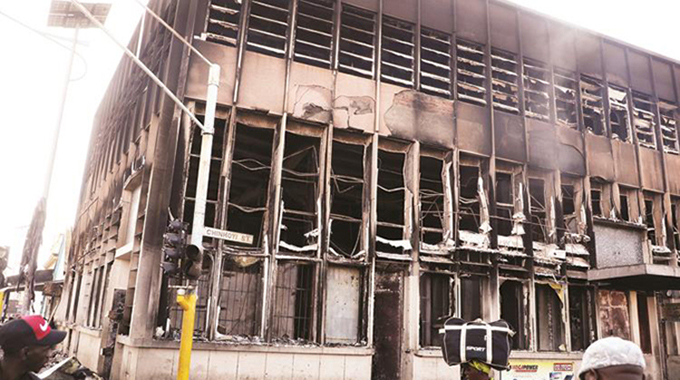
Pardon Gotora Urban Scape
There are so many public buildings dotted around the country. These public buildings range from one story to skyscrapers with 20 or more floors.
The population that flocks in and out of these buildings is astronomical, the reason being that, most of the buildings provide critical services to members of the public.
These services range from houses, workspaces, commercial centres, Government services, places of worship and entertainment, to mention but a few.
Imagine the number of people who visit the central registry offices in Harare for national identity cards, passports or birth certificate registration.
And those who visit the Zimbabwe Republic Police’s charge office at Harare Central Police Station.
What about those who visit the Robert Mugabe International Airport?
Moreover, the number of students at the Midlands State University or the parishioners at a church. The list is endless.
For the skyscrapers, people access them through staircases, elevators or escalators. Some of these elevators and/or escalators are obsolete and/or lack proper maintenance. There are isolated cases of people who died from failure of such equipment. Many a time people are locked inside faulty elevators. When you are lucky, there are hotline numbers displayed inside the elevator.
But the assumption is that you are locked inside while you have your cellphone on your person and you have the airtime to call the service provider for rescue, there are no toll free numbers from the majority of the information plates displayed inside the elevators.
The ventilation provided for inside the elevator is just enough to take you to the next floor.
When there are two or more people trapped in the elevator, it feels more uncomfortable as they compete for the little oxygen available.
As the time elapses, they end up inhaling carbon dioxide breadth out by the person next door.
The ceiling of the elevator is so close that the lighting system poses a great danger as well, the heat and the infrared emitted by the bulbs. You might be lucky if the fault is caused by power outages, hence the issue of lighting falls away.
But how do you open the doors, there are no instructions to that effect.
Neither are there any guidelines to show how to respond in case of emergency, serve for the hotline numbers.
The aviation authorities are quite particular about safety of their passengers.
Before the flight takes off, the air hosts/hostesses fully demonstrate the life-serving skills in case of mid-air emergencies, and there are pamphlets that show stage by stage, how to react to an emergency, in case you might have forgotten the demonstrations made before take-off.
But the tale is different from high-rise buildings or other public buildings.
There are no precautionary statements, neither are there indications of how to respond when one is trapped inside.
In all of these buildings, there is a lot of paper and plastic materials that are prone to fires.
The partitions are prefabrications, some of which are also susceptible to fires. There are a lot of fire extinguishers hanging on the walls of these public buildings.
Some of them are regularly serviced, while others are not. The assumption is that everyone knows how to use fire extinguisher canisters or horse reels.
The fire alarms that are supposed to send signal to fire brigade or occupants of the building are dysfunctional, if at all they are there.
Some fire or smoke sensors and panic buttons were last tested when the building was constructed decades ago.
The panic systems for those doors with access control were last tested when the access control system was installed.
The sprinkler system last worked when it was still in the shop, and with the erratic water supply, they are rendered useless by default.
Some buildings do not have sand buckets, or when they are there, the people around them assume that they are disused flower pots.
The signage to emergency exit points is pathetic to say the least. Some of them are even chained and locked. Growing up in my village in Uzumba, I used to enjoy reading the inscription inside the buses, “Emergency exit, kick out panel”, despite being ignorant to the meaning.
There have always been debates and counter accusations, where the fire fighting vehicles are blamed for sounding the siren without water to put out fire.
But is there any rationale to pre-load the vehicles with water waiting for fires which do not happen daily? What of corrosion of the tanks?
The ideal scenario is that all public buildings should have fire hydrants, but we have a situation where the fire fighters will have to look for nearby fire hydrants or streams to fetch water, while the fire is ravaging.
Most organisations are not conducting fire drills or mock fires in public buildings.
In the event that people feel that mock fire may cause pandemonium, how about public education on how to react to fires in buildings.
The assembly point is at times clearly marked, but there are people like me who cannot be faulted for assuming that it is meant for singing the national anthem.
But who polices the issue of public safety in public buildings? It is not ideal to wait for a catastrophe to react.
Feedback: [email protected]



 Online Reporter