admin
admin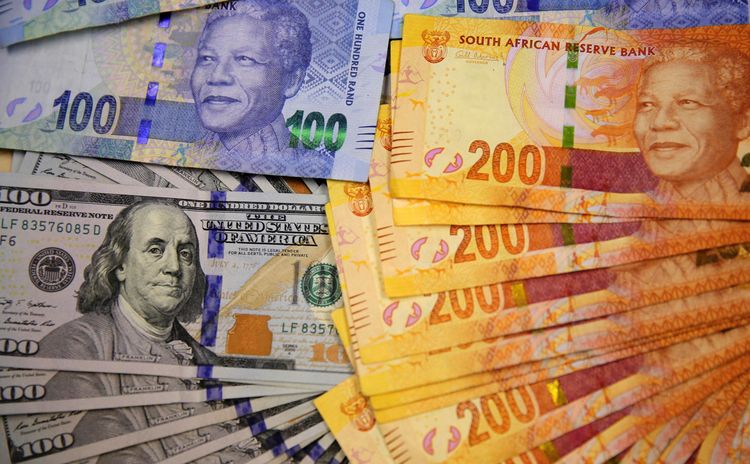
Persistence Gwanyanya
The IMF estimates that the US dollar is about 50 percent overvalued in Zimbabwe and this coupled with the fact that the country uses the same currency as the US, which is ranked number three on the Global Competitive Index, points to the increasing need to deflate the economy. Prior to dollarisation, Zimbabwe could to solve its competitiveness issues through currency devaluation and this option is no longer available in the post dollarisation era.
WHILST it is universally accepted that deflation is a sign of economic weakness, it is not without its short-run benefits.
Deflation, which is a scenario characterised by sustained decrease in the general price levels over a period of time, could be a result of internal adjustment necessary to restore or improve competitiveness in a country that has no autonomy over its exchange rate policy.
This is especially so in dollarised economies like Zimbabwe, which may be facing relatively higher prices as the US dollar appreciates against a number of currencies.
Appreciation of the US dollar has made Zimbabwe products more expensive over time, meaning that importers now require more of their currency to purchase the same amount of products in Zimbabwe, which justifies the downward correction in domestic prices, ceteris paribus (assuming that other things remain constant).
Deflation could also be a result of pass-through effects of lower prices now obtaining on imports from countries facing currency depreciation and thus could ease the pressure on cost of living while also facilitating recapitalisation by industry in Zimbabwe (imported deflation).
The new millennium was marked with record high inflation in Zimbabwe, which reached hyperinflation levels in March 2007.
The country’s hyperinflation scourge was solved overnight by dollarisation, which was introduced in August 2009.
However, the post-dollarisation era has witnessed a new phenomenon characterised by heightened deflation risk, underlining the theory that the solution of one crisis contains the seeds of another.
Rising deflation risk in Zimbabwe has largely been on account of weak demand, occasioned by subdued industrial activity and inability by Government to prop up demand through conventional monetary policy tools such as seigniorage (printing of money).
After a brief increase to peak of 4,91 percent in 2011, the country’s inflation has been on a downward trajectory since the beginning of 2012, sliding into deflation (negative inflation) in the first half of 2014.
The country, which closed year 2014 with negative inflation of 0,8 percent could be headed for deeper deflation as price continues to decline, with deflation of 2,47 percent recorded in 2015.
Deflation could be sustained by the softening global economic and financial conditions whose concomitant effects continue to be felt through easing global demand and declining global commodity prices.
In the short to medium term, evolution in international oil prices, US dollar and rand exchange rate, domestic and regional food production, as well as the level of aggregate demand and the continued need to enhance price competitiveness, will continue to underpin domestic inflation developments.
The US dollar, which is the country’s major currency in use, has been on the throes of a bull run since August 2011, with the concomitant effect of making Zimbabwe imports relatively cheaper.
It is estimated that the South African rand has depreciated more than 50 percent against the US dollar since January 2015, making South African imports significantly cheaper in US dollar terms.
The same goes for a number of emerging market currencies.
The benefits of a stronger currency would spill into lower prices of goods and services due to heavy reliance on imports. Imports make up more than two-thirds of GDP, with South Africa being the major source of these imports.
However, the business sector in Zimbabwe could be accused for not passing through the price effect of the US dollar appreciation to ordinary citizens, preferring to stash these benefits in their profit margins instead.
This largely reflects the hangover effects of hyperinflation, which continue to take toll on the quality of entrepreneurship in the country.
It could be the opportune time to reflect on the country’s pricing mechanisms with a view to addressing areas of inefficiencies and possible dead weight losses.
Changing the business culture of economic agents could be the starting point towards building a resurgent economy.
This is especially important to a country that recently emerged from what could be world’s greatest hyperinflation scourge ever since.
The Zimbabwe economy could be weighed down by the excess baggage of the hyperinflation mentality characterised with high propensity towards rent-seeking and activities bent on profiteering, making a killing out of nothing.
Most businesses in Zimbabwe are still operating in the haze of cost plus pricing models and labour could be accused of basing wage demands on need rather than productivity.
There is definitely need to move away from these pricing models.
Business should adopt productivity-based pricing rather than cost plus pricing whilst labour must be rewarded based on productivity — not need!
The excess baggage of corruption, corporate governance deficiency and bad corporate management could continue to weigh down the economy and should be trimmed sooner rather than later.
Government should intervene in solving these economic vices and avoid the tendency of avoiding taking bold measures necessary to arrest these economic adversaries.
The successful removal of extra costs from these economic evils, coupled with the efficacy of the transmission mechanism of cost benefits from favourable US dollar exchange rate should see Zimbabwe prices going down.
This way deflation could be beneficial to the ordinary Zimbabwean who is now going to pay less for the same amount of product, ceteris paribus.
However, changing the culture of doing business, like all other structural issues, is a difficult thing to achieve.
Given the increasing integration of the Zimbabwean economy into the South African economy, necessitated by the proximity and growing trade between the two countries, Zimbabwe would find itself also importing South Africa business culture over time.
This would be also be necessitated by increased consumer awareness coupled with with the aggression by South African suppliers in the wake of impending recession.
Increased competition for dwindling Zimbabwe market would leave little room for profiteering.
Local businesses now face direct competition from South African firms as a number of people would prefer to import directly from South Africa and as some South African businesses are now preferring to set shop in Zimbabwe so as to benefit from firming US dollar whilst others are preferring to sell their products at thin margins just to earn the strengthening US dollar.

As such, one would want to read deflation in Zimbabwe as an indication of the transition towards the more efficient and competitive economy at least in the short run.
Because South Africa is more a competitive economy than Zimbabwe — ranked number 56 compared to Zimbabwe which is ranked 124 out of 185 countries — Zimbabwe could be importing some cost efficiencies from South Africa.
Also, because the US dollar is believed to be overvalued in Zimbabwe, there is need to deflate the economy so as to restore or improve competitiveness.
The IMF estimates that the US dollar is about 50 percent overvalued in Zimbabwe and this coupled with the fact that the country uses the same currency as the US, which is ranked number three on the Global Competitive Index, points to the increasing need to deflate the economy.
Prior to dollarisation, Zimbabwe could to solve its competitiveness issues through currency devaluation and this option is no longer available in the post dollarisation era.
The choice is stark between internal austerity (European-style) and internal devaluation (price deflation).
Internal austerity and price deflation are consistent with the need to rebalance the economy towards more production and exports, through reduction of consumption by both Government and the private sector.
Because Government is an important player in the economic architecture of Zimbabwe, it has to play ball in the economic rebalancing.
Providers of public utilities should be more productive and efficient as the country can no longer afford to carry the excess baggage of their inefficiencies.
Bizarrely, Zesa and a number of town councils are angling to increase the price of electricity and water.
There is surely need to transform these institutions and in some cases there could be need for a complete overhaul of the same.
The same extends to central Government: The country can no longer afford to carry ghost workers and redundant and inefficient officers.
There is need for more efficient provision of public and social goods as any inefficiencies will reflect in the country’s general price level.
In Zimbabwe, Government still plays a key role in the general price out turn across a number of sectors.
A look at the pricing matrix for fuel prices reveals that despite the sharp fall in the international price of crude oil, the pump price of fuel has remained high compared to the region, largely weighed by Government levy.
Whilst it is acknowledged that Government has limited financial resources at the moment and thus need to widen its sources of revenues, it is also acknowledged that the thrust should not be on increasing taxes and levies but widening the tax base.
Government expenditure is currently skewed towards consumption and it would make sense if the fuel levy is reduced with a view to reducing the pump price of fuel to the benefit of the wider economy and importantly the industry.
My recommendation could be viewed as seeking to substitute increased production (through low fuel prices to industry) for low Government consumption on mainly current expenditures, which will see further decrease in prices to the benefit of the whole country.
In view of the above, the notion by IMF, the World Bank, some itinerant academics and policymakers alike seeking to suggest that deflation could be Zimbabwe’s major economic challenge remain debatable!!
Persistence Gwanyanya is an economist and banker. He is also a member of the Zimbabwe Economics Society and he writes in his personal capacity. Feedback [email protected] or WhatsApp +263 773 030 691



 Online Reporter