Online Reporter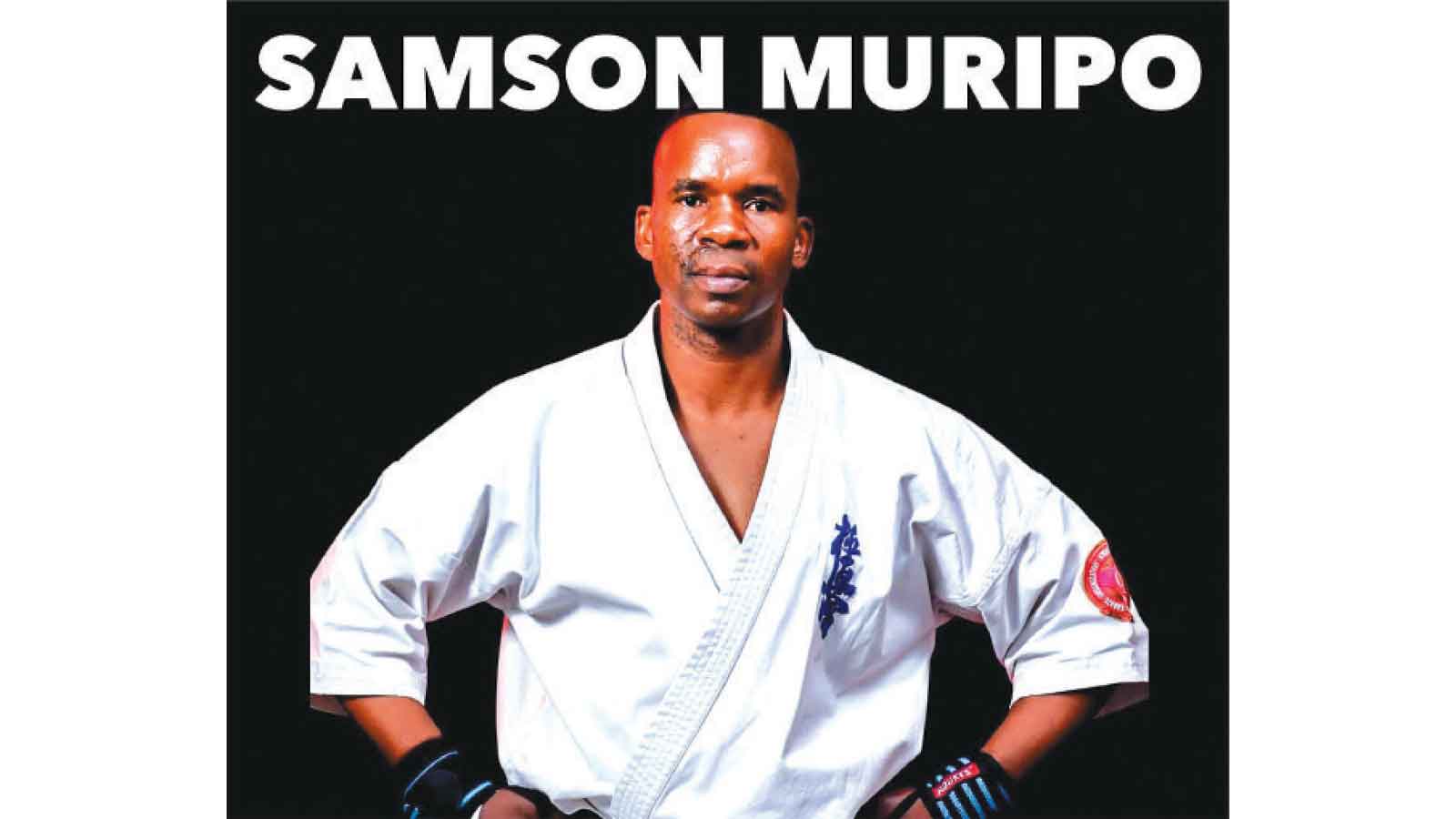
Ellina Mhlanga-Zimpapers Sports Hub
NEARLY three years after calling it time on active competition, renowned karateka Samson Muripo still spends most of his time in the dojo at Raylton Sports Club.
This time he is not preparing for any major competitions, but focusing on creating an enabling environment for the development of the next generation of karatekas.
The desire is to leave a legacy that will impact generations to come in the Zimbabwean karate fraternity. This is particularly so in Kyokushin.
“I competed locally, then regionally and eventually represented Zimbabwe,” said Muripo.
“Every bruise taught me respect, perseverance and the meaning of Osu no Seishin (the Spirit of Osu) — a key concept in the Kyokushin philosophy that reflects perseverance, patience and the never-give-up spirit.”
Those lessons are the ones he would like to pass on to the next generation.
From a humble beginning in the early 1990s at Ndima Government Secondary School at the Kopa Business Centre in Rusitu Valley, Chimanimani, Muripo went on to make a name for himself, winning the world title twice and several international events. His big win came in 2009, claiming his first world title. He won the middleweight category Kyokushin union World Cup in Japan to become the first African to achieve such a feat.
In 2017, he consolidated his status as one of the best karatekas to emerge from Zimbabwe when he successfully went through a technical promotion to fifth dan in India to become a Shihan.
Two years later, he got his second world title when he was crowned champion at the sixth Kyokushin Karate World Cup in Moscow, Russia. In late 2023, Muripo earned his sixth dan at an international technical promotion seminar in Shizuoka, Japan.
On his way to the promotion, he had his last fight at the 2nd So-Kyokushin World Karate tournament, which preceded the grading.
He then retired from competing.
But for all his achievements and the fame that comes with it, the most important of it all is not the trophies and medals but people.
“Medals fade, but people remain.
“My greatest achievement is not on a podium, but seeing students who came to me with no direction now become instructors, parents and responsible leaders in society,” said Muripo.
“To be awarded the title Shihan by World So-Kyokushin headquarters in Japan means I now carry the responsibility to teach the next generation the correct way.”
That trust is bigger than any gold medal.
“It has been challenging but very fulfilling,” said Muripo, who is the Zimbabwe So-Kyokushin Karate-Do Organisation branch chief.
“As a competitor you worry about yourself. As a developer you worry about 1 000 students, for instance.
“The journey has taught me patience. You plant a seed today and you may only see the fruit five years later.
“But when I see our dojos growing in provinces and parents bringing their children, I know we are on the right path.”
For Muripo, it is not just about identifying talent and growing karate, but developing students who can positively impact their communities, especially in a world where social ills such as drug and substance abuse are affecting many people.
The development initiatives on Zimbabwe So-Kyokushin Karate-Do Organisation’s radar include the Schools Karate League, dojo development and Bushido for Women.
“We go into primary and secondary schools to identify talent early and teach discipline,” said Muripo.
“Bushido for Women is a programme to empower girls and women through karate, self-defence and leadership.
“We also run quarterly training camps and grading to monitor progress. We have made solid progress.
“Membership has doubled . . . Our referees are now rated according to international standards after the recent seminars.
“Most importantly, parents and schools now see karate as a tool for character, not violence. That is the biggest progress.”
In the last year, some of the students such as Tatenda Kambarami, Tsitsi Muranda and Florry Chandavengerwa went on to impress in major competitions.
Kambarami won the Women’s Open division last year at the 1st Kyokushin Kenbukaikan World Championship in Zambia.
In May this year, Muranda was crowned champion in the Women Under-55kg at the African Full Contact Karate Organisation (AFCKO) annual tournament in South Africa.
Chandavengerwa reached the final in the Women Open category.
“Tatenda, Tsitsi and Florry all came through our respective dojos,” said Muripo. “Tatenda’s world title in Zambia last year made all of us proud.
“They are proof that when you combine talent with discipline and proper coaching, Zimbabweans can compete with anyone.
“They are now also helping to coach younger girls. That is the cycle we want.”
And seeing the new crop of fighters finding their way to the top is assurance they are creating a sustainable system.
“It means everything,” said Muripo. “When I put on the Zimbabwe flag after I had given my all in preparations, I did it for pride.
“Now when I see a 16-year-old girl from Chitungwiza or Mbare and the like doing it, I know the legacy is safe.
“My job now is to make sure the door I walked through stays open and even wider for them. That is the true spirit of OSU — passing the torch.”
The former world champion would like to bring the glory days back for Kyokushin.
Recently, the organisation staged a selection tournament open to all full contact styles at the Chitungwiza Aquatic Complex.
It was preceded by an athletes’ technical seminar and referees and judges’ seminar facilitated by Japanese instructors Naoto Kusakabe and Marty Yamagata.
“Those glory days are coming back and shall remain on the positive trajectory, funds permitting,” said Muripo. “The current crop is hungry for victory.
“Give us two to three years and you will see Zimbabwe So-Kyokushin back on top in Africa and beyond.”
Kusakabe and Yamagata joined the Zimbabwean branch chief to lead the technical promotion that saw Admire Chingozhoro earning his fifth dan, alongside Tangayi Mhlanga and Shadreck Chigombe, who got their fourth and third dan, respectively.
In an interview just before his grading, Chingozhoro, a seasoned fighter who has represented the country on the international stage, credited part of his journey to Muripo.
“At some point I wanted to drop out of the sport, then Shihan Muripo persuaded me to stay and for me to travel for international tournaments in Japan, Shihan Muripo is the one who was helping me,” he said.
“So, I am grateful to him because he is the one who made me stay in the sport.”