Chronicle Editor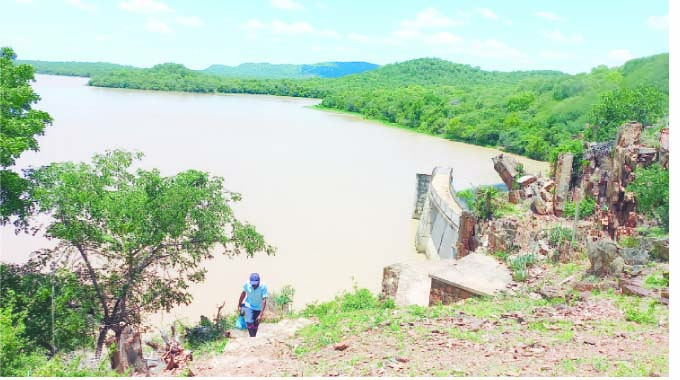
Sukulwenkosi Dube-Matutu, Matabeleland South Bureau Chief
AN additional 200 hectares will be put under irrigation using Tuli Makwe Dam water as the Second Republic moves to fully utilise water bodies that have been lying idle across the country to ensure food and nutrition security.
Tuli Makwe Dam has the capacity to irrigate 400 hectares of land. The dam which is located in Ward 8 used to irrigate 200 hectares of land at Makwe Irrigation Scheme before the scheme collapsed in 2017 due to power challenges.
Makwe Irrigation Scheme is currently under rehabilitation under the Small Holder Irrigation Revitalisation Programme (SIRP). The scheme is set to be operational by year end. This will see Tuli Makwe Dam being utilised once again.
Speaking recently during a visit to the dam Deputy Minister of Lands, Agriculture, Fisheries, Water, and Rural Development Cde Davis Marapira said the area under irrigation will be expanded to 400 hectares to ensure that Tuli Makwe Dam is fully utilised.
“Tuli Makwe Dam has a capacity to irrigate 400 hectares but for now it will irrigate 200 hectares until expansion has been sorted out. We have seen Government under Second Republic moving in to ensure that water bodies are fully utilised as we have water bodies that have been lying idle for many years.
Some water bodies haven’t been fully utilised and Government wants to change that. For example, Tuli Makwe Dam has a potential to irrigate 400 hectares but in the past it was irrigating 200 hectares. It can also support a number of livelihood projects which can boost the economy of the local community,” he said.
“We have changed the policy where we are saying that as we construct the dams we also construct the irrigation schemes. This means provision of water for irrigation purposes and also domestic and other purposes. We have had situations in the past where we had dams like Tokwe Mukosi and Mayuchi Dam where it took long for the water to be utilised and these are the anomalies which the Second Republic is addressing.”
He said there are more than 15 irrigation schemes across the country which are set to be commissioned.
Cde Marapira said in Gwanda, Mtshabezi Dam which had been lying idle for so many years was now irrigating Mtshabezi Irrigation Scheme.
He urged farmers from Makwe area to utilise Tuli Makwe Dam to start other livelihood projects such as fishery.
“The idea of the President is to make sure that by 2030 we have a middle income status. This has already started as Government is providing infrastructure which will be used to change people’s lives such as dams and irrigation schemes.
The President is saying no place should be left behind and as communities make sure you come on board. Already we have two dams that are being constructed in Matabeleland Region which are the Gwayi Shangani Dam and the Tuli Manyange Dam. These dams will go a long way improving livelihoods and alleviating poverty,” he said.
Cde Marapira said while Government had put in place measures to promote fish farming, the farmers also had to come up with initiatives.
The country has over 10 700 water bodies, of which most were being underutilised.
In order to promote utilisation of water bodies, The Ministry of Lands, Agriculture, Fisheries, Water and Rural Development, in collaboration with the Zimbabwe National Water Authority (Zinwa) has identified 1 200 dams and other water bodies across the country with each dam set to be fed with 50 000 fingerlings by 2025, as Government moves towards a US$8,2 billion agricultural industry economy, contributing 20 percent of GDP by 2025.
The programme will also see the country increase its annual fish production from 20 000 tonnes to 60 000 tonnes.
Government has also increased the number of dams in Matabeleland under the Presidential Fisheries Programme to 122 from an initial 12 with US$15 million set aside as the Second Republic seeks to achieve a 60 million fingerlings marks by 2025.
Under the scheme, 50 000 farmers across the country will benefit.
Before the programme, Matabeleland region had just over 20 fish farmers, but the number has since increase to 130 with more expected to come onboard as interest in fish farming continues to increase due to the Government’s move to promote the industry.
Farmers in have been urged to utilise dams in their areas to venture into smart commercial fish farming projects in line with Government’s rural industrialisation drive.
Under smart fish farming the farmers use cages to enclose their fish within a certain portion of a dam. The farmers feed their fish and keep record of their fish. – @DubeMatutu.



 Online Reporter