

 Chronicle Editor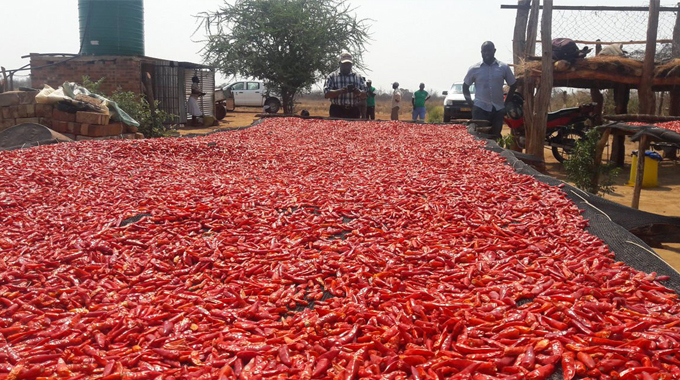
Business Reporter
THE growing global demand for spices, coupled with dwindling supply from traditional source markets, presents a good opportunity for local producers to increase exports of chilli pepper into the world market, ZimTrade has said.
Citing the recent heatwaves in some of the leading global chilli suppliers as having wreaked havoc on chilli pepper crops, resulting in decreased harvest yields, the country’s trade promotion agency has rallied local producers to stand up for the challenge.
With some areas in Asia receiving heavy rains, ZimTrade says the supply chain is projected to be further constrained and this will drive prices up.
It further noted that the present partial lockdown in China has put even more strain on the chilli pepper business, as it limits imports.
Chilli pepper prices in China are, therefore, predicted to rise from May 2022 going forward, it said in a latest update.
“Although Zimbabwe currently exports bulk of its chilli to regional markets such as South Africa, there is room for the country to earn more by targeting China and other leading importers,” said ZimTrade.

“Given the suitable and large land area available for production, Zimbabwean farmers have capacity to produce enough supplies that will increase the country’s share of the global market.
“Local farmers in Zimbabwe could leverage on the vast land resources and good soils to sustainably increase their production capacities.”
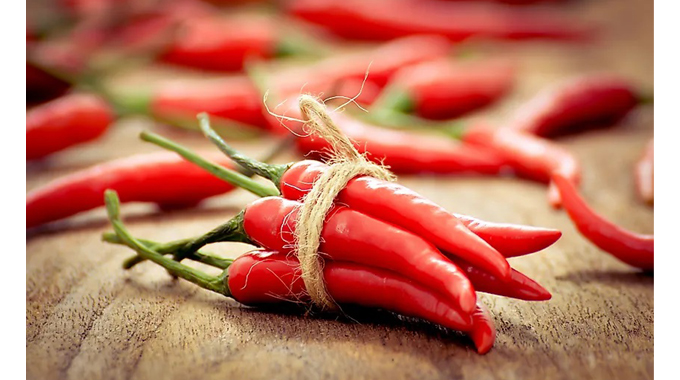
According to the agency, the most popular chilli pepper is bird’s eye, which is not difficult to grow as it can be produced in open fields and green houses, under shade nets, pot, containers and even in back yards. In addition, ZimTrade said fresh chillies that are organically grown in Zimbabwe can be competitive on the export market as more people are increasingly paying attention to healthy eating.
“Zimbabwean farmers can improve their competitiveness and achieve the required volumes by developing effective produce consolidation models,” said the agency.
“This allows small-holder farmers whose capacity is small to combine produce and contribute enough export figures.”
Already, lower yields have driven up prices by more than 80 percent in first four months of the year to a record high, and prices are expected to remain high throughout the year.
According to Market Access, the price of chilli in the global market between February and May 2022 has reached its highest of US$18,17/kg with the average price being US$6,58/kg.
The Netherlands is paying the highest price for chilli at US$18,17/kg while South Africa has the lowest price at US$0,68/kg.
In China, the wholesale price of chilli pepper increased by 304,47 percent year on year. In second week of May 2022, the price hit US$6,30/kg, compared to US$1,56/kg the previous year.
The highest value recorded for chilli pepper in China topped US$10,15/kg in the second week of April 2022, coinciding with Shanghai’s partial shutdown.
China is one of the world’s largest importers of dried pepper, with a total value of US$ 508 million in 2021. The major supplier to that market is India with exports worth US$440 million, according to Trade Map. Chili pepper consumption has increased in China due to the rapid increase of hot pot meals.


 Online Reporter