admin
admin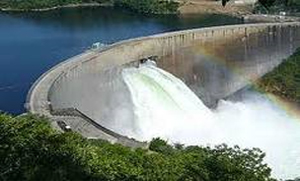
Sifelani Tsiko
Agriculture Editor
Water at Lake Kariba, the country’s largest water reservoir has risen above its minimum operating level of 475,50 metres, boosting hopes for steady power generation for Zimbabwe and Zambia.
A latest update from the Zambezi River Authority showed that its water elevation as at March 2, 2021 had risen to 480,76 metres.
“From the last update made on January 19, 2021, the lake levels have increased by a total of 3,96 metres from the lake level of 476,80m recorded on January 19 to a lake level of 480,76m recorded on March 2, 2021,” the Authority said.
“This has placed the lake level at 5,26m above the minimum operating level (MOL) of 475.50m. This lake level recorded on March2, 2021 translates into usable storage or live storage of 24,31 billion cubic metres (BCM). Last year on the same date, the Lake level was lower at 477.17m with 7.48BCM of usable water or 11,55 percent live storage.”
Lake Kariba, the world’s largest man-made water reservoir, is a major source of water for power generation, domestic consumption, fisheries and wildlife for Zimbabwe and Zambia.
Above normal rains in the 2020/2021 rainfall season have boosted water levels, helping the Authority to maintain the 30 billion cubic metres of water allocated for power generation operations at Kariba for the year 2021.
“The authority continues to monitor the evolving hydrological situation under the Kariba catchment. This is being undertaken, taking cognisance of the increased rainfall activity, and resulting water levels at Kariba dam, with the view of making consideration regarding the possibility of revising the water allocation at Kariba dam,” it said in the latest update.
Water levels on Lake Kariba fell sharply after southern Africa endured its worst drought in nearly four decades in the previous season.
The minimum operating level (MOL) refers to the lowest level at which the lake is not able to provide water (live storage) for power generation.
“Where the lake level reaches the MOL, power generation operations would cease due to the exhaustion of usable water (live storage),” said Zambezi River Authority chief executive Eng Munyaradzi Munodawafa.
“The current lake level height of 5,26 metres is measured from MOL and represents the amount of water that is currently available for allocation to the utilities for power generation (live storage). The live storage has continued to increase on a daily basis owing to the increased rainfall activity in the Kariba catchment and associated higher inflows into the Lake.”
When asked whether the current lake level was now above its full capacity, Eng Munodawafa said: “The lake is not yet at its full capacity. When at full capacity, the lake level is 13m above the MOL with live storage at 100 percent with 65 billion cubic metres of usable water. The current lake level and usable storage is lower than this (13m) and therefore the lake is neither at full capacity nor above it.”
Eng Munodawafa said there were no plans to open floodgates of the Kariba Dam reservoir as of now despite the rising lake water level.
“The lake current level recorded on 2 March 2021 of 480,76m does not warrant any need for spilling. As is the case for dams with the design such as that of Kariba dam, there is a rule curve under the standing operating Procedures (SOP) for Kariba dam that governs Kariba reservoir operations and guides as to when spilling would be required.
“The current lake level is way below the rule curve limits of maximum storage for this time of the year and therefore, this implies that there is room to store incoming floods in the reservoir. Therefore, as the lake level recorded on 2nd March 2021 falls way below the Rule Curve limit, the Authority will not undertake any spilling soon,” said Eng Munodawafa .
The highest increase ever recorded in usable storage was during the 2009/2010 rainfall season when the lake level increased from a level of 484m recorded in January 2009 to a level of 487,50m recorded in May 2009.
This placed the lake level 11m above the MOL, with usable storage having increased from 40BCM in January 2009 to 59 BCM during the same period.
The lake was in May 2009 just 1 metre below full capacity with 91 percent live storage.
Straddling the border of Zambia and Zimbabwe, Lake Kariba is 223km long and stretches 40km across at its widest point.
The authority records daily water levels of the Zambezi River at its 14 stations located across the Kariba Catchment area.
The information helps to plan reservoir operations at Kariba dam.
Zambezi River flows at Chavuma station which have been increasing over the past months, have now started receding due to reduced rainfall activity in the catchment area.
In the period under review the river recorded 2 292m3/s flows as at March 2, almost half the flows recorded on the same date last year which were higher at 4 691m3/s.
“This current reduction in flows is in tune with past trends and also a normal hydrological cycle for the station whereby two peaks are recorded twice in any given season: the first in early March and the second one in April. Accordingly, the second peak is expected in April as the rainfall season progresses,” the Zambezi River Authority said.
Victoria Falls, one of southern Africa’s biggest tourist attractions, has hit its highest peak in years in recent months following heavy rains that have pounded major catchment areas of the Zambezi River in parts of the SADC region.
The Authority said the water levels have increased significantly compared to the same period last year.
“The Zambezi River flows at Victoria Falls recorded more than double increase on March 2, 2021, in comparison to that of the same date last year, therefore, closing the period under review at 2 910 m3/s on March 2 while 969 m3/s was recorded on the same date in 2020,” the Authority said.
“As per past trends in flows at this station, increase in flows continue to be recorded. The flows are also projected to reach another peak towards the end of April 2021.”
The Southern African Development Community (SADC) region recorded the lowest rainfall in nearly four decades in the 2018-2019 cropping season, causing severe food and water shortages across the region.
It also led to a massive cut in power generation capacity at Lake Kariba, causing power outages that could go for more than 18 hours in some parts of the country.


 Online Reporter