

 admin
admin— three-times winners Germany and 1988 champions the Netherlands — has been arguably the most intense rivalry of all, going back to their meeting in the 1974 World Cup soccer final.
Then, the Germans won on home soil but on the pitch, the bruised pride of conflicts past can be assuaged.
Prussian military strategist Carl von Clausewitz insisted in his day that “war is merely the continuation of policy by other means”, whereas international sport, in the well-worn words of British writer George Orwell, is “war minus the shooting”.
Less discussed today is the “1984” and “Animal Farm” author’s parallel assertion in his 1945 article “The Sporting Spirit”, published in the left-wing magazine Tribune, that “serious sport has nothing to do with fair play. It is bound up with hatred, jealousy, boastfulness, disregard of all rules and sadistic pleasure in witnessing violence.”
Even the toughest tacklers in the brawniest team might not necessarily go that far but where the Germans and the Dutch are concerned, their meetings could hardly be confused with a reunion of old friends.
Germany defender Mats Hummels says the Dutch will be fighting for their lives to qualify from the “Group of Death,” not just because they are taking on an old enemy and neighbour buoyed by a win over Portugal but after their shock loss to Denmark.
“There is a huge history and a healthy rivalry between the two nations, so either team will have to give 100 percent, they have to win and we want to secure our passage to the quarter-finals,” he told reporters.
In footballing terms there is little to choose between two sides, who between them won 19 out of 20 qualifiers, with Holland’s only loss coming to Sweden after they had already secured their passage to Poland and Ukraine.
But this is a fixture which transcends football — especially for the Dutch, who were occupied by Nazi German forces for five years during World War II.
Two games in particular demonstrated how, sometimes, the past is not a foreign country but cannot entirely be buried even by the passage of time.
After their 1974 World Cup final loss, the Dutch, who had been expected to win even though the Germans were the competition hosts, felt desolate, midfielder Wim van Hanegem in particular.
“They (the Nazis) murdered my father, sister and two brothers. I am full of angst. I hate them,” he said afterwards about losing his relatives during the war. In later years, van Hanegem would modify those sentiments but the hatred was still not far below the surface 14 years later when the Dutch, en route to winning their only continental title to date, knocked tournament hosts the Germans out of Euro 88. — AFP.


Online Reporter
- Herald
- October 4, 2026
- 11 views
Mapfumo at Chivayo residence
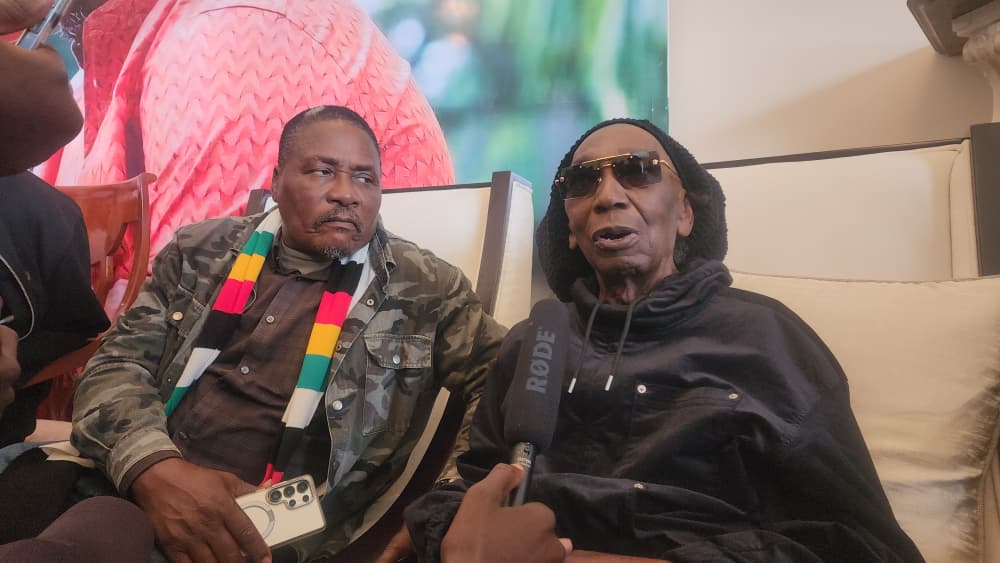
Arron Nyamayaro CHIMURENGA music guru, Thomas Mapfumo, has arrived at the Chivayo family home to pay his condolences. He was accompanied by one of the music promoters, Josh Hozheri. Other…
