Online Reporter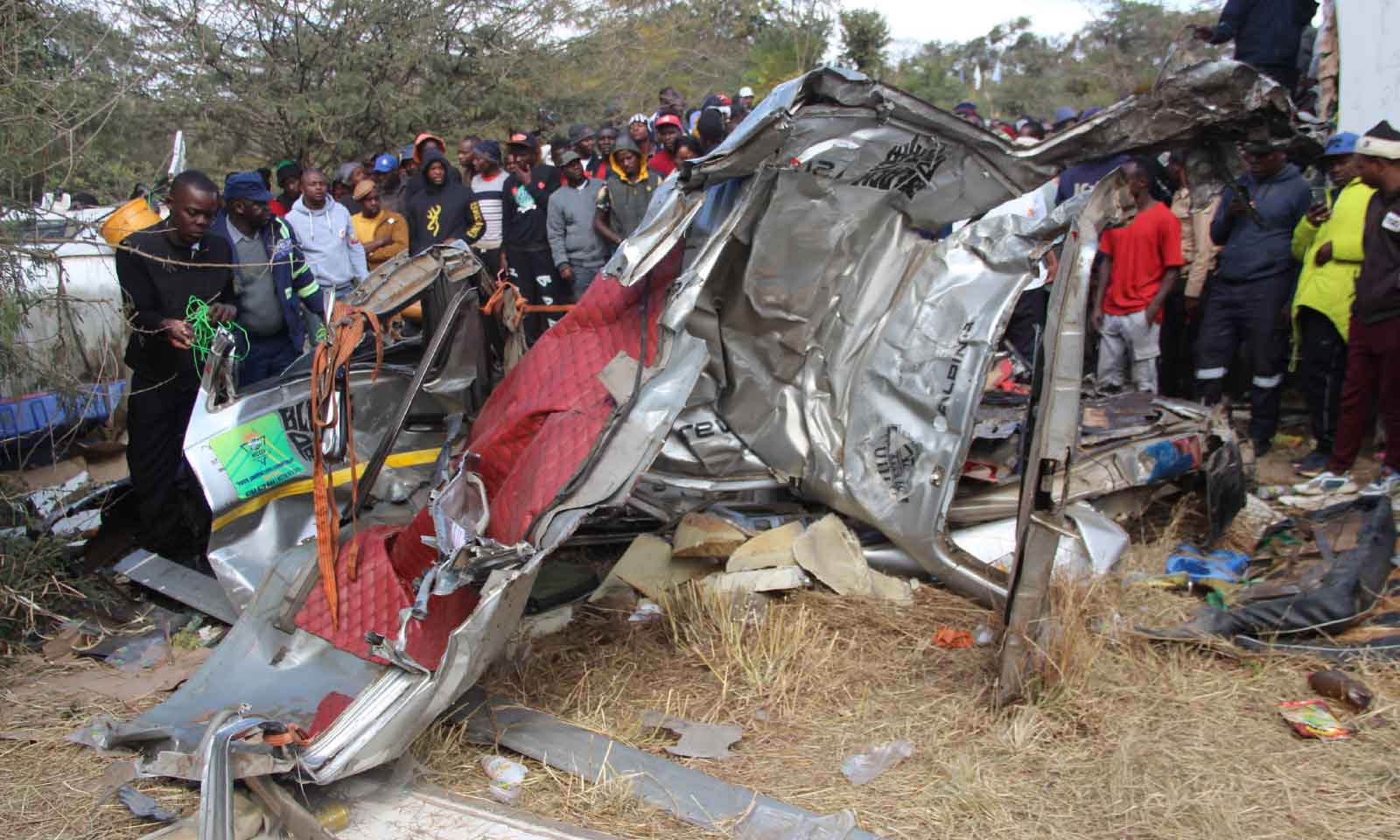
Gibson Mhaka
Zimpapers Politics Hub
ZIMBABWE is currently grappling with a devastating and predictable public health disaster on its roads.
The statistics are as chilling as they are consistent, a road crash occurs roughly every 15 minutes, resulting in over 35 000 crashes annually and claiming more than 1500 lives.
For those who survive the initial impact, the nightmare is often just beginning.
For decades, the aftermath of a road traffic accident in Zimbabwe has been defined by a desperate scramble for funds.
Victims are often left languishing in hospital corridors while relatives haggle with insurance companies or bus operators over liability.
In many cases, the “Golden Hour”—that critical 60-minute window where medical intervention can mean the difference between life and death, is lost to administrative wrangling and financial uncertainty.
It is against this backdrop of systemic failure and human suffering that the Government’s move this week to embark on national public consultations on the proposed Road Accident Fund (RAF) Bill emerges not just as a policy shift, but as a moral imperative.
Ending the Cycle of Family Financial Ruin
Currently, most accident victims in the country are left suffering in silence.
The media is replete with stories of seriously injured survivors suing bus operators or spending years in court seeking compensation that rarely comes in time to fund their recovery.
Consequently, families of accident victims find themselves shouldering the financial burden alone.
Savings are drained, assets are sold, and relatives are left with the lifelong pain of looking after survivors who have suffered life-altering injuries.
By establishing a dedicated “purse” to guarantee immediate medical care without argument or wrangling, the RAF Bill seeks to shift this burden from the individual to a collective national safety net.
The “Golden Hour” and Global Best Practice
The science of trauma care supports the urgency of this legislation. Dr Clifford Gobo, a certified road safety practitioner with research interests in transport infrastructure finance and economics, emphasises that the current system’s reliance on upfront payments is a death sentence for many.
“In Zimbabwe, the Golden Hour is frequently lost due to slow ambulance dispatch, lack of fuel or functional vehicles, payment disputes, delayed hospital admission, and poor coordination among responders,” Dr Gobo noted.
“The Road Accident Fund directly targets these failures by guaranteeing immediate funding for evacuation and emergency care.”
The logic is simple but profound: if a hospital knows that payment is guaranteed by a state-backed fund, they can admit and treat a patient immediately.
Dr Gobo points out that research shows victims treated within this period have survival rates of up to 80 percent, while delays lead to irreversible damage or death.
“The Road Accident Fund ensures that every victim receives care immediately, vulnerable groups such as pedestrians, passengers, and cyclists are protected, and hospitals can admit patients without demanding upfront payment.
“This approach aligns with global best practice and reduces administrative bottlenecks,” explained Dr Gobo.
A Sustainable Funding Model
Critics and fiscal sceptics often raise concerns regarding the long-term viability of such a fund, questioning whether it will eventually become a drain on the national treasury.
However, the proposed Bill addresses these anxieties by outlining a diversified and robust revenue base designed to ensure the fund remains entirely self-sustaining.
Rather than relying on direct Government allocations, the model taps into existing economic activities related to road use and public health risks.
A primary pillar of this financial strategy involves the reallocation of 35 percent of all third-party insurance premiums directly into the fund, ensuring that the insurance industry contributes its fair share to immediate victim care.
To further bolster the purse, the Government is considering the introduction of levies on vehicle imports, effectively linking the increase in road traffic to the funding of accident recovery services.
Beyond vehicle-related revenue, the proposed legislation adopts a “polluter pays” approach by incorporating “sin taxes” on alcohol and cigarettes, acknowledging the high correlation between substance use and road traffic accidents.
Additionally, the fund will be augmented by a share of traffic fines, creating a logical cycle where those who break road safety laws directly fund the medical care of those injured on the nation’s highways.
This multi-layered approach ensures a consistent flow of capital that protects the national fiscus while guaranteeing immediate relief for victims.
According to Dr Gobo, this mirrors successful global public health financing models.
“This diversified revenue base mirrors global public health financing models and reduces pressure on the national budget,” he said, adding that by covering medical costs for crash victims, the fund would “reduce uncompensated care, free up hospital resources, and enable investment in trauma infrastructure.”
Political Will and Regional Obligations
The introduction of this Bill also reflects the high-level political will of the Second Republic.
President Mnangagwa has also consistently urged motorists to exercise caution and has reminded the nation of its obligations as a signatory to the SADC Protocol on Transport.
The President’s recent call for closer regional collaboration following a horrific cross-border crash that claimed 42 lives underscores the gravity of the crisis.
Zimbabwe is currently a signatory to international benchmarks, and by 2030, road traffic injuries are projected to be the seventh leading cause of death globally.
The RAF Bill is Zimbabwe’s proactive response to this projection, aligning the country with World Health Organisation (WHO) recommendations on post-crash care.
The Road Ahead: Public Consultations
The Ministry of Transport and Infrastructural Development has shown transparency by taking this Bill to the people. The consultations, which will start in Marondera tomorrow, will spread to Mutare, Masvingo, Bindura, and Victoria Falls.
“This is your opportunity to contribute your views and help shape this important legislation,” the Ministry stated.
This democratic process is vital because it is the public—the commuters, the motorists, and the families who understand the true cost of the current “compensation vacuum.”
Restoring Dignity: Prioritising Lives over Administrative Red Tape
The Road Accident Fund Bill is more than just a financial mechanism, it is a restoration of dignity to the Zimbabwean commuter.
For too long, being involved in an accident in Zimbabwe meant not only physical trauma but the prospect of financial bankruptcy for one’s entire extended family.
By removing the “wrangling” and the “arguments” over who is at fault before a life is saved, the Government is finally prioritising the sanctity of life over administrative red tape.
As Dr Gobo rightly concludes, by removing financial uncertainty, the fund allows responders to act immediately.
If successfully implemented, the RAF will ensure that the “Golden Hour” belongs to the victim, not the insurance adjuster.
It is a welcome development that ensures that while we work to reduce accidents, we no longer abandon those who survive them.