Online Reporter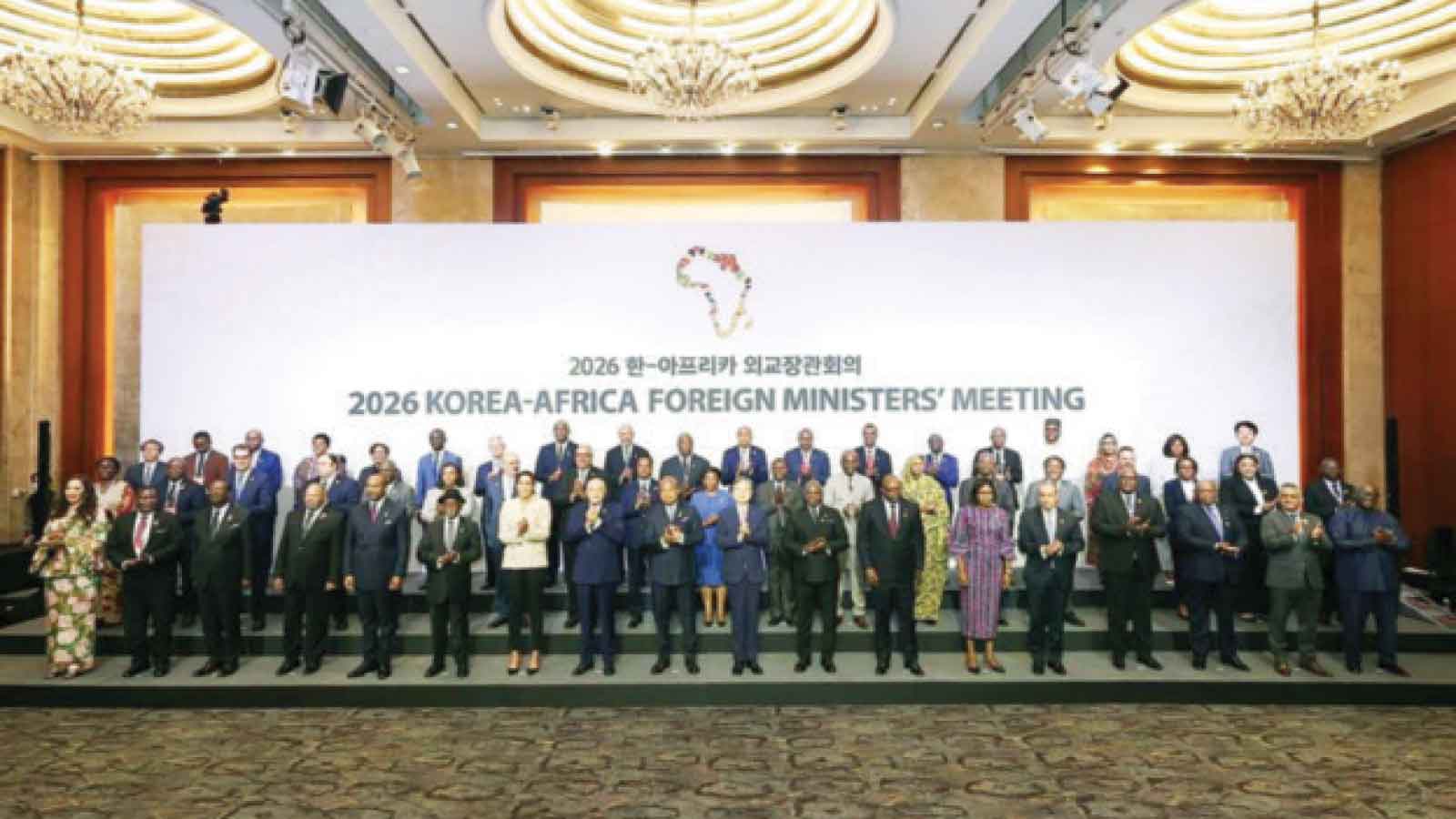
Park Jaekyung-Korean Ambassador to Zimbabwe
ON 1 June 2026, Seoul hosted the Korea–Africa Foreign Ministers’ Meeting, bringing together foreign ministers and senior representatives from across the African continent and the Republic of Korea.
The meeting marked an important step in advancing the Korea–Africa partnership and reaffirmed our shared commitment to transforming vision into action.
While the inaugural Korea–Africa Summit in 2024 established a broad framework for cooperation, this year’s ministerial meeting focused on implementation. Participants reviewed progress made since the Summit and explored ways to accelerate cooperation in areas that matter most to the future prosperity of Korea and Africa alike.
The joint statement adopted at the conclusion of the meeting reflects the breadth and ambition of today’s Korea–Africa partnership.
Ministers reaffirmed their commitment to expanding cooperation in trade and investment, industrial development, digital transformation, critical minerals, agriculture, healthcare, education, climate resilience, peace and security, and people-to-people exchanges.
The message was clear: Korea and Africa are building a partnership that is practical, forward-looking, and grounded in mutual benefit.
Among the notable outcomes of the meeting was the welcome expressed by African partners for Korea’s proposal to convene the next Korea–Africa Summit in 2029.
The welcome extended to Korea’s proposal carries significance beyond the meeting itself. During his meeting with African foreign ministers in Seoul, President Lee Jae-myung expressed his hope that the Korea–Africa Summit would evolve into a regular mechanism for cooperation between Korea and Africa.
Such a vision reflects a shared understanding that the challenges and opportunities of the twenty-first century require sustained dialogue, long-term partnership, and institutionalized engagement.
It also demonstrates Korea’s commitment to building a durable and forward-looking partnership with Africa based on mutual respect and shared interests.
The importance of this partnership has never been greater. Africa is home to some of the world’s fastest-growing economies, a dynamic and youthful population, and enormous potential for innovation and industrialisation.
At the same time, global challenges—including climate change, food insecurity, public health threats, and economic uncertainty—require stronger international cooperation and new forms of partnership.
Korea’s own development experience demonstrates the transformative power of education, innovation, industrialisation, and international engagement.
Having risen from the devastation of war to become one of the world’s leading economies, Korea understands both the challenges and opportunities of development. Korea does not seek to export a model. Rather, it seeks to share experiences and work alongside partners in pursuit of solutions tailored to their own priorities and aspirations.
For Zimbabwe, the outcomes of the Seoul meeting hold particular relevance.
Zimbabwe possesses abundant natural resources, a talented and resilient population, and a clear vision for economic transformation.
As the country pursues industrialisation and value addition, there is considerable scope for expanding cooperation with Korea in areas such as manufacturing, agriculture, digital technology, vocational training, renewable energy, and healthcare.
One area of growing importance is cooperation in critical minerals and mineral value chains. As global demand rises for minerals essential to the clean energy transition and advanced technologies, Zimbabwe is increasingly recognised as an important partner.
Korea, meanwhile, possesses world-class expertise in advanced manufacturing, battery technology, and industrial innovation. By working together, our two countries can explore opportunities that generate greater value, create jobs, and support sustainable economic development.
Agriculture is another promising area for collaboration. Enhancing agricultural productivity, strengthening food security, and improving climate resilience are priorities shared by both Korea and Zimbabwe. Korea’s experience in agricultural modernization and rural development offers valuable opportunities for knowledge sharing, technology transfer, and technical cooperation.
The experience of Saemaul Undong-inspired rural development projects in Makoni District offers a meaningful example of this partnership in action.
By supporting community-led efforts to improve livelihoods and local infrastructure, these initiatives demonstrate how cooperation can produce tangible benefits at the grassroots level.
They also highlight an important principle shared by both Korea and Zimbabwe: sustainable development is most effective when local communities themselves become active participants in shaping their future.
Healthcare and human resource development likewise remain central pillars of our partnership. Korea has long believed that investment in people is the foundation of sustainable development.
Through scholarships, training programmes, capacity-building initiatives, and development cooperation projects, Korea seeks to support the next generation of Zimbabwean and African leaders, professionals, and innovators.
In an increasingly interconnected world, our collective ability to address common challenges depends on the strength of partnerships such as the one between Korea and Africa.
In this regard, I would like to warmly congratulate Zimbabwe on its election as a non-permanent member of the United Nations Security Council for the 2027–2028 term.
This achievement reflects the confidence of the international community in Zimbabwe’s constructive role and growing contribution to international peace and security. Korea looks forward to working closely with Zimbabwe at the United Nations and other multilateral fora to promote peace, stability, sustainable development, and a rules-based international order.
As partners committed to multilateralism and international cooperation, our two countries have much to contribute together on the global stage.
Perhaps the most important message emerging from Seoul is that the Korea–Africa partnership has entered a new phase. The emphasis is no longer solely on dialogue; it is on delivery. Success will be measured not by the number of meetings held, but by the tangible improvements achieved in the lives of our peoples.
As Zimbabwe prepares to assume its responsibilities as a member of the United Nations Security Council and as Korea and Africa look ahead to the next Korea–Africa Summit in 2029, the opportunities for partnership have never been greater.
The decisions taken in Seoul provide a roadmap for deeper cooperation in the years ahead. Korea remains committed to working closely with Zimbabwe and all African partners in pursuit of shared growth, sustainability, and prosperity.
The road to 2029 begins now. Korea stands ready to work hand in hand with Zimbabwe and African partners to advance economic development, strengthen international cooperation, and contribute to peace and security.
Together, we are building not only a stronger Korea–Africa partnership, but also a more prosperous, resilient, and interconnected future for our peoples.