admin
admin
Gibson Mhaka, Senior Features Reporter
WHILE recognising the role of churches in the struggle for independence in Zimbabwe at the 100th Centenary Celebrations and Thanksgiving at St Joseph’s Catholic Mission in Kezi, Matabeleland South province recently, President Mnangagwa said churches were a vital cog during the country’s protracted liberation struggle and post-independence.
President Mnangagwa highlighted that the liberation of Zimbabwe was not only a result of the barrel of the gun, it was complemented by various peaceful liberation forces, including the activities and the narratives of the church.
The President said during the country’s protracted liberation struggle, Catholic missions, like St Joseph’s together with other communities and traditional leaders across the country became proverbial “water” in facilitating and assisting freedom fighters.
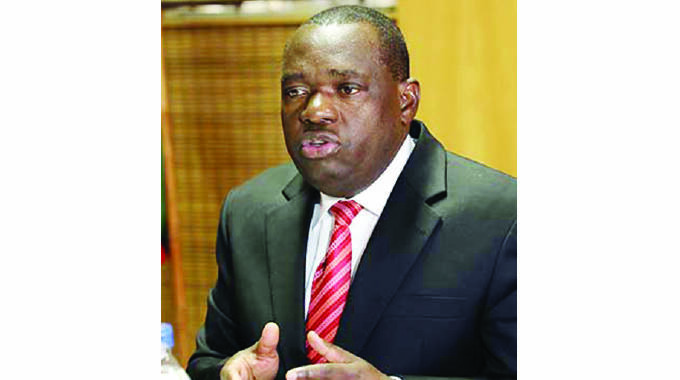
“The long-standing relationship between the Government and the Roman Catholic Church dates back since time immemorial and continues to endure across the areas of education, health, social protection and human development, among others. The relationship among the church, Zimbabwe’s liberation struggle history as well as our political economy cannot be overemphasized,” said President Mnangagwa.
From President Mnangagwa’s observation, it is clear that the struggle to liberate Zimbabwe from the colonial regime was carried out on different fronts; some people provided the means to fight, others went to the battlefield while the church felt obliged to engage in a prophetic vocation against the colonial system.
It is also important to note that as the country observes 43 years of its independence on April 18, a recollection of the story about the liberation struggle which brought the country’s independence in 1980 will not be complete without talking about schools, particularly mission schools or church-run schools which were used as recruiting sites during Zimbabwe’s liberation struggle.
A large volume of published studies describes the role of different groups such as politicians, bureaucrats, armed forces, the mujibhas and chimbwidos, intellectuals, and so forth in the war of liberation.
However, there are relatively few historical studies in the area of the contribution of church-run schools in the upsurge of Zimbabwe.
The role of mission schools in the nation’s fight for independence as recruiting ground is often neglected by both historians and political analysts.
It has not received its fair share of attention.
While church-run schools provided a steady stream of educated Africans capable of filling the lower levels of the colonial administration and operated vocational and agricultural schools, they, too, served as a recruiting ground in Zimbabwe’s liberation struggle.
The Manama Mission in Gwanda District, Matabeleland South province mass recruitment of the January 1977, serves as a touchpoint for reflecting on why the role of mission schools in the country’s liberation struggle should not be overlooked.
The recruitment which saw over 400 pupils being taken to neighbouring Botswana notably made international headlines as never before had such a huge mass been recruited to join the armed struggle. The group also included teachers, school staffers and nurses from the nearby Manama Mission Hospital.
Many have regarded the Manama Mission recruitment as the turning point of the armed struggle, especially on the Zapu side as it saw thousands more Zimbabweans crossing over to Zambia to train as freedom fighters.
Among prominent figures that were recruited were the late Lieutenant General (Retired) Dr Sibusiso Moyo, his cousin, Air Force of Zimbabwe (AFZ) Commander Air Marshall Elson Moyo, former minister Chiratidzo Mabuwa, Cde Mercy Sibanda the wife of the Commander Zimbabwe Defence Forces General Philip Valerio Sibanda, Beitbridge East legislator Cde Albert Nguluvhe, Zimbabwe Elections Commission (Zec) chief elections officer Mr Utoile Silaigwana and many others.
Church of Christ-run Dadaya Mission situated about 20km west of Zvishavane, Midlands province also produced a number of luminaries, playing a major role in national politics such as Cde Obert Matshalaga, Cde Ndabaningi Sithole, the late former Cabinet Ministers Richard Hove, Cephas Msipa and David Karimanzira and the late veteran academic, nationalist and former Zimbabwean ambassador to Germany, Professor George Kahari among others.
The strike by students at the Dadaya Mission School in 1947 was also an important background episode to the rise of African nationalism in Southern Rhodesia.
The strike by the students recognises the role of the youth in the liberation of Zimbabwe from the oppressive colonial shackles.
It was also a turning point in the battle against colonial rule.
Cognisant of the Manama Mission mass recruitment and strike by students at Dadaya Mission, it is important to note that the role of mission schools contains one of the most experiences of the armed struggle as sites for recruitment and epicentre of political activism.
Other church-run schools such as Inyathi Mission of the London Missionary Society in Bubi District, Matabeleland North, Brethren-in-Christ Church-run Matopo Mission in Matobo District, Matabeleland South, Methodist Church-run Thekwane in Bulilima District, Matabeleland South, Roman Catholic Church-run Kutama College in Zvimba, Mashonaland West and Gokomere in Masvingo province also produced distinguished cadres and national heroes who played a pivotal role in the country’s liberation struggle.
Besides serving as recruiting sites during Zimbabwe’s liberation struggle, research also shows that mission schools had a lasting impact beyond their early years.
Today, local communities that were more exposed to mission schools, still achieve higher levels of education, when compared to communities where there were no schools.
Church-run schools were also popular because of the opportunities they offered. Being able to speak and write in the coloniser’s language was considered a privilege. It offered the most direct path towards prestigious jobs in colonial administrations and European enterprises.


 Online Reporter