Chronicle Editor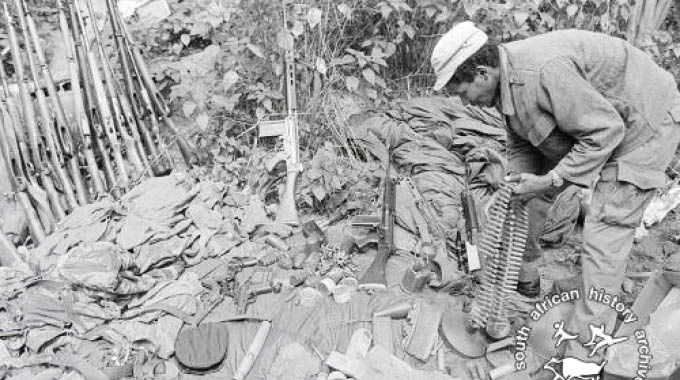
Pathisa Nyathi
SOMETIMES we underestimate the role played by the youth during the liberation struggle. These were young people, unarmed and therefore vulnerable, some of whom abandoned school to assist the armed comrades waging the war.
A guerrilla operates like a fish in water — he has no life outside of water. The community, in its broadest manifestations, provides the necessary support ranging from intelligence gathering, provision of food and water, fundraising, security, provision of health and morale.
The list is endless.
Obed Gumede was a youth at Sivalo at the time the war of liberation was raging on. He had to pull out of Sivalo Secondary School and also from Mbuma Secondary School. The ground was, in political terms, was well prepared to support the war of liberation. Nkayi District together with its neighbouring district of Lupane, received a lot of evictees from Matabeleland South in the late 40s to early 50s.
Evictions and resettlement in the hostile dark forests politicised imikutulwa, as the evictees were generally known. Government lorries offloaded them at various boreholes sunk for them, hence the name imikutulwa. As a result, they quickly embraced nationalist resistance to the settler government with its repressive laws. The early nationalists in the two districts were themselves evictees. Among them in the Nkayi District were, inter alia, Welshman Hadane Mabhena, Isaac Ronald Mswelaboya Sibanda, Juta Masina, Lakatshona Ndebele, John Maluzo Ndlovu’s father, William Mbambo and Samson Ndebele.
Initial infiltration into the area by the ZPRA guerrillas was to establish links with the Zapu political structures. Confrontation with the enemy was avoided in the nascent stages of the liberation war. Political commissars led the initial operation as point persons in the politicisation campaign. Reconnaissance was a priority together with the caching of arms. Confrontation was to follow later when the locals’ support was secured.
The youth were an important component in that support to sustain the war. Both boys and girls were involved. Among them was young Obed Gumede. That was in 1976 when ZPRA infiltrated their area. Among the better known guerrillas who operated in the locality were the following: Mzimb’okhalimali, Tshukela, Phugeni, Gatsheni (SaNtozonke) and Vundla. The guerrillas initially presented themselves to the elders to whom they explained the purpose of their presence. Of course, it turned out they were preaching to the converted.
Obed identified their weapons as bazookas, guns with what looked like vinyl records, AK rifles, grenades and some PPShs. The first step after initial contact with the guerrillas was to form Zapu political branches and revive the party so that its members were in a position to lend support to the struggle.
Phineas Ncube established Mavikane Branch of which he became chairman. The branch was to provide the requisite logistics and fundraising. Within that branch there were about 12 to 13 active youths
In order to fundraise for the struggle, the villagers brewed and sold beer among their members. Khoza’s village was the venue for beer brewing. The raised funds were for the purchase of tennis shoes and boots for the guerrillas. The youths from Sivalo met with guerrillas for briefings. At that point the youths were not armed. They were later armed with a hand grenade for self-protection.
On the day when beer was ready for sale, the youths patrolled the area to ensure there were no enemy forces nearby. Guerrillas arrived to drink beer and also play cards. In the evening the party started and went on till morning.
“Throughout that period we continued with our patrols. The money raised was used to purchase tennis shoes and the chairman Phenias Ncube would announce how many pairs had been purchased from Bulawayo. The war of liberation was won on account of our collaboration,” says Obed.
Fundraising parties were held it was deemed safe to do so. Whenever the enemy forces were spotted in the area, it was our duty to get close to them for the purpose of noting their numbers, the number of cars (called crocodiles on account of their shape), the sort of weapons they were carrying and their deployment. Guerrillas needed that information to plan an attack against the Rhodesian forces.
“One day we got the opportunity to see the ZPRA guerrillas launch an attack on the enemy. The enemy forces had been spotted at Somakandane Business Centre. In addition to the businesses at the centre there was also a dip tank nearby. From Somakandane Business Centre you get to Sipemba.”
The youths heard the army cars roar from Nkayi Business Centre towards Somakandane. The District Assistants were guiding the convoy since they were familiar with the area since they had been recruited from the local areas. Some of the DAs no longer lived among the villagers, instead, they were based at Nkayi Business Centre.
Mangqala Khumalo, Mdilizelwa Gumede and Bhululu Mahlangu, the incumbent Chief Sivalo, were DAs based at Nkayi Business Centre. For them life among the community was no longer tenable. Mangqala Khumalo, in particular, despised the guerrillas and doubted if they were well trained.
The youths devised a strategy to get close to the Rhodesian forces at the business centre. Once fairly close, they were going to count how many soldiers there were, how many crocodiles they had, the types of weapons they were carrying and their deployment within the business centre. Donkeys provided the answer.
Obed came up with the plan of pretending to be intending to pen the donkeys. The donkeys were grazing close to the business centre. He managed to get close to the donkeys and the centre at the same time. One white soldier approached one tame donkey and was poking it with his rifle. Obed’s eyes were meanwhile, darting around making the necessary observations — reconnoitring. “Uphi wena bonile lobanewenu?” asked the white man about the sitting of guerillas. “Kudala sacina ukubabona,” responded Obed indicating they had not been seen in recent times.
Mangqala Khumalo was, however, suspicious of the donkey tactic. Having seen the enemy at close range, Obed went back driving the donkeys to brief the guerrillas. Their interest was in finding out whether the Rhodesians were armed with the PPSHs. Apparently, none carried the vaunted gun from the last world war. The guerrillas decided they were not going to allow the Rhodesian contingent to spend the night at Somakandane. Contact was planned to drive them away.
There were 30 guerrillas in all. Obed and the youths were advised not to get too close. “You may go up the trees and observe from there — behind us.”
Somakandane River was on the southern side of the business centre. Two ZPRA guerrillas deployed beyond the business centre, on the northern side, so that the Rhodesians were between them and the rest of the guerrillas who had taken cover on the southern bank of the river, with the youths behind them — up the trees. The stage was set for the expected contact.
The two guerrillas on the northern side released a volley of bullets from their AK rifles. The Rhodesian forces at the business centre imagined there were many ZPRA guerrillas advancing from that northern direction.
As a matter of fact, there were just two of them firing to create the impression the entire group was advancing from that direction.
The Rhodesian soldiers and the DAs ran towards the river, not knowing the greater number of ZPRA guerrillas were lying in ambush. As soon as they got close, the ZPRA cadres opened fire. The Rhodesians were rushing towards Somakandane River to seek cover. It was not to be. They were mowed down with some of them flying into the air only to come down with a thud — lifeless. The youth were watching from the tree tops.
Those at the business centre including Mangqala Khumalo ran as fast as their legs would carry them towards the parked cars. They hurriedly got inside and drove away leaving the corpses of their comrades littering the area. No one came to pick the corpses till four days later. The corpses had decomposed by then.
A female store owner was accused of being in constant contact with the Rhodesian agents. She was driven into her store at the centre which was then set alight.
When it was considered that the youths had matured enough following the experiences they had gone through, time was ripe to take them across the Zambezi River to Zambia for military training. Phugeni, one of the guerrillas led them from Sivalo through Lusulu towards Binga.
At Lubimbi the recruits waited. There they saw several game, some of which they had never seen before.
They hid in the bush for a while as the security situation did not permit their move further to the north. About 15 armed guerrillas were approaching stores to get them some food. It was not to be. Towards the end of 1979 a ceasefire was announced and the opportunity for them to participate in the struggle, this time as armed guerrillas, slipped through their fingers.
Meanwhile, Chief Solomon Sivalo Mahlangu came under pressure on account of his son Bhululu who was a DA. Chief Sivalo could no longer bear the pressure. He left his home and community to live in Nkayi Business Centre. Timothy Gumede, a villager and Obed’s father, took the responsibility of trying cases in the traditional court during the absence of Chief Sivalo.
One Mbayigwa Tshuma, after the fatal encounter at Somakandana, went to remove a wrist watch from a white man’s corpse. Little did he realise there was some white man who had been wounded during the encounter but did not die. When Mbayigwa Tshuma bent down to remove the wrist watch, the wounded white man opened fire. Mbayigwa Tshuma’s ’s intestines were gouged out. He survived the ordeal and lived to tell the story.



 Online Reporter