admin
admin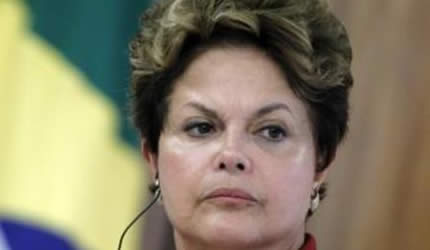
She also offered to earmark US$25 billion for public transport in response to protesters’ exasperation with sub-standard public services and inadequate mass transit systems in the world’s seventh largest economy.
The proposals from Rousseff come after two weeks of demonstrations that have rattled her leftist government, bringing 1,2 million people into the streets to demand a better quality of life.
Following crisis talks with protest leaders, and then state governors and city mayors, Rousseff suggested a referendum on the establishment of a constituent assembly tasked with crafting political reform.
“My government is hearing the democratic voices of the streets which are demanding change,” she said. “We know we can find solutions together with the population.”
The president did not elaborate on her reform plans. The protests in Brazil initially focused on a hike in transport fares before mushrooming to encompass a variety of gripes including criticism of the huge cost of staging the 2014 World Cup and demands for an end to corruption.
The wave of demonstrations coincides with the Confederations Cup tournament being held in six Brazilian host cities as a dry run for next year’s World Cup. Brazil has spent US$15 billion to stage the two events.
Rousseff called for US$25 billion to be allocated in new investments “to improve public transport in our country,” with the construction of metro systems the priority.
Buses are, however, the most common means of transport used by the country’s 194 million people, while rising prosperity means an ever-increasing number of private cars clog the streets of most major cities, creating traffic chaos.
Rousseff also stressed the need for fiscal responsibility and for boosting investments in health and education as demanded by the throngs who have taken to the streets over the past two weeks.
She has called for the use of oil royalties to boost education and proposing the recruitment of foreign doctors to bolster health services.
After the talks, representatives of the Free Pass Movement (MPL) — which successfully forced authorities in several cities to cancel the fare hikes — said they were open to dialogue but vowed to carry on with protests.
“The struggle does not stop. The struggle for free transport continues,” said MPL representative Mayara Longo Vivian.
State governors and mayors of the main opposition party, the Social Democratic Party, had huddled among themselves to map out a joint agenda.
A referendum in Brazil can only be called by Congress, where Rousseff’s ruling Workers’ Party (PT) lacks an absolute majority and governs with a coalition of parties. — Guardian.co.uk.


 Online Reporter