Online Reporter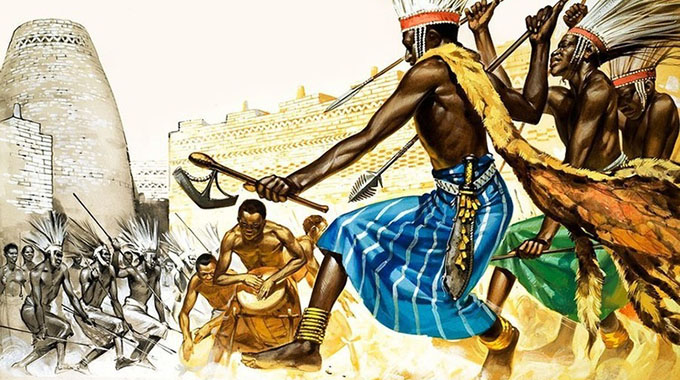
Zimpapers Writer
A local organisation, Manyanga Eva Rozvi/Lozwi Cultural and Community Group, dedicated to preserving the history and heritage of the Rozvi Empire, has formally adopted a constitution to guide its operations, a senior official has confirmed.
The top leadership of the Manyanga Eva Rozvi/Lozwi Cultural and Community Group signed their constitution at a hotel in Kwekwe on October 4. Group chairman, Mr Emmanuel Kanjoma, a descendant of Mambo Tohwechipi, the last known Rozvi king, described the drafting and adoption of the document as major milestones for the organisation. He said the constitution is the culmination of extensive research, consultations with members, and engagement with legal experts to ensure it meets the group’s governance needs.
The next step, said Mr Kanjoma said is to register the document with the Government. Thereafter, the group will be well-positioned to intensify its interactions with authorities in its longstanding quest to preserve and promote the history and interests of the Rozvi Empire and unite its descendants.
“We’re going to continue mobilising descendants of Changamire Dombo in and outside Zimbabwe. We’re going to sign a memorandum of understanding with the Department of Museums and Monuments so that we can have access to all Rozvi heritage sites, revive the Lozwi (Kalanga) language among the Rozvi who now speak other languages,” Mr Kanjoma told Chronicle.
The Rozvi State governed most of what is present-day Zimbabwe between 1660 and the late 1860s when Mambo Tohwechipi died. He is buried at Mavangwe in Buhera, Manicaland Province, and his grave is a national monument. Khami Ruins was the first capital of the Rozvi state, followed by Danan’ombe (formerly Dlodlo) near Shangani, Nharetare (Naletale) also close to Shangani, and Manyanga (Ntaba zika Mambo) in Nkayi.
Key governing structures provided for in the constitution include the general assembly, which would be the principal organ of the group bringing together all Rozvi people; the board of trustees, whose members would be drawn from the top tier; and the special advisory board which would be the “final authority on all matters of strategic importance, constitutional interpretation, and internal conflict resolution. Its decisions shall be binding on all organs and members of the Rozvi Empire.”
The association would be funded through registration fees, membership subscriptions and contributions, grants and donations from other organisations, institutions, well-wishers, and income-generating projects.
“Our people are now scattered all over, but we’re saying the empire is back and all the Rozvi people must come and register under our group,” Mr Kanjoma said.
“We now have a constitution to get everything clear. We hope that we will work with the Government along the way.”
His organisation runs many activities across the country. It holds regular clean-up campaigns and commemorates Africa Day every year. In March, it planted indigenous fruit trees at Khami Ruins
National Monument, an event that was also attended by pupils from Green Gables High School, which is located close to the landmark.
Mr Kanjoma contended that the Rozvi Empire’s role in the fight against white colonialism remains largely unacknowledged. He asserted that the nation’s first war of liberation was waged by the Rozvi under the leadership of Changamire Dombo between 1860 and 1866.
“He led his people against Portuguese invaders, and the decisive confrontation was the Battle of Maungwe in Hwedza around the confluence of the Save, Macheke, and Ruzawi rivers. He drove them out of his territory up to Sofala in Mozambique.
“We believe that this was the first liberation war to have been fought by the people of Zimbabwe against white colonialism. We’ll speak to authorities for this to be recognised as such and be celebrated,” he said.
Mr Enersio Takambani Chidobera, public relations officer for the Manyanga Eva Rozvi/Lozwi Cultural and Community Group, said: “We’ll operate within the framework of the Constitution of Zimbabwe.
While the Constitution does not currently recognise a king, we hope to engage the Government in the future on this matter. Our goal is to reunite the Rozvi Empire, preserve the history of the Rozvi people, and advance their interests in collaboration with the Government.”