Chronicle Editor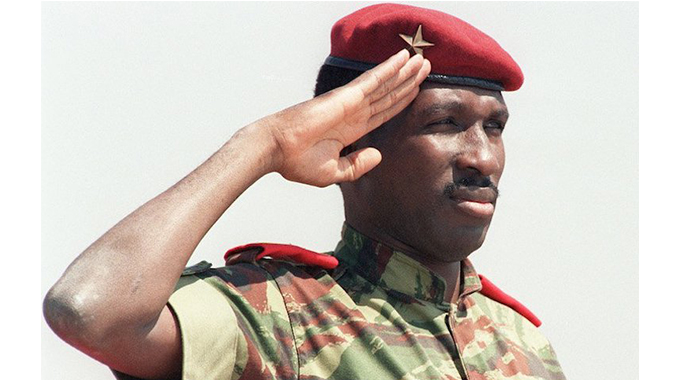
Cetshwayo Zindabazezwe Mabhena
When the Zulu Kingdom of Africa is mentioned, for instance, it is the image of Shaka the warrior king that dominates attention and arrests the imagination. Europeans in particular enjoy imagining a bloody thirsty king that had his people for breakfast and had the heads of his own for a pillow at night.
That there was political wisdom by which even the warrior king was bound is forgotten. Contrary to that colonial opinion Zulu kings ruled through a robust system of consultative democracy where chiefs consulted their people and accordingly forwarded the people’s insights and wills to the King that made decisions and laws based on the will of the Hoi Polloi, the masses of the people. Another facility of democratic rule that is an invention of the Zulus is the exalted office of the praise poet, the Imbongi.
The English word Praise-Poet is misleading because the main function of the poet was not to sing the praises of the individual king but to salute the ancestors, praise the Kingdom, recite the manifesto of the nation, and even warn and ridicule the King. The Imbongi enjoyed political immunity and diplomatic protection. Even the ferocious Shaka sat down like a child and listened to the Imbongi telling him in rhythmic lyrics that he must stop the killings and learn to listen to the people or his very days on earth will be numbered and would end badly for him.
In that way, the institution of the Imbongi acted as the true Fourth Estate that was a pillar of democracy. The Imbongi enjoyed enough freedom of speech to be the pulse of the nation. The King did not have to listen to spies or rumour to get what the population thought of him and his rule. The Imbongi reported publicly even all the insults and invectives with which the people privately pelted their ruler. The Imbongi was a man of title that spoke for the ancestors as well as for the poorest of the poor in the Kingdom.
There is no king that would even imagine bringing him to harm for his open speech and lashing tongue. Contrary to the myths and stereotypes peddled by missionaries and explorers brute force was not the pillar of ancient African kingdoms such as the Zulu Kingdom. Wisdom was. Kings relied on wise counsel from chiefs, other elders and ancestral spokespersons such as the Imbongi for the wisdom of leadership and rule. Wisdom not war was the central plank of political power.
The African Idea of the Philosopher Kings
In Africa, in the Zulu Kingdom in particular, a reigning king is called umntwana, which means a child of the late kings. A living king does not address the population and say “my people (bantu bami).” He refers to the population as “abantu bakaBaba (the people of my father.)”
Before the Imbongi addresses the reigning King he first salutes the late kings and recites their exploits which is a very political way of telling the present king to pull up his socks and try and fill the big shoes of his ancestors. There is nothing that humbles a present leader more than being told that his forbearers were great heroes and that he might be failing them in his own leadership. The name of the great ancestors and their glories were used by the Imbongi to bring the rulers to order and to humble them. Ancestral wisdom and the precedence set by generations of ancestors were used by the poets and advisors to humble kings and get them to rule with wise counsel.
In other words, kings, in all their glory and majesty lived in fear of the ancestors and the common people that stood to judge them. Kings, in their daily lives worked hard to create grand legacies for which they would be remembered by generations to come. The power and majesty of every African king had to be covered in the glory of kind and good deeds. Impunity and tomfoolery in leaders was frowned upon and despised.
Common people by their invocation of ancestral legacy and tradition had power and control over their kings that had to practice obediential leadership that was in awe of the ancestors and respect for the common people. A council of many chiefs that lived among the people formed a circle of advisors around the king and conveyed to him the fears, loves and expectations of the people. The Chiefs also took from the King news, wisdom and promises that the King would have given. The Will of the people became the desire of the King and in turn they were willing to die for him and the nation.
In short, the myth and stereotype that pre-colonial African leaders ruled by spears and blood is exactly that, mythical and stereotypical. It is my considered allegation that rule by wisdom is an ancient African ideal not an import from Europe. It is also my observation that consultative democracy is an idea that ancient African kingdoms perfected and lived by and not a gift that came with the colonisers and enslavers from the West. Wisdom in leaders is a glorious African legacy that must be passed down from one generation to another. The iron fist and blade of the spear as an emblem of African leadership is a colonial attribution and stereotypical labelling by biased missionaries and bored explorers.
The Peril of African Philosopher Kings
Most African youths remember and revere Thomas Sankara as a brave soldier and leader of the people of Burkina Faso. He was the humble leader that lived in modest dwellings and used to cycle up and down the streets talking and working with the common people. One of his most famous speeches of 1987 was that: “The Revolution cannot Triumph without the Emancipation of Women,” Sankara was a soldier and a feminist. He was severally referred to as Africa’s own Che Guevara for his humility, social justice activism and determination against imperialism. Sankara was a philosophic leader that reflected deeply on the plight of his people and was determined against corruption and imperialism. He had the humility of a priest and the courage of a monster, he trusted his comrades fully and so did they betray him. He was assassinated on the 15th of October 1987. The legacy of Sankara is a legacy of wisdom.
In Bissau-Guinea and Cape Verdean there was an agricultural engineer, intellectual, poet, theoretician, revolutionary, political organiser, nationalist and diplomat. He was one of Africa’s foremost anti-imperialists. He despised domineering power and encouraged humble leadership. One of his philosophical aphorisms was that: “no matter how big your hand is, it cannot cover the sky.” By that he meant that power has its limits, no one leader should think that they are almighty.
He expressed the same political wisdom in another aphorism that he made famous: “no matter how hot the sun is, it cannot cook your rice.” By that Amilcar Cabral meant that no matter the power a leader had it was not enough on its own without the support of the people. Consent was to Cabral the hallmark of political rule. Like Sankara, Cabral was assassinated on the 20th of January 1973. He left behind such treatises on politics as “The Weapon of Theory” and “Unity and Struggle.” It is Amilcar Cabral who wrote of the need to “Return to the Source” of things in culture and politics in Africa. What Cabral called the “weapon of theory” was actually the power of contemplation and meditation that he believed should guide African leadership. The source for him was the African past that was not romantic but was also not a hell as the colonists would have us believe.
The Beautiful Ones
African philosopher kings scare Empire to the bits. Frantz Fanon said it that the native who quotes Montesquieu had better be watched. An African philosophic leader that is read about the world and understands how the world works is unwanted by an Empire that feeds on the ignorance of the oppressed of the Global South. It is for that reason that Africans must invest in reflective and contemplative leadership. The Sankaras and Cabrals of Africa are the beautiful and powerful ones of Africa that Africa must treasure and reproduce. They were assassinated because they threatened the very roots of Empire and promised the total liberation of their people. Wisdom is the very root of the struggle for African liberation.
Cetshwayo Zindabazezwe Mabhena writes from Gezina in Pretoria: [email protected]


 Online Reporter