Online Reporter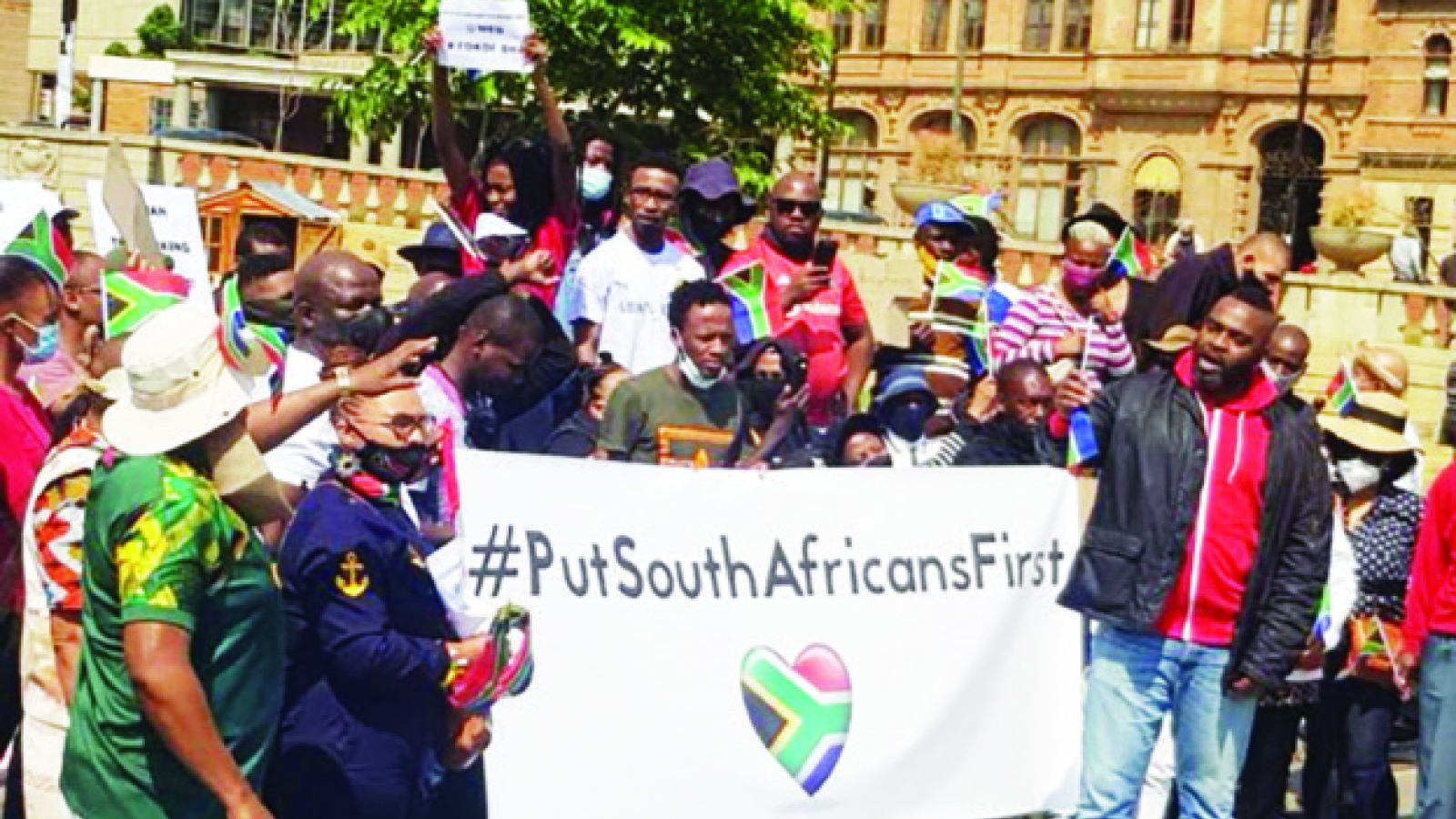
Gibson Mhaka-Zimpapers Politics Hub
THE recent landmark ruling by the Johannesburg High Court in South Africa, which issued an interdict against Operation Dudula, marks a significant milestone in the historical narrative of liberation movements in Southern Africa, particularly for Zimbabwe and South Africa.
The judgment decisively protects the fundamental human rights of foreigners, ensuring their access to essential services, including healthcare and education.
In a powerful affirmation of the rule of law, Judge Leicester Adams declared Operation Dudula’s conduct, which included harassing, intimidating and demanding identity documents from persons attempting to access hospitals and schools, as “explicitly unlawful”.
If effectively enforced, the ruling means that foreigners can no longer be barred from accessing clinics, hospitals or schools. Children and parents can no longer be harassed in classrooms, and communities can no longer be subjected to raids, evictions or public humiliation orchestrated by Dudula and other, smaller anti-migrant groups.
The ruling must be viewed through the lens of the “brother and sister” relationship shared by Zimbabwe and South Africa, a bond rooted in their shared anti-colonial and anti-apartheid liberation struggles.
The court’s action serves as a crucial check on the erosion of pan-Africanism and liberation values within South African society, as Operation Dudula’s activities directly contradicted the historical debt owed to frontline states like Zimbabwe, whose citizens often bear the brunt of such xenophobic campaigns.
The interdict is also a powerful statement that these historical bonds of solidarity still have weight under the rule of law.
Furthermore, the judgment indirectly strengthens the Southern African Development Community (SADC) principles of regional integration.
Both nations are signatories to SADC protocols designed to foster regional integration and ultimately achieve the free movement of people. Xenophobic campaigns fundamentally undermine this entire SADC agenda.
By making the internal environment safer for SADC citizens to live, work and access services without fear of arbitrary interruption, the ruling validates the efforts to maintain economic stability.
Crucially, the economies of Zimbabwe and South Africa are inextricably linked by shared trade routes, resource flows, and regional infrastructure, notably the Beitbridge border post.
Attacks on migrants disrupt the smooth flow of goods, labour and services, affecting both economies; thus, restoring legal certainty facilitates the stability necessary to maintain these shared regional assets.
Judge Adams’ ruling is a definitive victory for constitutionalism and the rule of law over vigilantism.
The judgment confirms that the power to demand identification documents and verify residency status rests exclusively with state agents (immigration and police officers), not private citizens or vigilante groups.
It is important to note that the ruling is a decisive legal blow against xenophobia, demonstrating that South Africa’s constitutional foundations remain robust enough to defend human rights against popular prejudice.
This is a critical legal deterrent against unlawful harassment and ensures that disputes, however complex, remain within established legal frameworks.
The court also decisively protected basic human rights by restraining Operation Dudula and its named leaders, Zandile Dabula and Dan Radebe from interfering with foreign nationals’ access to essential services, including healthcare and education.
The court found that the movement’s actions, such as removing teachers and learners from schools based on nationality, amounted to a violation of basic human rights.
This not only safeguards personal dignity but also creates a moment of accountability for the state, as the focus shifts back to the government’s need to proactively manage migration through competent state channels, rather than allowing a policy vacuum to be filled by vigilante groups.
For Zimbabwe, this reinforces the diplomatic necessity of engaging with South Africa on legal pathways and safe return mechanisms for its citizens.
The fact that the case was spearheaded by Civil Society Organisations (CSOs) like the Socio-Economic Rights Institute of South Africa (Seri) on behalf of a coalition including Kopanang Africa Against Xenophobia (KAAX), the South African Informal Traders Forum (SAITF), the Inner City Federation (ICF), and Abahlali base Mjondolo demonstrates the crucial role of civil society in upholding constitutional principles where the state or public sentiment falters.
This collective action provides a model for regional advocacy against discrimination.
This is essential for Zimbabwe and other SADC nations, as it reinforces the diplomatic necessity of engaging with South Africa on legal pathways and safe mechanisms for its citizens, who are now legally protected from arbitrary harassment.
The ruling shifts the focus from citizen vigilantism back to the South African state, highlighting the government’s inherent responsibility to manage migration through competent, lawful channels, rather than allowing a policy vacuum to be filled by vigilante groups.
Beyond protecting individual rights, this poignant ruling symbolises the enduring bond forged during the struggle against colonialism and apartheid and sends a powerful message that the hard-won principles of pan-Africanism and shared sacrifice cannot be discarded in the face of domestic socio-economic pressures.
It serves as an inspiring model for regional advocacy, ensuring that the dream of a stable, integrated, and rights-respecting Southern Africa remains viable, anchored by the rule of law.
Finally, the interdict against Operation Dudula is a definitive victory for constitutionalism, human rights, and regional solidarity.
By shielding foreign nationals from vigilante harassment and ensuring their access to essential services, the ruling goes beyond legal procedure, it powerfully reaffirms the enduring Pan-African bond forged during the liberation struggles.
This judicial check on xenophobia not only restores legal certainty within South Africa, but also validates the spirit of SADC protocols on regional integration and the free movement of people, securing a crucial precedent for a stable, integrated and rights-respecting Southern Africa.