Online Reporter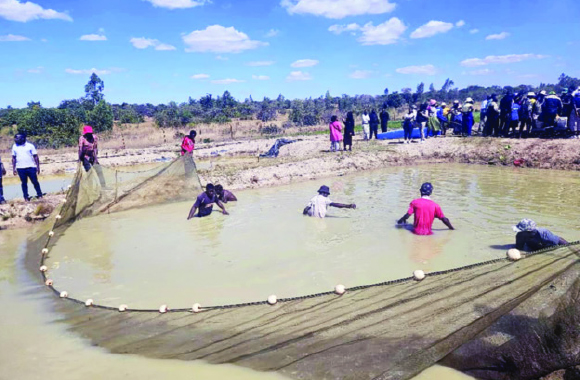
Precious Manomano-Herald Reporter
As Zimbabwe embarks on the Rural Development 8.0 initiative, communities are filled with hope for a brighter future as the programme aims to enhance food security, boost income generation, and create employment opportunities, ultimately revitalising the rural economy.
The initiative is crucial in addressing pressing challenges such as inadequate national and family food supply and limited access to resources, with the government targeting 3.5 million households annually under the Presidential Climate Proofed Input Scheme.
Lands, Agriculture, Fisheries, Water, and Rural Development minister Dr Anxious Masuka said investments in critical infrastructure, including dams, fishponds, boreholes, and irrigation systems, are essential for agriculture and improving community resilience.
“Emphasis must be placed on Agro-ecological tailoring of crops and soil health management, which are crucial for sustainable farming and investment in irrigation infrastructure would be a catalyst for rural industrialisation in the region.
“The Pfumvudza/Intwasa conservation farming method plays a key role in promoting practices that enhance productivity while safeguarding the environment,” he said.
Despite facing challenges such as El Niño-induced drought, significant progress has already been made. The Presidential Cotton Scheme aimed for 24 000 tonnes of production last year.
Additionally, the Presidential Community Fisheries Programme has established 1 342 fish ponds and has successfully stocked 67 of the targeted 100 dams, providing vital protein sources for local communities.
Government’s commitment to addressing animal health through initiatives like the Presidential Blitz Tick Grease Scheme, which distributed approximately 767 595 units to farmers, further underscores this effort.
The Rural Development 8.0 initiative is not just about immediate needs; it is about empowering communities to build a sustainable future. Education plays a pivotal role in this transformation.
The ministry is committed to evolving agricultural education from 2.0 to 5.0, fostering a culture of innovation and entrepreneurship.
Dr Masuka emphasised the importance of education 5.0 in improving skills.
“We have transformed our agriculture colleges from Agricultural Education 2.0, focused on extension and training, to Agriculture for Development 5.0, which includes innovation and entrepreneurship so that our graduates are ready to take up farming as a business.”
Zimbabwe Commercial Farmers’ union (ZCFU) president Dr Shadreck Makombe said the programme has significantly improved people’s livelihoods.
“This is helping farmers and it has already helped in many ways because you would find a lot of activity and in terms of production at different levels. At the same time, livelihoods have improved and food security has been enhanced or is ensured, so in other words, we are seeing a programme which gives a brighter future not only to farmers, but also to the populace in general as well as to the economy because of production on the ground,” he said.
Zimbabwe Indigenous Women Farmers Association Trust president Mrs Depinah Nkomo applauded the Government for introducing various measures which are uplifting the lives of people.
“There are many programmes designed to empower farmers, hence food security is guaranteed as well as incomes. Various projects such as village business units, dam constructions and Presidential programmes have significantly improved the majority of the lives in the rural areas. This has also led to rural industrialisation,” she said.
With a vision for Zimbabwe to become an upper middle-income economy by 2030, Government is working on various initiatives that transform agricultural systems, encouraging farmers to view it as a business.
The Rural Development 8.0 initiative is indeed a beacon of hope, not only addressing immediate challenges, but also empowering rural communities to thrive in a sustainable manner. By focusing on local development and education, it encourages Zimbabweans abroad to return and contribute to their homeland’s growth.
The programme has more than eight components which are the Presidential Input Programme-Pfumvudza/Intwasa, Presidential Input Programme for Cotton, Presidential Rural Development which is expanded to include the Presidential Borehole Drilling Scheme and the Presidential Communities Fisheries Programme, Presidential Blitz Tick Grease programme, which seeks to ensure that cattle owning households are able to prevent the recurrence of January disease. There is also the Presidential Rural Poultry Programme and the Presidential Goat Pass on Scheme.