Online Reporter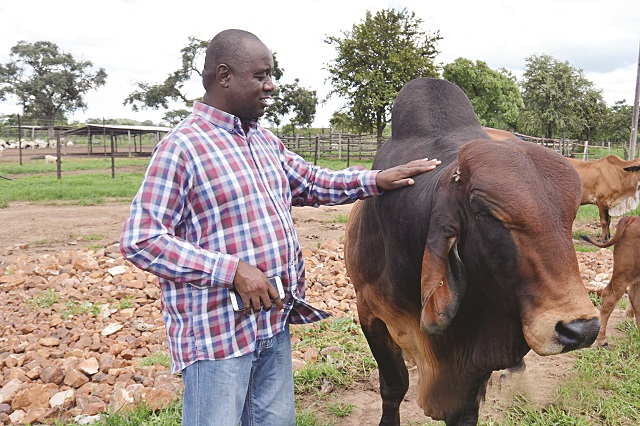
Theseus Shambare
Zimbabwe is ramping up efforts to grow its national herd to 12 million cattle by 2034 — a target now within reach after the country’s stud livestock population surpassed 24 000 registered animals.
Under the Livestock Growth and Recovery Plan (LGRP), the initial goal was to increase the herd from 5 million to 6 million cattle by 2030 as part of Vision 2030.
But with stronger policy support, increased private sector participation and a thriving stud breeding industry, authorities are now aiming even higher.
The move marks a strategic shift toward building climate-resilient, disease-tolerant and commercially viable herds, particularly among smallholder farmers who supply over 90 percent of the country’s marketed cattle.
As part of this drive, the Government is preparing to roll out a Presidential Livestock Programme, under which upgraded Tuli and other indigenous breeds will be distributed to communal and resettlement farmers across provinces.
Speaking on the sidelines of the 57th National Breed Sale held at CC Sales in Mt Hampden on Friday, Deputy Minister of Lands, Agriculture, Fisheries, Water and Rural Development, Davis Marapira, said the country’s expanding stud population would serve as the genetic engine of future livestock growth.
“We now have over 24 000 fully registered animals across 17 breeds — from Brahman, Simbra, Simmental to Tuli,” said Marapira.
“This is a game-changer for both commercial and communal beef production. Even I could not leave empty-handed — I took home Dorper sheep.”
The elite auction themed “Battle of the Breeds” lived up to its billing, with a Brahman bull fetching a staggering US$40 000, becoming the top-priced animal of the day. A Dorper sheep also stunned the crowd, going under the hammer for US$4 300.
Hosted annually by the Zimbabwe Herd Book (ZHB), the National Breed Sale has become a benchmark event for Zimbabwe’s cattle genetics market.
This year’s edition featured 140 elite animals — including 60 bulls, 68 heifers, six rams and six ewes — all DNA parentage-verified, performance-recorded, and fully registered.
ZHB general manager Dr Mario Beffa said the event underscored how far the country has come in building a science-based national herd.
“We are not just selling cattle — we are shaping Zimbabwe’s livestock future,” said Dr Beffa.
“The data-driven selection process is what allows these animals to thrive, even under harsh climatic and disease conditions.”
The sale drew breeders, buyers and investors from across the country and the region, reaffirming Zimbabwe’s status as a rising force in Southern Africa’s genetics trade.
Despite challenges such as Theileriosis (January Disease), Foot and Mouth Disease and stock theft, the record-breaking auction signalled growing confidence and optimism in the sector.
With genetic improvement now at the heart of the Livestock Recovery Plan, the “Battle of the Breeds” may be over for 2025 — but for Zimbabwean farmers, the race to feed the nation through resilient, high-yielding cattle has just begun.