

 admin
admin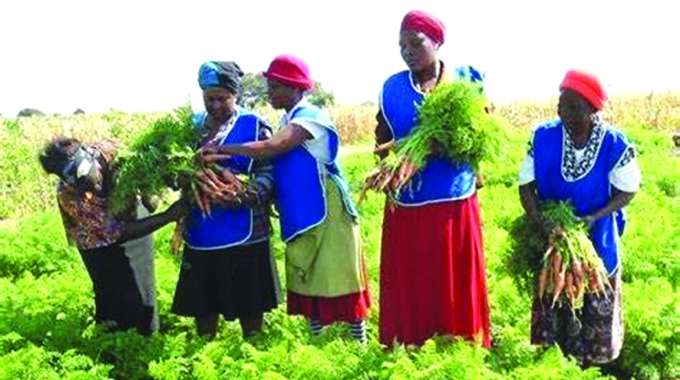
Fungai Lupande Mash Central Bureau
MR Trevor Bobo (27) had never worked, even for a day since completing his Ordinary Levels in 2014, until the Second Republic initiated the Rural Development 8.0 programme that has created thousands of job opportunities for rural youths in their villages.
Under the Vision 2030 Accelerator Model, 10 horticulture gardens have been established in Mt Darwin to complement the Presidential Borehole Drilling Programme.
The Presidential Borehole Drilling Programme has brought double benefit to rural communities, as they can now access potable water, and also generate income through the nutrition gardens.
As the Government drills boreholes in each of the 35 000 villages across the country, Bobo and many others in the villages are working where they were born and bred, among their kinsman, overseeing the effective implementation of this programme.
The horticulture gardens are being run professionally, with members getting a monthly salary from the Agricultural Finance Corporation and sharing dividends after the sale of produce.
Excited about his first job that is close to home, Mr Bobo thanked the Second Republic for creating employment opportunities in previously marginalised communities at a time the country is fighting drug and substance abuse among youths.
He said the adoption rate of the Rural Development programme is high, largely because it is spearheaded and implemented by “one of their own”.
“There is a high sense of ownership of the programme because together we are working towards the development of our area, and our people,” said Mr Bobo.
“It is easy to work among your people because they know me and we love each other. We have 9 200 plants of tomatoes and we are expecting US$24 000 after harvest.
“Each of the 120 beneficiaries will get US$45 after deductions. We are prioritising people with disabilities and we will set aside vegetables for pregnant and breastfeeding mothers as well as children below five years.”
Fresh from Chaminuka Agricultural College, 22-year-old Ms Talent Mangachena said the Kandeya horticulture garden has created employment for many rural youths, and economically empowered young women across the country.
“This is my first job after completing a national certificate in commercial agriculture at a local vocational college.
“My village grappled with water shortages and we resorted to shallow wells along the Ruya River. We now have tap water close to our homes, lessening the burden of carrying water on our heads by many girls my age.
“To get income from this project, village members are the first to benefit to improve nutritional value and eradicate malnutrition,” said Ms Mangachena.
Mr Talent Kamoto from Zunde D Village said he was selected by people in his village to lead them in implementing the garden project. They have 3 000 bundles vegetables that are ready for market and 15 000 heads of cabbages.
“Sixty households are benefiting from this garden and our members will be getting a salary of US$3,88 per day. Men and women in this village are working together well to improve household nutrition and generate income,” he said.
“I am one of the youths employed through this programme and I am grateful to the President. Our produce will generate US$14 400 and after deducting all the costs, scheme members will be left with US$9 900 and share US$55 per household.
“This amount excludes fisheries from which we anticipate an additional US$100 per household after harvest in three months’ time.”
Already, 870 boreholes have been drilled countrywide, with Mt Darwin getting 68, a move that is now uplifting the peoples’ standards of living.
Out of the 10 gardens in Mt Darwin, Lands, Agriculture, Fisheries, Water and Rural Development Minister, Dr Anxious Masuka, recently visited four of them: Zunde D, Madhogo Garden in Chaukura Village, Chigango Garden under Chief Kandeya and Marira Garden.
Dr Masuka said after the Pfumvudza/Intwasa programme, President Mnangagwa launched the poultry, goat and now the Vision 2030 Accelerator Model.
“Agriculture will take us to an upper middle-income economy only if we take farming as a business. This vision will not come by migrating to other areas and towns but it lies below your feet,” he said.
“The President saw that we cannot attain Vision 2030 when women and young girls are still travelling long distances to fetch water.
“To this end, the Presidential Borehole Drilling Scheme was launched to ensure that all the 35 000 villages have access to potable water within short distances. This programme also saw the drilling of boreholes at Chief’s homesteads.
“The President restored the dignity of women and young girls by ensuring that they no longer carry buckets of water on their heads. The borehole will be accompanied by a horticulture garden and a fish pond,” he said.
“This has brought together all arms of the Government including the Agricultural Rural Development Authority, Zinwa, Agritex, Agricultural Marketing Authority, AFC and the irrigation department to ensure the upliftment of rural communities.
“ARDA will employ a community member as a manager and others as security guards. The scheme members will get a monthly salary from AFC based on the number of days they worked in the garden.
“The produce will have a ready market and after selling their produce, members will deduct all costs including salaries and share dividends. The scheme will be registered as a company with its members as shareholders.”
All this is in line with President Mnangagwa’s drive to ensure that no person or place is left behind.
Critically, the motivation to migrate from rural to urban areas in search of employment has been reduced by the Rural Development programme.


 Online Reporter