Online Reporter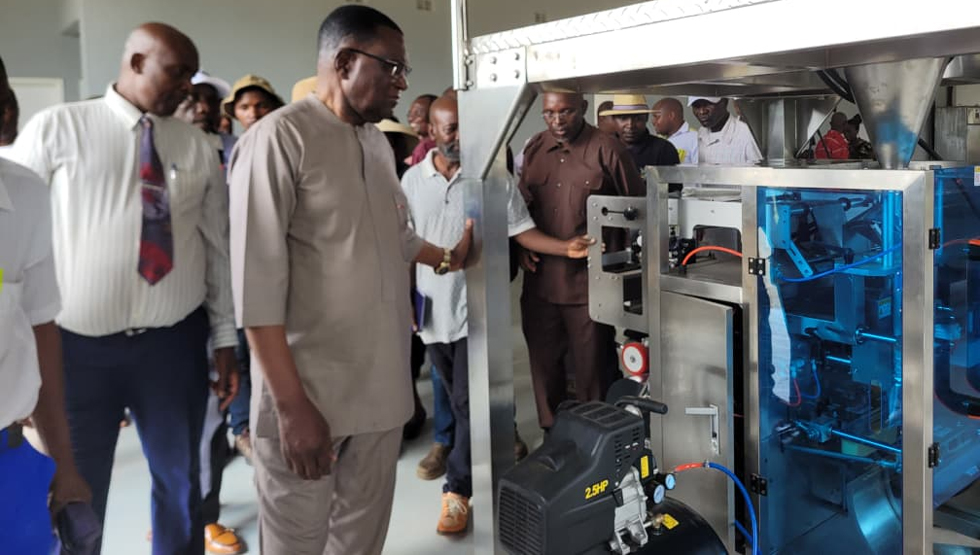
Tendai Gukutikwa
Post Reporter
GOVERNMENT has announced a strategic shift towards a value-addition economy, driven by rural communities, as it prepares to commission the US$450 000 Hauna Fruit and Vegetable Processing plant in Mutasa District.
Special Advisor to the President on Monitoring Implementation of Government Programmes and Projects, Dr Joram Gumbo on Wednesday described the plant as a testament to the country’s nationwide rural industrialisation efforts.
“This plant is, not simply a local development initiative, but a symbol of a national policy shift in how rural economies should function,” he said, adding that the plant will play a pivotal role in transforming the country’s agricultural sector, enabling rural communities to move up the value chain and reap greater benefits from their produce.
The Hauna Fruit and Vegetable Processing Plant is part of the Government’s broader efforts to promote rural industrialisation and stimulate economic growth, and is expected to create new employment opportunities and income streams for local farmers, contributing to the country’s overall development agenda.
“We are moving from subsistence, from selling raw bananas in roadside baskets, to processing high-value products that can compete on domestic and export markets. Rural communities are not recipients of development, they are the economic engines of our new industrialisation agenda,” said Dr Gumbo.
The plant, now in its final stages ahead of commissioning, will process 400 kilogrammes of horticultural produce per hour, turning bananas and vegetables into flour, chips and cooking oil.
Dr Gumbo said this marks the beginning of a national rollout where every district will industrialise based on its strongest agricultural product.
“Every district must unlock its comparative advantage. Bananas here in Mutasa, pineapples in Chimanimani, marula in Mwenezi, and fish in Binga. We are building value chains where the producer owns the economic benefit, not the middleman,” he said.
He said the facility will directly benefit at least 600 farmers in Honde Valley, and create income opportunities for over 2 000 more, predominantly women and youths from Mutasa and Nyanga.
“For too long, smallholder farmers have been working hard only to remain poor. Unscrupulous middlemen exploited them because they had no processing facilities and markets. This plant ends that era. It transfers power into the hands of the farmers,” said Dr Gumbo.
He stressed that the project brings the Second Republic’s development philosophy to life.
“This plant is the practical expression of our President’s doctrine of leaving no one and no place behind,” he said.
Dr Gumbo said the Hauna project aligns with the National Development Strategy (NDS1) priorities on rural industrialisation, job creation and food security, and contributes to global development goals.
“It contributes directly to Sustainable Development Goal 8 on decent work and economic growth, and Goal 9 on industry, innovation and infrastructure. We are building an empowered, competitive and inclusive society,” he said.
He said the plant is a result of a tripartite partnership between Government, African Development Bank (AfDB) and International Labour Organisation (ILO), describing the cooperative business model under the Valley Sharks Agricultural Cooperative union as one that should be replicated across the country.
“This partnership is a blueprint of how Government, development partners and communities can co-create solutions that deliver measurable impact. This is how we build an economy brick-by-brick, and community-by-community,” said Dr Gumbo, adding that Government will insist on international quality standards and responsible management to ensure longevity.
“This community asset must endure for generations.
“We will ensure strong financial management, continuous capacity building and maintenance programmes,” he said, adding that sustainability and competitiveness are non-negotiable.
“Every product from Hauna must meet global standards. We are positioning our rural farmers for export markets,” he said.
Dr Gumbo said rural industrialisation will be the backbone of Zimbabwe’s economic growth.
“This is how we build the Zimbabwe we want, a Zimbabwe that works for all, not for a selected few,” he said.
Ministry of Lands, Agriculture, Fisheries, Water and Rural Development Mutasa District head, Mrs Betty Masvanhise said the plant will end serious losses suffered by farmers due to the area’s mountainous terrain.
“Honde Valley is remote. For farmers to take bananas to Mutare or Harare is expensive and risky. By the time they arrive, most of the bananas would have ripened and middlemen take advantage to rip-off farmers.
“Farmers are forced to accept whatever prices they are given. With this plant, the market comes to the farmer. Farmers will be processing instead of begging for buyers. It will change household incomes dramatically,” she said.
Mutasa District Development Officer in the Ministry of Women Affairs, Community, Small and Medium Enterprises Development, Mrs Sheila Mtetwa, said the factory represents economic liberation for women and young people who previously worked without guaranteed markets.
“For years, women and youths produced bananas, but could not sell them at viable prices. This project is life-changing. It gives them access to income, to dignity, and to financial independence,” she said.
Farmers interviewed at the site said they expect the plant to transform livelihoods in the valley.
Mrs Mutsa Mutete, who has grown bananas for more than a decade, said she was forced to throw away produce when it failed to find a buyer on numerous occasions.
“Middlemen knew we were desperate. They would tell us that the bananas were too ripe and offer low prices. Now we will be taking our bananas to a factory that needs them. We will earn real income,” she said.
Mrs Nomore Nyagato said farmers in Honde Valley have been stuck in poverty, not because they lack skill, but because they lacked access to processing.
“We grow tonnes of bananas, but without a processing factory, we could not move out of poverty. This plant gives us control. We are no longer powerless,” she said.