Fungai Lupande
Mashonaland Central Bureau
ZVITOKWE Secondary School and its teachers’ houses have been connected to the national grid, ending years of power shortages that limited classroom learning.
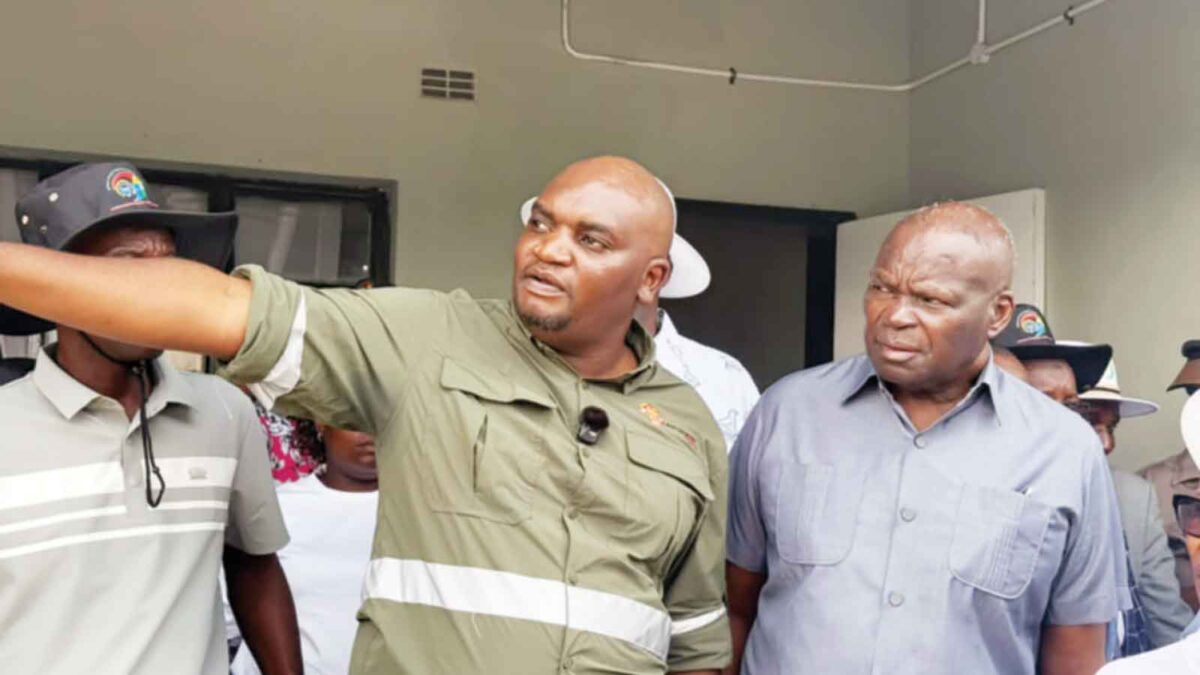
Energy and Power Development Minister July Moyo commissioned the project on Saturday. Addressing stakeholders at the ceremony, Minister Moyo said the initiative aligned with President Mnangagwa’s Vision 2030 and urged businesses operating in rural areas to support local education.
“The President says there is no place, no village, no person and no child who should be left behind,” he said.
Minister Moyo also encouraged residents to launch income-generating projects, such as poultry and crop farming, to help fund school feeding programmes.
The electrification project was delivered through a partnership involving the community, the private sector and the Rural Electrification Agency (REA).
Canterbury Mining company secretary Mr Samuel Rusike credited local Member of Parliament Joseph Mapiki for initiating the construction of the school using community resources before securing private-sector support.
“When there was no school, he mobilised the community to begin with the resources at their disposal,” Mr Rusike said.
“When the community reached the limits of its capacity, he engaged Canterbury Mining to take over and commence construction, and today we see the next logical step in that progression.”
Mr Rusike compared the collaboration to a relay race among stakeholders.
“The community ran the first leg, Canterbury Mining took over the next, and the Rural Electrification Agency is now taking the baton. At no point was the baton dropped as we continue together towards the realisation of Vision 2030,” he said.
REA acting board chairperson Mrs Chitiyo said the agency had allocated 79 percent of its 2026 budget, amounting to $5,6 billion, to rural electrification projects.
As of November 2, 2026, REA had electrified 8 977 institutions nationwide, including schools and clinics, leaving 1 958 schools still awaiting connection.
Under its Rural Energy Masterplan, which utilises grid, solar and biogas technologies, REA aims to electrify all targeted schools and clinics by December 1, 2026, subject to funding. Mrs Chitiyo added that the agency plans to introduce complementary services such as internet connectivity and Wi-Fi.
Local residents welcomed the power connection, saying it would enable learners to use computers and allow women to start small businesses such as soap-making and selling cold drinks. “Harare has come right here. Our grandchildren can now learn using computers like children in town, which is wonderful,” said resident Mrs Mebo Tore.
Another resident, Mrs Hamundide Jentara, said the development would help narrow the educational gap between rural and urban schools.
Despite welcoming the electrification project, villagers raised concerns over alleged environmental degradation caused by local mining operations, claiming that some activities had damaged sacred rivers, pools and mountains.
Residents called for stricter regulation of mining companies to protect wildlife and cultural heritage.