Chronicle Editor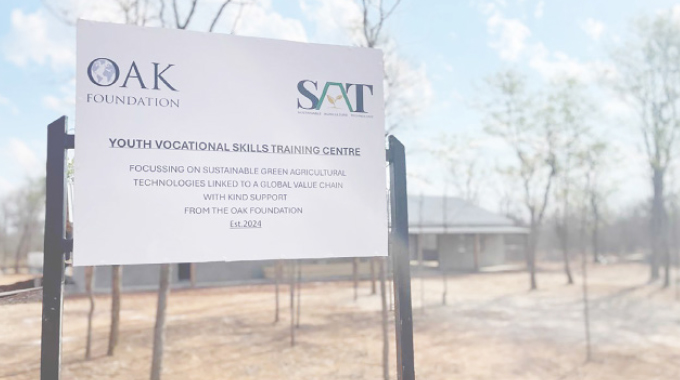
Sunday News Reporter
IN a significant stride toward community resilience and rural industrialisation, Sustainable Agriculture Technology (SAT) has partnered with the Government to revolutionise smallholder farming and livelihoods in the largely dry Mwenezi District as part of efforts to achieve an upper-middle-income economy by 2030.
SAT, a local non-governmental organisation now operates in the country’s 34 rural districts and has directly empowered around 700 000 smallholder farming households with sustainable agribusiness models designed in close collaboration with private sector partners and various Government departments.
The initiative has seen Mwenezi witnessing transformative developments particularly through the establishment of a multi-service centre at the Rutenga Industrial Park.
The centre encompasses the promising paprika processing plant established under the PapriAfrika (Ltd) banner, the Sesame value addition centre under SesAfrika, and a vocational youth training facility focused on green agricultural technologies. These ventures not only enhance local agricultural output but also create much-needed employment opportunities for the youths in the district.
“The multi-service centre is a beacon of hope for our community,” said a local farmer.
“We are now seeing better markets, improved incomes and a pathway for our youth to learn valuable skills.”
Briefing the Minister of State for Provincial Affairs and Devolution for Masvingo Ezra Chadzamira at the multi-service centre ground-breaking ceremony in Rutenga, Mwenezi District, SAT Deputy Country Director Mr Lloyd Masunda said the paprika processing plant aims to produce 300 metric tons of fine-milled paprika annually, with the potential to double that capacity.
“By entering into a joint venture with the Mwenezi Paprika Growers Cooperative Society, which holds a 24,5% share in the business, SAT has already laid the groundwork for local farmers to benefit from better market access and revenue streams,” he said adding that the plant awaits crucial food safety certifications in order to break into lucrative global markets.
“Similarly, SesAfrika is revitalising the sesame value chain by offering services such as cleaning, grading, and oil extraction for both local and export markets. With partnerships extending to international corporations, including Japan’s Itochu Corporation, SAT has successfully exported 212 metric tons of sesame to Japan and Mozambique, while effectively training over 4 600 local sesame growers,” Mr Masunda said.
He added that they were looking forward to more growth given Mwenezi’s fruitful irrigation potential, featuring resources like Manyuchi Dam and the perennial Mwenezi River.
“SAT is capitalising on these assets to spur agricultural productivity and attract further investment. We emphasise the importance of youth engagement through our vocational training centre, which instils practical skills in green agricultural techniques and encourages entrepreneurship,” he added.
Mr Masunda said while SAT has made remarkable strides, challenges persist. The organisation faces significant hurdles, including a lack of land to expand paprika production and access to affordable financing for value chain development.
He said illegal sesame smuggling has also dampened market stability for local farmers, who are struggling to secure their profits amid rampant insecurity.

He appealed for support such as the provision of necessary exemptions from export surrender requirements for smallholder farmers to better facilitate their market operations and stimulate export activities adding that much of their work aligns seamlessly with the Government’s rural industrialisation drive and national development strategies.
“In building resilience in our communities, we need to work collaboratively with our Government. Together, we can not only eradicate poverty but also realise the dreams encapsulated in Vision 2030,” Mr Masunda said.
Minister Chadzamira thanked SAT for its efforts in empowering the communities saying its programmes feed into the rural industrialisation agenda that emphasises on use of locally available resources to build community resilience and empowerment initiatives.
He said with continued commitment from local stakeholders, funding partners, and the Government, Mwenezi is on a path to transformation that could serve as a blueprint for rural communities throughout Zimbabwe.
“As we champion the cause of sustainable agriculture rural industrialisation whose import is to see industrial activity being launched based on factor endowments that define and drive economic activity for the benefit of the local people, the future looks bright for both the smallholder farmers and the generation of rural youth aspiring to make their mark in the agricultural landscape,” said Minister Chadzamira.



 Online Reporter