Andrew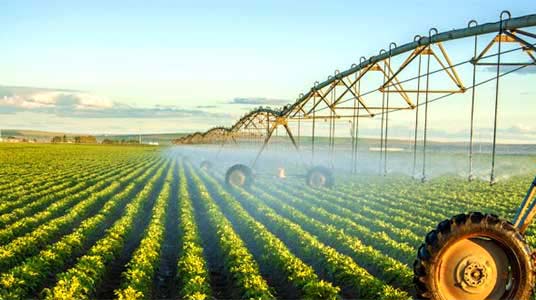
Ranga Mataire
Group Political Editor
In his New Year’s message to the nation, President Mnangagwa declared 2022 as the year of growth.
“2022 must be a year in which we focus on efficiencies through moving away from recovery to growth,” the President said as a rallying call to citizens and industry.
And true to his word, since that New Year’s message, the Government has put its focus on revitalising industrial growth particularly in rural areas.
The focus on rural areas is in line with the President’s policy initiative of not leaving anyone or any place behind.
It is also informed by the need to develop previously marginalised areas to reduce rural to urban migration that has put pressure on urban amenities.
Province by province, the Government has initiated and supported development projects that are meant to improve livelihoods of ordinary people.
In Matabeleland South, the Government is constructing Tuli-Manyange Dam and in Matabeleland North, Lake Gwayi-Shangani is taking shape.
Preliminary work, which includes the construction of two saddle dams, is under way, with the first dam already 80 percent complete.
The preliminary works are expected to be complete by end of next month.
The dam is a major achievement of the Second Republic in terms of helping rural residents’ livelihoods, as it will provide water for agriculture.
Upon completion, 2 000 hectares will be irrigated.
The dam would also service the irrigation projects of Vela, Guyu Business Centre, Ntalale Business Centre, Chelsea Business Centre, Sizhubane Barracks, Manama Mission and Business Centre, Sebasa and Mankonkoni.
In Matabeleland North, Lake Gwayi-Shangani is on course to completion.
The excavation of the main dam’s major foundations is already done and access roads are being built on site.
Drilling, blasting, and transportation of rocks has already been done together with fabrication of concrete stones needed for dam construction.
Treasury has provided $43 million to hasten the project expected to be finished by December this year.
The Lake Gwayi-Shangani is part of the National Matabeleland Zambezi Water Project, an idea conceived in 1912 but failed to materialise, only for President Mnangagwa’s Government to make it a reality.
Material for the pipeline to bring water to Bulawayo City had already been placed at strategic points for connection ahead of the dam’s completion.
Another project set to change the rural industrial outlook is the Marula/Mapfura Processing and Value Addition Plant at Rutenga Growth Point in Mwenezi, Masvingo Province.
Developed by the National Biotechnology Authority of Zimbabwe, the $150 million plant is one of the flagship Government projects meant to stimulate socio-economic growth.
Commissioning the project late last year, President Mnangagwa said besides the Marura/Mapfura project, his Government was “rehabilitating roads to facilitate intra and inter economic trade, which require good roads.
Beitbridge-Harare-Chirundu road is already under construction and tendering for the Beitbridge-Bulawayo road had already started.
The Gwanda-Maphisa, West Nicholson-Mberengwa and Plumtree-Bulawayo roads are already being repaired under the Emergency Road Rehabilitation Programme.
The construction of major roads is meant to facilitate business in rural communities, whose impact would feed into the national economy.
Besides the Mapfula/Mapfura processing plant, Government also spearheaded the setting up of the $US1 million fruit and vegetable processing plant at Tabudirira Vocational Centre in Mutoko, Mashonaland East.
The plant is meant to add value to the produce grown by local communities.
The state-of-the-art processing plant saves local farmers transport and accommodation costs in Harare, where they have been supplying their produce.
The ruling ZANU PF Government is indeed leaving no place and no one behind through the implementation of its development agenda, whose massive rural development programmes are making a mockery of the poor service delivery by inept opposition-dominated urban councils.
Unlike successive colonial governments that neglected rural development, the Second Republic through the leadership of President Mnangagwa seeks to modernise rural communities in order to reduce the rural to urban migration.
The vision behind rural industrialisation is meant to obtain improved productivity, higher socio-economic equality and stability in social and economic development.
It is called counter-urbanisation.
The idea behind rural modernisation is also informed by history.
Around the 1950s and 1960s, countries in the West focused on industrial growth and modernisation in urban areas.
The agricultural sector was largely neglected by national policies in favour of investment in urban industries.
It was assumed that benefits of growth would trickle down to the poor as they shifted into modern sectors of the economy and that the agriculture sector could act as a reservoir of surplus resources and labour for industrial growth without requiring investment in its own right.
Over the years, countries have realised that the focus on urban areas has created maladjusted development, which now needed remodelling as what the New Dispensation is undertaking.
For rural industrialisation to take real effect, President Mnangagwa has consistently urged farmers to take advantage of the National Enhanced Agricultural Productivity Scheme (NEAPS) and the Second Republic’s industrialisation drive and access inputs for strategic crops whose production is being supported by Government through the speeding up of construction of dams and existing schemes to increase land under irrigation.
The evidence of the President’s work is on the ground.
As a pragmatist, President Mnangagwa is driving rural industrialisation, which is already giving birth to industrial activities that are based on the resources available in a particular rural community.
It is such endowments that ultimately become the drivers of the industrial activity in a particular rural area.
All well-meaning citizens must applaud what the President is spearheading because in the end rural industrialisation assists in slowing down urban migration and in turn reduce urbanisation challenges.
Rural industrialisation will also lead to improvement in environment by reducing industrial units in big cities.
Employment creation is one obvious direct impact of rural industrialisation.
Rural areas are home to communities that have a commitment to permanent residency and thus people’s predisposition to community development will be driven by a quest for personal development.
The answer to rural development does not lie in handouts from the cities, but in what the countryside can generate for the cities to stimulate the national economy.



 Online Reporter