Thupeyo Muleya, Beitbridge Bureau
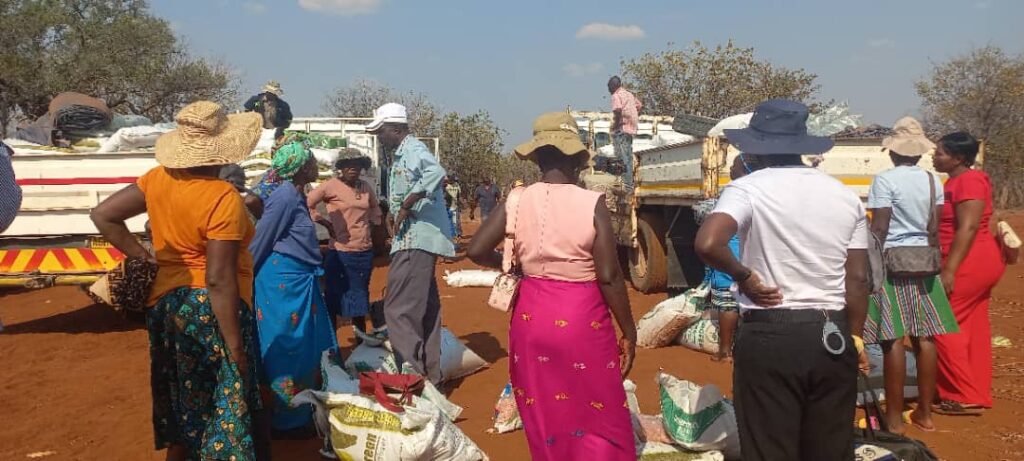
As climate shocks continue to threaten food security and livelihoods, rural women are emerging as central to Zimbabwe’s climate adaptation and resilience strategy, through collaboration between Government, development partners and communities.
This was highlighted by the United Nations Development Programme (UNDP) Zimbabwe as the world marked the 2026 International Day of Rural Women.
In a statement on Tuesday, the UNDP said that, through the Climate Resilient Livelihoods project, implemented in partnership with the Government and supported by the Green Climate Fund (GCF), rural women are gaining greater access to productive technologies, climate information, financial services and leadership opportunities.
The project, being implemented across 15 districts in Manicaland, Masvingo and Matabeleland South provinces, has reached over 2.8 million people, 53 percent of them women, with 229,414 women benefiting directly. Women also head 65 percent of the households reached.
The results, UNDP said, demonstrate how targeted investments in rural women can strengthen household livelihoods, improve agricultural productivity and build communities better equipped to withstand climate shocks.
“Rural women are not only among those most affected by climate change; they are also central to the solutions. When women have access to productive technologies, finance, climate information and decision-making opportunities, entire communities benefit,” said UNDP Zimbabwe Resident Representative, Dr Ayodele Odusola.
“This demonstrates the importance of investing in women’s leadership and economic empowerment as essential foundations for climate resilience and sustainable development.
“The importance of adaptation is being seen in reduced workloads and improved production. Through the introduction of labour-saving technologies such as earth augers, multi-crop threshers and grinder-choppers, the time required to prepare Intwasa / Pfumvudza planting basins has fallen from 39.4 hours to 6.3 hours, while cereal threshing time has dropped from 58.2 hours to 5.2 hours – an overall 76 percent reduction in women’s workload.”
He said women are also increasingly taking up decision-making roles and that across active irrigation schemes supported by the project, women’s representation on Irrigation Management Committees has increased from less than 20 percent at baseline to about 49 percent, with women now serving as chairpersons, secretaries and treasurers and leading Operations and Maintenance Fund management in four of the 13 developed schemes.
Financial inclusion, he also noted, has improved, with 463 Village Savings and Lending (VSL) groups established, involving 5,981 farmers, 77.7 percent of them women. By December 2025, the groups had accumulated US$329,374 in savings, helping members invest in livestock, inputs, and education.
Dr Odusola said through 230 Farmer Field Schools, the project has reached 82,434 farmers, including 53,392 women, while 282 female extension officers have been trained in climate-smart agriculture and agroecology.
He said a total of 199,062 women have received tailored weather and climate advisories via radio, bulk SMS and WhatsApp.
“The achievements highlight that adapting to the effects of climate change requires collaboration – combining Government leadership, international financing, technical support and community participation, with rural women placed at the centre,” he said.