admin
adminstill centuries before that. A Russian embassy was sent to Constantinople back in 838, while in 860, Kievan Rus signed a treaty of peace and amity with the Byzantine Empire.
Russia’s unique geopolitical location and this country’s role in international affairs have long since determined the great importance of diplomacy, which has contributed heavily to building the Russian State, consolidating it as a leading European and world power, and serving as a most important instrument to protect national interests. Since 1549 the diplomatic service was made into an office of the State and received a special status.
The Ambassadorial Department successfully managed the Russian foreign policy throughout XVI-XVII centuries (with first permanent Russian diplomatic missions abroad opening in 1600s), when in 1718-1720 it was gradually transformed into the Collegium of Foreign affairs by Emperor Peter the Great.
This marked the emergence of the Russian Empire and the establishment of Russia as a Great European power. The constellation of talented diplomats serving within the Collegium laid down the basic principles and methods of the Russian diplomacy.
Finally, in 1802, the modern form of foreign policy management — the Ministry of Foreign Affairs — was created by the manifesto of Emperor Alexander I.
By 1914 Russia had a wide network of diplomatic and consular representations all over the world.
The Ministry of Foreign Affairs (in 1917-1946 — the Peoples Commissariat for Foreign Affairs) upheld state interests at every turning point of Russian and world history. Our diplomacy made crucial contributions to the strengthening of the anti-Hitler coalition during World War II and creation of the United Nations Organisation, bolstered the UN authority in governing international relations, fought for peace and disarmament.
Russia’s Diplomacy Today
The primary meaning of Diplomats’ Day is to reaffirm the continuity of the best traditions of national diplomacy, traditions that have always distinguished the representatives of the Ministry of Foreign Affairs, who faithfully served Russia in the most diverse situations and always upheld the national interests, freedom and independence.
Today the Russian diplomacy plays a significant role within the UN, G8, G20, APEC and other world and regional forums, promotes ties of friendship and co-operation with other states.
Presently the Russian Federation has diplomatic relations with 200 countries and has 140 Embassies, 12 Permanent Representative Offices in International Organisations, 74 General Consulates, and 4 Consulates. More than 11,000 staff members work at the Ministry of Foreign Affairs and its Missions abroad.
Now is the time of sweeping change around the world, which is getting more complicated, multidimensional and interdependent. A new polycentric system of international relations is currently being shaped. This predetermines the growing role of diplomacy, as well as, of course, greater responsibility for those who have picked this profession.
Russia is trying hard to ensure the supremacy of law and democracy in international relations, to galvanise efforts to search for joint solutions for the challenging problems that we are facing, to consolidate the authority and the influence of our country.
Russia supports the further strengthening of the role of the UN, which has a universal mandate and generally recognised legitimacy, in the most important issues in world politics. Particular importance here is paid to the UN’s role as a guarantor of the rule of international law.
Traditionally friendly relations between Russia and African states in sub-Saharan Africa further develop with every year. Priority is given to ensure a favourable political climate for the expansion of practical co-operation with the diverse continent.
Steps are taken to strengthen ties with the African Union (AU) and subregional integration organisations — the Southern African Development Community (SADC), Economic Community of West African States (ECOWAS), Intergovernmental Organisation for Development (IGAD). The Russian side has been accredited as an observer in the East African Community.
Russia has an active political role to play in the UN, especially its Security Council on peace and security in Africa, including the development of strategies for resolving armed conflicts and the definition of the mandates of peacekeeping operations in the region. Russia continues to participate in practical peacemaking on the continent. Russian troops and police officers have been involved for the past few years in the operations of the UN peacekeeping in the Democratic Republic of the Congo, Western Sahara, Sierra Leone, Cote d’Ivoire, Liberia and Sudan.
Particular attention is paid to development of trade and economic ties with African countries and their upgrade to the level of political engagement. An important role in this context is assigned to the bilateral intergovernmental commissions. In 2012 a similar bilateral commission with Zimbabwe has been relaunched.
Russia actively participates in concerted steps of the international community to provide comprehensive assistance to Africa in order to ensure sustainable development of the continent, including in the framework of the “Group of Eight”. Our country continues to occupy a leading position in terms of writing off African debts. Significant assistance to Africa is being provided in terms of education and training. The quota for state scholarships for Africa is increasing every year. Altogether now more than eight thousand Africans are studying in the educational institutions in Russia. The Russian law enforcement schools now implement programs to train peacekeepers and police officers from the countries of the continent. The courses of the Russian Interior Ministry schools have accepted over 160 professionals from 18 African countries within the recent years.
Russia visibly confirms its commitment to widen the ties with Africa, which plays an increasingly important role in the modern world.
Modern diplomacy has become by far diverse and dynamic. It requires a wider range of knowledge in various fields such as environmental issues, climate change, fighting terrorism and many others. Still the best fundamental traditions are going strong, and among them – high professional culture, profound knowledge of international relations, commitment to their own country and respect for the countries of posting. — Russian Embassy in Harare.


Online Reporter
- Herald
- July 31, 2026
- 6 views
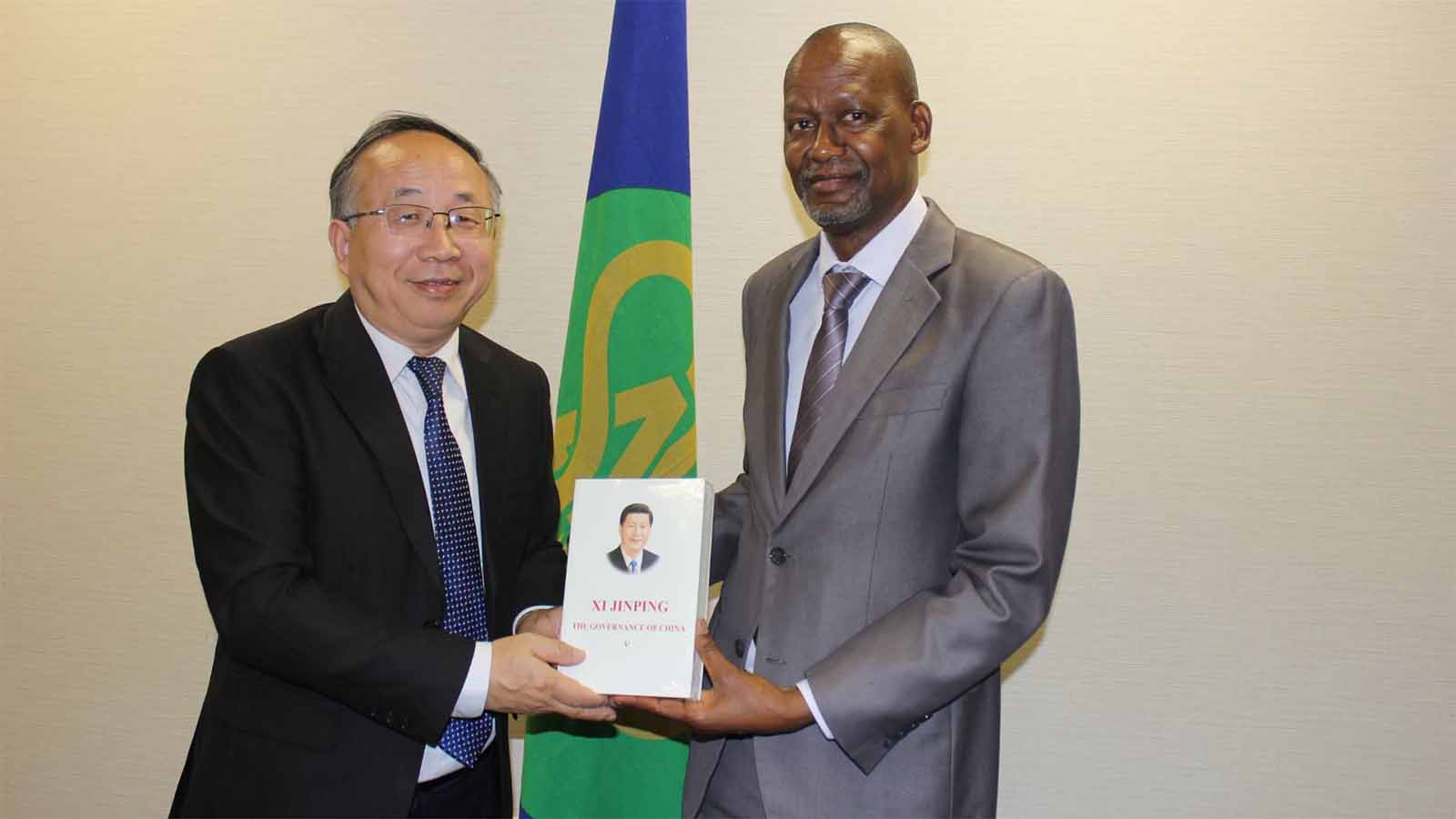
China announces $90,000 grant to boost SADC Secretariat capacity building
Gibson Nyikadzino Zimpapers Politics Hub The Chinese government has announced a $90 000 annual grant for the 2026-2027 financial year to support capacity building initiatives at the Southern African…