

 admin
admin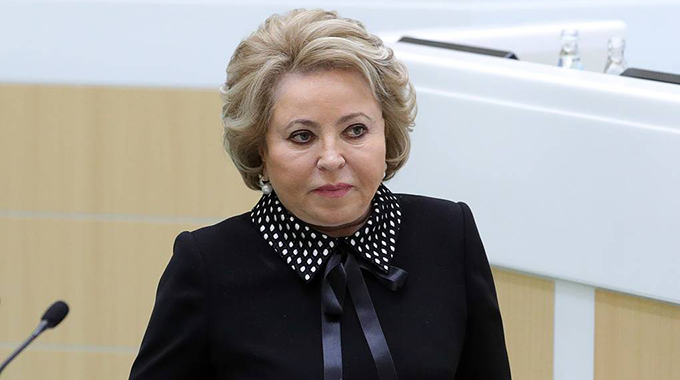
Valentina Matviyenko, chairperson of the Federation Council of the Russian Federation, suggested to Ukraine’s parliamentary delegation to sit down at the negotiating table.
Mrs Matviyenko is representing Russia at the G20 Parliamentary Speakers’ Summit in Indonesia.
There the senator suggested to Ukraine’s parliamentary delegation to sit down at the negotiating table noting that Russia was in favour of a peaceful settlement of the crisis.
She also emphasised that Russia had repeatedly offered to hold talks on settling the internal Ukrainian crisis and the agreements had been practically reached but Ukraine “then, obviously, being externally governed rejected these agreements.”
Russia is ready to stop its special military operation in Ukraine on the conditions set forth by Moscow.
The senator who visited Harare in June specified that their subject would not be the accession of four new territories to Russia.
“This is out of the question, this is already part of our Russia,” she said. “Yet we are ready to stop further military action but on those conditions that Russia sets forth,” the upper house speaker added.
“Within the framework of dialogue, the legislators can create some basis, some foundation for this,” she noted.
The speaker of the upper house of Russia’s parliament, Valentina Matviyenko, criticised as the latest fake news about the nuclear threat allegedly emanating from Russia.
“The West has already run out of arguments to discredit Russia, to escalate the blatant Russophobia around Russia and to scare the world with such a terrible Russia, so they have been circulating this false story about the nuclear threat emanating from Russia.
That is another lie, the latest fake news,” she said at a G20 Parliamentary Speakers’ Summit, when asked to comment on allegations by the foreign media that Russia could use tactical nuclear weapons in Ukraine.
“Never did Russia plan to threaten anyone with the use of nuclear weapons,” she assured.
Russia views nukes as a tool of deterrence only, Matviyenko added. “The conditions were clearly spelled out when Russia could use nuclear weapons — to repel aggression or an attack or for self-protection,” she noted. Under Russia’s nuclear doctrine, the country can use nuclear arms if an adversary uses those or other weapons of mass destruction against it or its allies or when reliable information emerges about the launch of ballistic missiles to attack Russia or its allies.
Also, Russia is allowed to use its nukes if an adversary impacts the necessary facilities for nuclear retaliation or in case of aggression against Russia with the use of conventional weapons, provided the very existence of the nation is jeopardised.



 Online Reporter