admin
admin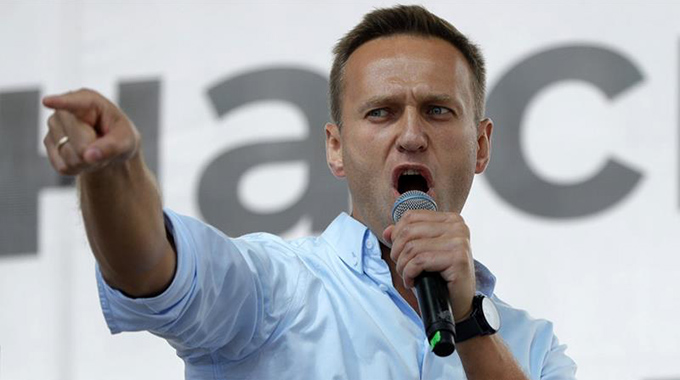
Maria Zakharova Correspondent
We are all witnessing how the West, Western leaders, officials, integration institutions and associations led by the respective Western states have launched a massive misinformation campaign concerning the situation with a Russian citizen, Alexey Navalny.
The German political elite has expressed concern over what had happened in an aggressive manner. In particular, Federal Chancellor Angela Merkel spoke about an “attempt to silence” Navalny. German parliamentarians mention the “aggressive regime” in Russia that is allegedly trying to advance its own interests by using violence and breaking international law.
On September 4, foreign ministers of Germany and France, Heiko Maas and Jean-Yves Le Drian, said in a joint communiqué that they were “both appalled by this attack on Mr Navalny, which constitutes a most serious blow to the basic principles of democracy and political pluralism.” The policy of hardline accusations was quickly picked up by other Western countries. In particular, French President Emmanuel Macron qualified the incident as “attempted murder” and demanded that Russia “urgently shed light” on “the circumstances of this attempted murder and who is responsible.”
The French President even used the UN platform to make public comments on the matter. US Secretary of State Mike Pompeo, in unison with his European colleagues, threatened to impose more sanctions on Russia for the alleged use of a chemical weapon against Alexey Navalny. We consider this kind of rhetoric unacceptable. There is no and can’t be any evidence to support Russia’s involvement, no “Russian trace,” as they put it, in what has happened.
We have to state with regret that it is not the first time the US diplomacy has built its position on unconfirmed rumours. I would say the US State Department is the agency that is most vigorously engaged in public speculation. Once again, the United States and its European allies, for purely political reasons, have deliberately aggravated their relations with Russia, preferring a policy of escalating system-wide confrontation to constructive partnership. Unfortunately, this pattern of behaviour is increasingly becoming their new normal.
Washington is not showing even the slightest interest in moving away from its stereotypes. Had it been otherwise, instead of groundless accusations and threats against Russia, they would have long advised their German colleagues Washington continues to exert strong pressure on to satisfy the repeated requests from the Russian Prosecutor General’s Office for legal assistance and for the documents Russia has requested.
None of the public statements made by US Secretary of State Mike Pompeo contain any such calls to the German authorities. At the same time, we are registering endless calls from the American side at different levels to the German side, such as to halt the Nord Stream 2 project. Isn’t that interesting? In this context, I would like to clarify how things stand in reality using a few specific facts as examples. As I said, the German authorities have still not responded to the official requests of the Russian Prosecutor General’s Office to provide practical support to the Russian law enforcement agencies in their pre-investigation inquiry into the facts concerning Alexey Navalny’s emergency hospitalisation in Omsk on August 20.
A corresponding request was sent to Germany’s Federal Office of Justice on August 27 and September 14 in line with the European Convention on Legal Assistance in Criminal Matters of 1959 and the Protocols thereto. Berlin has still not provided any biological samples from Alexey Navalny or the results of their tests, which German military doctors believe contain traces of the so-called Novichok class poison; they have not provided any information about the nature of the treatment the Russian citizen received in the Charite clinic in this connection. The German side gave no assistance in organising a meeting between investigators from the Russian Interior Ministry and Mr Navalny.
All of the above evidence is crucial for the aforementioned pre-investigation check, which cannot be completed; according to the Russian legal procedure, it is an indispensable precondition to opening a criminal case with regard to the alleged poisoning of Navalny — something the German side keeps insisting on as an ultimatum. Russian law enforcement agencies have repeatedly confirmed their readiness to consider and take into account all the data and materials available to the German doctors that they believe is evidence of a crime committed against a Russian citizen.
But Berlin does not seem to be in a hurry to share them, while simultaneously declaring the need for immediate action on the Russian side. The situation is grave, but Moscow has neither grounds nor intentions to take Berlin’s word for it. This must be understood. On the whole, it seems that our German counterparts are using deliberate tactics and intentionally wasting time in responding to the Russian Prosecutor General’s Office’s requests, citing various excuses each time we remind them about it.
We believe this is all being done, among other things, to keep the idea of Russia’s alleged unwillingness to clarify the reasons that caused Navalny’s dire health condition afloat in the international information space. We would like to declare with full responsibility that such statements are false.
While waiting for the information requested from Berlin, the Russian Ministry of the Interior has even extended the timeframe of the mandatory pre-investigation check, while simultaneously carrying out a scope of investigative actions and intelligence gathering activities. About 200 people have been questioned.
We would like to emphasise once again that the key to completing the investigation lies with the German authorities. In this case, everything depends on Berlin. I would very much like the German media to put special emphasis on this.
Statements by German officials are also in line with this counterproductive policy, as they suggest the Organisation for the Prohibition of Chemical Weapons (OPCW) is the only authority Russia should request for the relevant biomaterials and documents.
Now I would like to ask our German colleagues a direct question: does this mean the German side is refusing to respond to requests from the Russian Prosecutor General’s Office for legal assistance? This is not a rhetorical question and we would certainly like to hear a clear answer.



 Online Reporter