admin
admin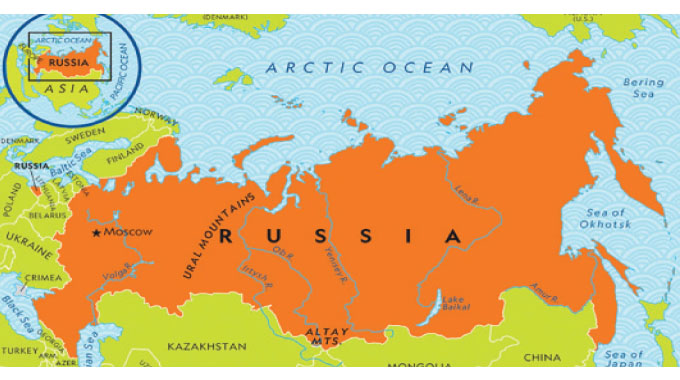
Marshall Rufura Ndlela
AFRICA has been through a lot. The struggle for liberation and independence from imperialism, colonialism, and slavery was a fight against oppression, inequality, and injustice. White minority rule had been arrogant enough to claim ownership of the land, leading to uprisings across all countries in Africa.
The oppressors were empowered by the illegal Berlin convention that portioned Africa into powerless micro-States managed by minority whites.
These minorities, backed by the nukes and powerful arsenal of their countries of origin, became the official governments. How can a few decide for the masses? How can immigrants decide for the local nationals?
Disorder became the order of the day in Africa. Resources were plundered. The colonial masters have a bulk of resources in reserve that they cannot legitimately account for, which is what backs their currencies.
Zimbabwe, previously known as Rhodesia, was colonised by the Rhodes family, which represented British interests.
The Rhodes family started by colonising the Cape and extended their colonial evil deeds to Africa with the main aim of conquering the continent.
South Africa was colonised by a concoction of white chauvinistic forces ranging from the Dutch, Portuguese, Britons, and to a lesser extent, the Germans. It was a scramble for her resources and her strategic positioning.
Many parts of Africa were divided among the imperialist forces that managed to either impose their white junkies to run the affairs of Africa or impose puppet governments or sponsor rebellious acts.
Britain, Belgium, France, Spain, and Italy were the premier league on African colonisation, racial segregation, slavery, human rights abuse, and plundering of economic resources.
African liberators in the name of Nkwame Nkrumah, Patrice Lumumba, Thomas Sankara, among others were toppled, and puppet governments installed. The main agenda was to advance the colonial agenda of diplomatic colonisation where resources are still transferred to these governments at a low transfer price close to zero and colonial tax payments.
However, the Federation of Russia was a major force in liberating Africans from the imperialist forces. Russia, Cuba, Venezuela, Egypt, China, and Yugoslavia were the countries that offered military friendship with the suffering Africans. African liberation required support, expertise, and training.
Russia spent millions of dollars supporting Africans’ warfare against these minority-led governments in Africa. The guerrilla warfare, the tactic use of arsenals, and intelligence-driven operations required maximum training and skills transfer.
The Federation of Russia offered all the support for no price but for a political ideology of advancing socialism and communism.
The African system of economics is based on Ubuntu, which is an African redefinition of socialism. Umuntu ngumuntu ngabantu . . . some scholars agree that Cde Julius Nyerere’s Ujaama was a blend of Ubuntu and socialism.
Russia did not stop supporting the Africans. The support continued though at a depressed level by the majority European Council members. Any country that does not agree with the former superior master is being subjected to sanctions.
Lest we forget that in 2008, at the peak of sanctions, Zimbabweans found themselves with nothing to feed themselves, and Russia donated billions of goods in a programme known as Bacossi (Basic Commodity Supply Side Intervention).
As the UN Security Council passed a vote to assassinate a sitting president of Libya, Muammar Gadaffi, through invoking Chapter VII of the UN Charter, the majority of BRICS (five leading emerging economies: Brazil, Russia, India, China, and South Africa) countries abstained from voting as a sign of disapproval.
Surprisingly, South Africa voted in favour of the invasion of their revolutionary and sister African country. Russia openly criticised Gaddafi’s murder and invasion of Libya.
It is very ironic for the same countries to claim to be the champions of democracy, human rights defenders, and peace nations.
As long as they continue to be arrogant, disrespectful to Africans, and plunderers of their resources, the historic friendship between Russia and Africa will continue to thrive. The African continent needs partners who respect and support its sovereignty and self-determination, rather than partners who seek to exploit its resources and impose their political ideologies on it.
Russia’s commitment to the liberation of Africa from colonialism and imperialism, as well as its support for African development and integration, is an example of what true friendship and partnership should look like.
λ Marshall Ndlela is a Zimbabwean based in South Africa. He is a holder of a Master’s Degree in Finance and Accounting from the University of Chichester, England. He can be contacted on [email protected]


 Online Reporter