

 admin
admin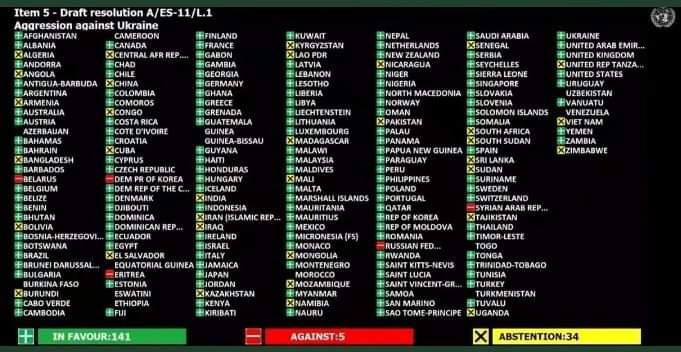
Mukudzei Chingwere
Herald Reporter
Zimbabwe believes diplomatically isolating Russia is not the right way to address the situation in East Europe following the former’s military operation in Ukraine.
Yesterday Zimbabwe together with countries like China, South Africa and more than 30 others abstained from the anti-Russia vote at the emergency session called by the United Nations Security Council.
Abstaining however, is different from not voting, and Zimbabwe’s reasoning was that they felt the decision is not promoting dialogue.
Five countries including Russia, Syria and Belarus voted against reprimanding Russia and 141 assembly members supported the resolution.
However, the resolution is non-binding but the international community believes it sends a message across.
“Zimbabwe is not convinced that the resolution adopted yesterday points in the direction of dialogue,” said Acting Minister of Foreign Affairs and International Trade, Minister of Higher and Tertiary Education, Science and Technology Development Professor Amon Murwira.
“On the contrary, it poured more fuel to the fire, thus further complicating the situation.”
Russia is being pushed towards a pariah state through the imposition of economic sanctions as a way of forcing them to stop the military operation.
Prof Murwira said, “Zimbabwe does not support the imposition of unilateral coercive measures or unilateral sanctions of any kind on any member state for that matter, as this is contrary to the United Nations Charter.
“Unilateral sanctions have never worked to resolve any situation. On the contrary, sanctions unleash untold humanitarian crises and human suffering of the ordinary people.
“Zimbabweans, have been victims of unilateral sanctions for over 20 years and would not wish this on anyone. Dialogue is the way forward.”
The Acting Minister of Foreign Affairs and International Trade said, “Zimbabwe therefore, commends the Russian Federation and Ukraine for initiating dialogue and urge them to intensify their efforts towards finding a durable solution to the conflict taking into account the security interests of both parties.”


 Online Reporter