admin
admin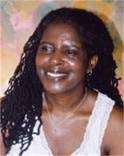
for them, working hard, being grateful and love for yourself and others are some of the ingredients which lead to one living a fulfilled life.
Ruth Mpisaunga is a woman who has lived a fulfilled life, she is grateful and she celebrates every minute of it.
Her positive attitude towards life opened many doors for her and she paved the way and mentored other women in various fields, professions.
A teacher by profession, she has also worked in the arts as a singer, actor and author, in business as a business executive, her life has turned full circle as she is back in teaching but now she is into Bible study.
She has come out with merits in the fields and professions she has been involved in. A well travelled woman. A mother of three, a grandmother of eight, she celebrated her marriage of 50 years on July 1 this year.
Her life experience has turned her into a fountain of wisdom.
But how did she manage to achieve so much? Ruth’s upbringing prepared her for what she is today. Her background shaped her character and grounded her into understanding broader issues about life; family, community, work relations, friendships, church issues, and the list goes on. Her grounding and her philosophy to life have been her guiding principle. “You only have one life and it’s a walk, and it is this walk that sets the pace of one’s life,” says Ruth.
She was born Ruth Muchawaya in the late 30s in Mbare in a family of five. Her parents managed to send her to school through working hard and she would also help wherever possible.
Her father used to make fat cooks (township doughnuts), for sale and her mother cooked meat to sell at a local beer hall. When she was growing up her father passed on and her mother worked hard and continued to sell food at the local beerhall and she sent her to sell on her behalf.
“There was a beerhall in our area and we would go there after school at around 4pm. We carried dishes of meat or what we called fat cooks and would sit outside the bar and sell. My mother would entrust me with older women who also came to sell. I enjoyed what I was doing and I want to say that, that experience helped me to learn to work hard.
“People who drank beer came to buy the meat and then go back in the beerhall and when it was finished they would come to buy again. We would leave at around 8pm and this is something that I enjoyed.”
Ruth did not feel threatened and she was not afraid to sell meat at the beerhall because besides the mothers who looked after her who had also come to sell, the patrons who came to drink beer also made sure she was safe.
It is through this venture that she managed to go to school. Despite working late into the night and also expected to do certain house chores, she had good grades at school. She went on to do teacher’s training and worked as a teacher.
She taught in Mbare, Highfield and Mufakose.
Always wanting to uplift other women she joined the YWCA (Young Women’s Christian Association) in 1965. She worked for the YWCA for about four years as secretary of Harare branch, organising women’s programmes and she was also responsible for the study group for girls who were school dropouts, who had not passed Standard 6, who were enrolled for Form 1 to 4, and there were taught by volunteer teachers.
An advent reader who read the newspaper everyday, one day she came across an advertising job which was being advertised and she tried her luck and she got the job, with an advertising agency called Grant’s Advertising in market research.
Advertising is still very much closed to women even today, but in the 60s it was not heard of that a black woman would be in advertising.
A woman who has always wanted to further her career, she went to Canada to study. She spent two years in Canada studying; how to operate and how to run co-operatives and came back in 1980 and worked for a farming co-operative for women, which benefited women who lived in townships around the farm especially in Glen Norah.
Being involved in business at an early age; selling meat at the beerhall inculcated in her a business mind and in the 1990s she became a top executive with an insurance firm having started as a sales rep.
“When you are a sales rep you earn what you bring, when starting they give you an advance and it goes into the business that one would be bringing.”
Ruth Mpisaunga understood this concept very well since she was young, and she performed very well as a sales representative rising to be the first woman branch manager of Old Mutual in Central Africa.
At some point Ruth was involved with the arts. Some of you will remember the song, “Imi Munosara Nani Ndaenda” which was popularised by Sarah Mabhokela and the Mahotella Queens.
She was part of the group which recorded the original tune which was composed by Jeremial Kainga, who was the leader of Menton and Sisters. She was a champion as a black woman in theatre and featured in a production Macbeth (the Zulu version), where she was Nowawa the wife of Macbeth. She wrote a book; Entertaining in the Home in 1979 which she is rewriting with her daughter Farai Mpofu.
Her life came full circle when she went back to teaching but now as a Bible study teacher. Recently she did a degree in theology which took her two years. Through a dream she was shown that she was a teacher. A shiny thing patted her on the shoulders and mentioned the word teacher three times and within a week after that her pastor invited her and wanted to share what he had been shown. He had been shown that she (Ruth) was supposed to teach the word of God, but for her to do that she was supposed to have the Thompson Chain Bible.
She had been given the Thompson Chain Bible by someone years ago, the day she left Canada and had not read it since.
The woman who gave her the Thompson Chain Bible followed her to the airport just to give her the book. She nearly refused it because her hand luggage was more than she was supposed to carry but something in her just said take it and see.
She had always wondered why the woman had followed her to the airport to give her the Thompson Chain Bible, but when was asked to go back to teaching she understood why.
Ruth Mpisaunga would like to see women taking higher positions in the church, because women form a larger percentage in the church.
It is not that easy for women to pursue their dreams because of mothering and being a wife. As a mother and wife it could not have been easy for Ruth to achieve all she has without a supporting husband.
Her husband has been supportive in the raising of their three children and as a result it has been easy for Ruth to pursue her dreams without much pressure. When they had their first child they went to live in India where Etherton, the husband, was studying and being in a foreign land without any help from relatives they took turns looking after the baby. He also helped with house chores.
“You know zvinonzi murume haaite washeni, murume haatsvaire (they say a husband does not do laundry, a husband does not sweep). I did all that, manapkins and all that you know, even kugeza mwana (bathing the baby). We spent those three years together away from home, away from friends, away from families and so on so that brought us very close together,” explained Etherton Mpisaunga.
He has always given his wife moral support in whatever she does. How has he managed and yet other men feel threatened by women who pursue their dreams.
“I didn’t feel intimidated, I didn’t feel uncomfortable, in fact I encouraged her to do some of the things and most of the things actually she has done in life I’ve encouraged.
“In that sense then I must have been a liberated male, long before it was fashionable.”
He is proud of his wife’s success. I suppose if the men themselves feel inadequate or they are indeed inadequate I think that, that creates a problem.
“I suppose really there was a strong bond and trust between us, which I would like to think again goes back to what she said a few minutes earlier that marrying of matongo.”
Ruth grew up in Mbare and Etherton in Highfield, their families went to the same church and that is how they got to know each other. On the day of their wedding they learnt that their parents had already blessed their marriage as the two parents knew somehow that they were going to be in-laws.
One day long before the two fell in love, the fathers exchanged ties.
He explained: “Mr Mpisaunga and my father Muchawaya said we want our children to marry and exchanged their ties and said they would pray for us, we only learnt about it on our wedding day.”
Etherton Mpisaunga explains the concept of matongo:
“I think the, the actual concept of vematongo in the sense of the same village, same locality perhaps takes a new meaning you know in terms of the changing circumstances and so on.
“But I think vematongo can be used very loosely to mean people that you have known over time, through social contact, work situation, school, you know education whatever.
“That is kind of breaking down now in the sense that a child at a young age goes to America, Canada, Britain, whatever, and it’s very rare that you would find somebody from Highfield or Mbare in the middle of Canada.
“If somebody has a common interest whether they are in the same geographic area or same town or whatever, matongo iwayo because really without that it’s starting from two different poles you know, and you are trying to close that gap and this is going to take a while and the danger is sometimes you won’t be able to close it forever.”
Ruth and Etherton have just celebrated their 50th anniversary.
They are also grateful to their friends, who have always been there for them.
It takes love and teaching in a friendly way in order to close the gap between generations, today’s generation has its own way of understanding what family means as each generation has its own way of seeing things.
Closing this gap needs a friendly approach, in order to instill certain family values in children. Ruth would take her children to their grandparents and she says that this helped as the grandparents would help in some areas she and her husband had overlooked.
“Grandparents become important and children see them as part of their family.”
It has also been easy for Ruth to pass on knowledge and instill family values to the new generation; her grandchildren.
A loving grandmother Ruth loves her eight grandchildren, who she says have changed her life.
Ruth is grateful to have loving children, who care for her and her husband.
Her positive attitude contributed to her fulfilled life.
- Joyce Jenje-Makwenda is a researcher, archivist, author, producer and freelance journalist. She can be contacted on: [email protected]



 Online Reporter