Online Reporter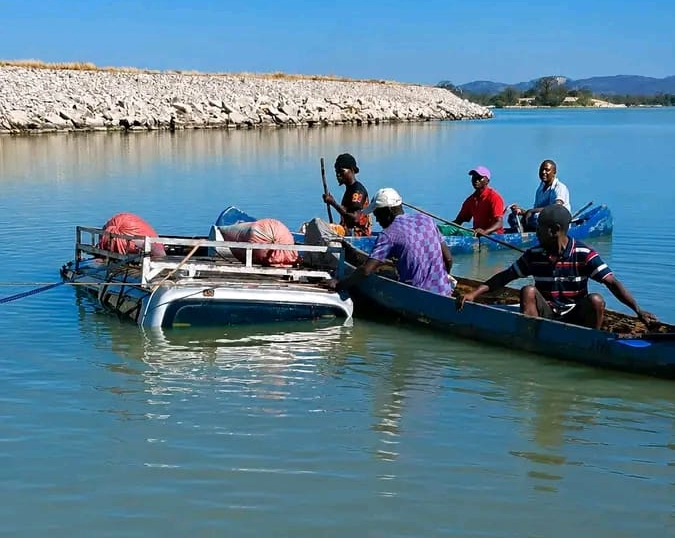
Lovemore Kadzura
Post Reporter
AT dawn, Ruti Dam does not glitter.
It breathes.
Mist rises from the dark water like breath on a winter morning, drifting across the vast expanse where Nyazvidzi River empties into the dam. On the shoreline, life begins early. Women balance buckets on their heads. Schoolchildren clutch plastic-wrapped exercise books. Farmers shoulder sacks of maize and sunflower seed.
They are not crossing for adventure.
They are crossing because they have no choice.
For the people of Buhera and Gutu districts, Ruti Dam is not merely a body of water separating two communities. It is a daily obstacle standing between them and schools, hospitals, markets, churches and relatives. Every journey across the dam carries an element of risk, a silent question that hangs over every canoe trip and every cautious step along the dam wall: “Will I make it to the other side?”
In the past three weeks alone, that question has ended in tragedy for 13 people.
Four members of one family died when a fibre-glass canoe capsized midway across the dam.
Witnesses say the vessel tilted suddenly, spilling its passengers into deep water. Search teams spent six agonising days combing the dam before the bodies were recovered.
Before the community could recover from that shock, another tragedy struck.
Nine churchgoers from Gutu District lost their lives after successfully crossing the dam and boarding a commuter omnibus in Murambinda.
According to reports, the driver allegedly secured the vehicle with a stone instead of engaging the handbrake. Moments later, the kombi rolled backwards and plunged into the dam.
Within seconds, it disappeared beneath the water.
When rescuers arrived, the surface was calm again.
For grieving families and residents, the latest accidents have renewed calls for a permanent bridge across Nyazvidzi River, a project that local leaders say was first proposed nearly five decades ago.
Buhera Rural District Council Ward 19 councillor, Councillor Taurai Matiza, said the tragedies that make headlines represent only a fraction of the suffering endured by communities living around the dam.
He said numerous drownings and crocodile attacks go unreported every year.
“We have lost too many people here. Every time someone boards a canoe, the family prays they will return alive. That is not how people should live,” said Councillor Matiza.
He believes the only lasting solution is the construction of a bridge, a project that was reportedly pegged in 1979 before being halted by the liberation war.
“Now there is attention because the last two incidents claimed multiple lives, but people have been dying here for years. The only real solution is to construct a bridge on the Nyazvidzi River,” he said.
Without a bridge, villagers are forced to make lengthy detours to access services that are geographically close, but practically out of reach.
For villagers on the Buhera side seeking to reach Gutu, the alternative route is both expensive and time-consuming.
“For people in my ward to access Gutu, they have to travel through Buhera Centre, a distance of about 55 kilometres, and then proceed through Nyadi, another 45 kilometres away. That is a journey of nearly 100 kilometres,” he explained.
The dam has become a crucial but dangerous shortcut.
People cross to access medical treatment at Murambinda Mission Hospital, attend schools such as Bangure High School, conduct business or connect to transport routes heading to Harare.
The economic realities also drive movement.
Transport fares from Gutu to Harare average around US$15, while travellers crossing through Buhera can pay nearly half that amount.
“People from both sides of the dam are closely related. There are family visits, church gatherings, business trips and medical journeys happening every day. As long as people need to travel, they will continue crossing the dam despite the risks,” said Councillor Matiza.
Ironically, villagers say the massive water body that dominates their landscape has brought them little direct benefit.
Situated in one of Zimbabwe’s driest regions, Ruti Dam was expected to unlock economic opportunities through irrigation, fisheries and other development projects.
Yet many locals feel they have received little in return.
“The dam, as it stands, has not meaningfully benefited the people of Buhera. Apart from being a white elephant, it has become a source of our sorrow,” said Councillor Matiza.
Most of the water is channelled into river systems that support agricultural activities further downstream, particularly in areas such as Chisumbanje.
Plans to harness the dam’s potential through hydroelectric generation and irrigation projects are still to materialise on a significant scale.
The community remains hopeful that a proposed 100-hectare irrigation scheme backed by the United Nations Development Programme (UNDP) will eventually transform livelihoods in the area.
Even when the waters appear calm, another danger lurks beneath the surface.
Ruti Dam and Nyazvidzi River are home to crocodiles, creating a constant threat for people fetching water, fishing, swimming or crossing the shoreline.
Stories of attacks have become woven into community life.
Children are warned never to venture near the water alone. Women washing clothes remain alert. Herdsmen constantly monitor livestock drinking at the shoreline.
The fear is ever present.
Headman Raiyas Bangure Chikuwa said a bridge will dramatically reduce people’s exposure to both drowning and crocodile attacks.
“We cannot freely use the water because we are always worried about crocodiles. The lack of a bridge has affected access to essential services for residents of both Buhera and Gutu,” he said.
Like many local leaders, he dismissed suggestions that supernatural forces are behind the recurring tragedies.
“We are deeply shaken as a community by the increasing loss of life. As long as there is no bridge, these tragedies will continue because people need to travel,” he said.
The victims of the latest kombi disaster were identified as Shumirai Madare, Chido Mashongwa, Stanley Songo, Kimberly Kativhu, Kelly Kativhu, Tafara Mahofa, Letwin Ndlovu, Irene Makamba and Kimberly Chirime.
Their deaths have once again exposed the devastating consequences of inadequate transport infrastructure.
For communities living around Ruti Dam, the issue is no longer about convenience. It is about survival.
A permanent bridge will provide safe, year-round passage between Buhera and Gutu, eliminating dependence on makeshift canoes and dangerous crossings. It will improve access to schools, hospitals, markets and social services while opening new economic opportunities for thousands of residents.
Until then, each sunrise over Ruti Dam brings another day of uncertainty.
The mist will continue to roll across the water. Canoes will continue to push off from the shoreline. Children will continue their journeys to school.
And families will continue to wait anxiously for loved ones to return home.
For the people of Buhera and Gutu, the question is no longer whether a bridge is needed.
The question is how many more lives must be lost before one is built.