

 malvernmugadzikwa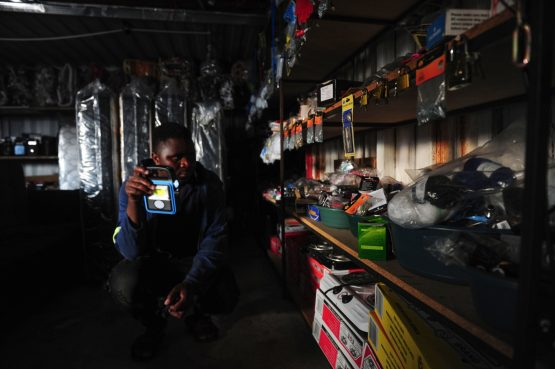
South Africa’s economy shrank more than expected in the fourth quarter, when the state-owned power utility intensified rolling blackouts that continue to put a dampener on output.
Gross domestic product contracted 1,3 percent in the three months through December, compared with upwardly revised growth of 1,8 percent in the previous quarter, Statistics South Africa said on Tuesday in a report released in the capital, Pretoria.
That’s the biggest contraction since the third quarter of 2021, when deadly riots, looting and arson disrupted supply chains, industrial output and demand for manufactured goods.
The median of 12 economists’ estimates in a Bloomberg survey was for a 0,4 percent slump.
Eskom subjected the country to power cuts, known locally as load shedding, on all but three days in the fourth quarter. The company, which produces almost all of South Africa’s electricity, has struggled to meet demand since 2008, and has imposed severe outages every day this year to protect the grid from collapse.
Sustained blackouts are seen as the most significant risk to economic growth.
Economists in a separate Bloomberg survey predict a contraction in gross domestic product in the three months through March, meaning the economy may already be in recession.
The electricity crisis is costing the country as much as R899 million per day and will shave 2 percentage points off output growth in 2023, according to South African Reserve Bank estimates.
It sees the economy expanding by 0.3 percent this year, well below the National Treasury’s growth estimate of 0,9 percent.
Economic growth slowed to 2 percent in 2022, from 4,9 percent a year earlier, Statistics South Africa data showed.
Electricity minister
President Cyril Ramaphosa named Kgosientsho Ramokgopa as the minister responsible for overseeing the government’s response to the energy crisis in a cabinet revamp late Monday.
The blackouts are likely to continue for at least two more years as Eskom overhauls its electricity-generating fleet.
It has repeatedly said an additional 4 000 to 6 000 megawatts of electricity generating capacity are needed to end outages.
The blackouts weighed on fixed investment spending in the final quarter of 2022, with private sector companies wary to commit large sums of money to domestic projects. Gross fixed capital formation, a measure of investment, rose 1.3percent.
Read all our Eskom coverage here.
Household consumption expenditure, which accounts for about two-thirds of GDP, grew 0.9 percent in the fourth quarter.
Consumer spending is likely to be affected by rising food and fuel costs, load shedding price pressures and interest rates that have returned to pre-virus levels.
Overall GDP expanded 0.9 percent year-on-year in three months through December, Statistics South Africa said.—Bloomberg


 Online Reporter