admin
adminThe Government and lawyers who represented resettled farmers in the 2008 case against white former commercial farmers, on Thursday dismissed the ruling, saying it was an affront to Zimbabwe’s sovereignty.
Zimbabwe has been challenging a decision by the South African High Court to register and enforce a judgment by the now defunct Sadc Tribunal. Ruling in a case brought up by 77 former farmers led by Mike Campbell in which they were challenging the legality of the land reform programme, the tribunal ruled in November 2008 that the scheme was “racist and illegal”.
The farmers went on to seek to register the ruling in Zimbabwe, but the attempt failed. In February 2010, they approached the High Court in South Africa, which registered it and sought to enforce it by seizing properties owned by the Government of Zimbabwe in that country. The farmers earmarked a number of properties for attachment, but could not do so because they enjoyed diplomatic immunity, which the Cape Town one didn’t.
They wanted to attach the properties so as to secure compensation for the land which they held but was acquired for resettlement. After they failed to identify many properties for seizure, the farmers settled for the Cape Town house to help pay legal costs Campbell incurred at the tribunal. Campbell died last year.
Thursday’s ruling by five judges was unanimous. The bench dismissed the argument by Zimbabwe that the country was not bound by the treaty which had not been ratified by the requisite number of Sadc member states for it to be operational.
“There is no merit in the submission that Zimbabwe is not bound by the (Sadc) treaty as amended, or by the protocol as amended,” the judgment read.
But the Minister of State for Presidential Affairs, Didymus Mutasa castigated the court ruling saying it is part of the ongoing efforts by Rhodesian elements to frustrate the land reform programme.
Minister Mutasa, who is also Zanu-PF Secretary for Administration said his party could seek a political settlement to the case.
“What they (farmers) are fighting is not about land, but to trouble the Government of Zimbabwe,” he said.
“After this judgment, which is legal, we should let it go and we speak to the ANC and take a political decision. I hope that is possible”.
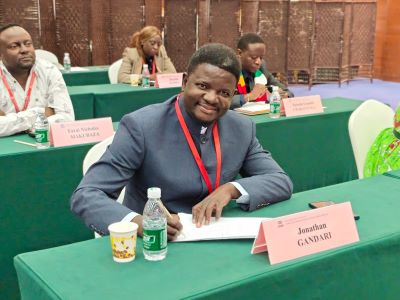
Zimbabwe Lawyers for Justice spokesman, Advocate Martin Dinha who represented new farmers at the tribunal in Namibia, said attempts to reverse the land reform programme will not succeed.
“Notwithstanding attempts by elements of the Rhodesian Front to derail the land reform programme, the programme is totally irreversible,” said Adv Dinha, also Mashonaland Central Governor.
“No country has jurisdiction over another. Zimbabwe is a sovereign state. South Africa must be careful. They must respect the sovereignty of Zimbabwe. They have properties here and given that there are unspeakable abuses that were committed during colonialism, property damaged and people killed, nothing stops us from seeking compensatory damages here that will see us attaching those properties”.
Sadc leaders dissolved the regional court mid last year and assigned their justice ministers to reconstitute and give it a new mandate.
Mr Willie Spies, a South African lawyer who represented the former farmers described the Supreme Court ruling as “a great success . . . a symbolic victory that makes it possible for the government of Zimbabwe to be effectively punished”.
The land reform programme which the former farmers are opposing, Adv Dinha said, was meant to correct racial and colonial land ownership imbalances that favoured whites at the expense of blacks.
He said the court ruling showed that South Africa’s judiciary needs to be “liberated from apartheid”.
“South Africa is not yet liberated; it has cosmetic liberation. South Africa remains a colony of white Rhodesians and apartheid,” he said.


 Online Reporter