admin
admin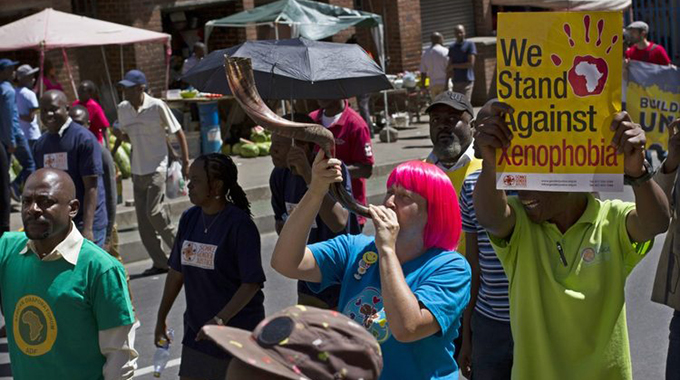
Phumla Williams Special Correspondent
One of the emphasis that are made in the preamble to the South African constitution is that South Africa belongs to all who live in it, united in our diversity.
We included this line in our constitution fully cognisant of the importance for our young nation to heal all the divisions of the past and establish a society based on democratic values, social justice and fundamental human rights.
The public discussions that have taken place in our country in recent months on the issue of racism, the issue of crime and claims of attack on foreign nationals are perhaps an indication that we, as a people, are still faced with contentious issues that need honest discussion and debate as we move South Africa and the African continent forward.
It has been argued in recent times that isolated cases of tensions between South Africans and foreign nationals living in our country were fuelled by xenophobia and the alleged South Africans’ hate of fellow Africans.
This narrative reared its ugly head again this week following the tragic murder of a Grade eight Congolese pupil in Turfontein, Johannesburg, whose life was taken from him at such an early age.
The government expressed sadness over this tragic event involving young people. We equally expressed our condolences to the parents who lost a child in such tragic circumstances.
We are aware that this case is now in the courts and we have full confidence in the judicial system of our country and that in time this matter will be brought to conclusion.
However, the narrative that is being disseminated about South Africa’s judicial system being prejudicial towards the deceased, and the assertion that South African courts favour locals is not only false, but dangerous to the extreme.
The story that the family believes if their child had committed the alleged offence, he would not have been granted bail because he is of foreign national is absurd.
Necessarily, claims like these add to the acrimony and the tensions in our communities and therefore, the difficulty of conducting a rational and even-tempered discussion on the question of the claims of xenophobic incidents.
Our constitutional and legal framework provide us with a strong legal base to confront issues of racism and xenophobia.
The government is firmly of the view that perpetual allegations of xenophobia, especially coming from credible bodies and respected members of the community will do nothing, but further fuel tensions between South Africans and their brothers and sisters who have decided to make our country their home.
When legitimate claims of attacks on foreign nationals were reported in the past, as the government, we acted decisively and we reminded South Africans never to forget the enormous sacrifices that were made by their brothers and sisters of Africa, to help us achieve our liberation.
As the government, we have always emphasised that the recent isolated incidents of attacks between locals and foreign nationals are fuelled by criminality and that acts of violence, whether committed by South Africans or foreign nationals, will not be tolerated.
Equally, we have said South Africa is a constitutional democracy governed by laws. Everyone working, studying and living in the country must obey its laws in their totality.
Accordingly, we wish to re-emphasise that no one has the right to take the law into their own hands.
The South African Government will enforce the laws of the country and will not hesitate to act against criminal activity or those found to incite violence.
South Africa’s transition to democracy was one of the world’s most iconic testimonies of tolerance and peaceful co-existence.
Under the stewardship of Nelson Mandela, the country had an unwavering dedication to democracy, selflessness, reconciliation, service to humanity and a better life for all.
The continuous claims by some that South Africans are xenophobic are a threat to our historical solidarity and friendship to fellow Africans.
Moreover, these claims go against the democratic values enshrined in the constitution.
Consequently, what we have to deal with is the issue of crime in our communities, whether it is committed by South Africans or people of foreign nations.
We have to work together to root out wrong elements in our communities and in this way we will live together in harmony.
Whatever else we may disagree about, at least, we need to agree that crime, drugs and gangsterism have no place in our communities.
Furthermore, communities have a duty to report criminal activities to police and avoid taking the law into their own hands.
Phumla Williams is acting director-general of Government Communications and Information System (GCIS) in the Republic of South Africa



 Online Reporter