Online Reporter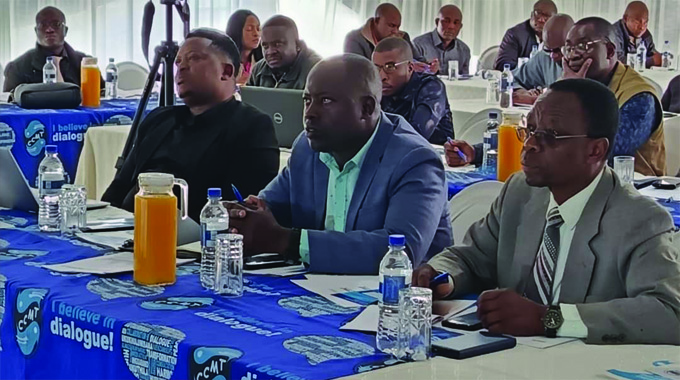
Patrick Chitumba, [email protected]
RAMPANT illegal land subdivisions and unauthorised developments, popularly known as “Sabhuku deals”, are threatening sustainable development in both rural and urban parts of the country, authorities have warned.
The illegal parcelling of land, especially by village heads near growth points and the construction of houses on road servitudes and other restricted zones, is undermining Government planning efforts and posing long-term risks to infrastructure and social cohesion.
This emerged during a three-day Midlands Provincial dialogue workshop on development-induced displacement held in Gweru, organised by the Centre for Conflict Management and Transformation (CCMT).
Midlands Secretary for Provincial Affairs and Devolution, Dr Edgar Seenza, said the unauthorised land subdivisions are now widespread, with some individuals reportedly selling land for as little as US$300, leaving unsuspecting buyers vulnerable to future displacement and loss.

“One village head alone cannot legally subdivide land, yet they are doing it. People are buying land from these ‘Sabhuku deals’ and sadly, they may end up being evicted with no compensation,” he said.
Dr Seenza said President Mnangagwa’s Call to Action has placed greater emphasis on protecting servitudes, which are areas reserved for public infrastructure such as roads and pipelines, from illegal occupation.
“We are seeing beautiful houses being built on road servitudes. It’s painful to know that one day these structures may be demolished.
“Local authorities must now audit these servitudes and wetlands to prevent further illegal developments,” he said.
Dr Seenza urged local authorities to intensify public awareness campaigns about land regulations and proper settlement procedures to prevent future displacements, whether from agricultural expansion, urban growth or infrastructure projects.
He said development-induced displacement must be handled with foresight and care. Dr Seenza said poorly managed relocations can tear families from ancestral lands and dismantle sustainable livelihoods.
“If not addressed responsibly, displacements can occasion impactful disruptions to lives. They can separate families from their ancestral lands and deprive communities of sustainable livelihoods and social cohesion,” said Dr Seenza.
“Through inclusive planning, equitable compensation and comprehensive resettlement strategies, we need to ensure that no one is left behind and that Vision 2030 becomes a reality for everyone.”
Director for Local Government Services in the Midlands Province, Mr Charlton Murove, also warned that traditional leaders and communities involved in illegal land sales will face prosecution.
“There is a need to combat the practice, which is now rife in communal lands close to urban areas. Sabhuku deals are illegal,” he said.
CCMT director Mr Xavier Mudangwe, said the organisation initially focused on compensating communities displaced by growth point expansion, but later broadened its scope to address displacement driven by agriculture, mining and infrastructure projects.
“In 2018, we developed compensation guidelines adopted provincially, but as we handled more cases, we realised our approach needed to be more comprehensive,” he said.
He noted that in March, CCMT facilitated a dialogue between the Government and mining companies to co-develop best practices for managing displacement in the mining sector, with an emphasis on avoiding it wherever possible and implementing inclusive relocation strategies when necessary.
“Today, we’re shifting focus to displacements caused by agriculture, urbanisation and infrastructure — all vital to national growth, but also potential sources of conflict if not well managed,” he said.
Mr Mudangwe said CCMT takes pride in contributing to the newly developed Urban State Land Management Policy, which emphasises fair and timely compensation for those displaced by development projects.
He said the workshop is part of ongoing efforts to balance economic development with human dignity and environmental protection.
Mr Mudangwe reiterated CCMT’s commitment to collaborating with the Government, the private sector, civil society and affected communities to design and implement long-term solutions that address the root causes of development-induced displacement.
“Our efforts today are a direct continuation of this same spirit of collaboration and commitment.
“We are committed to working with the Government, private sector, civil society organisations and affected communities to co-create and implement solutions that address the root causes of development-induced displacement conflicts and promote sustainable development,” he said.